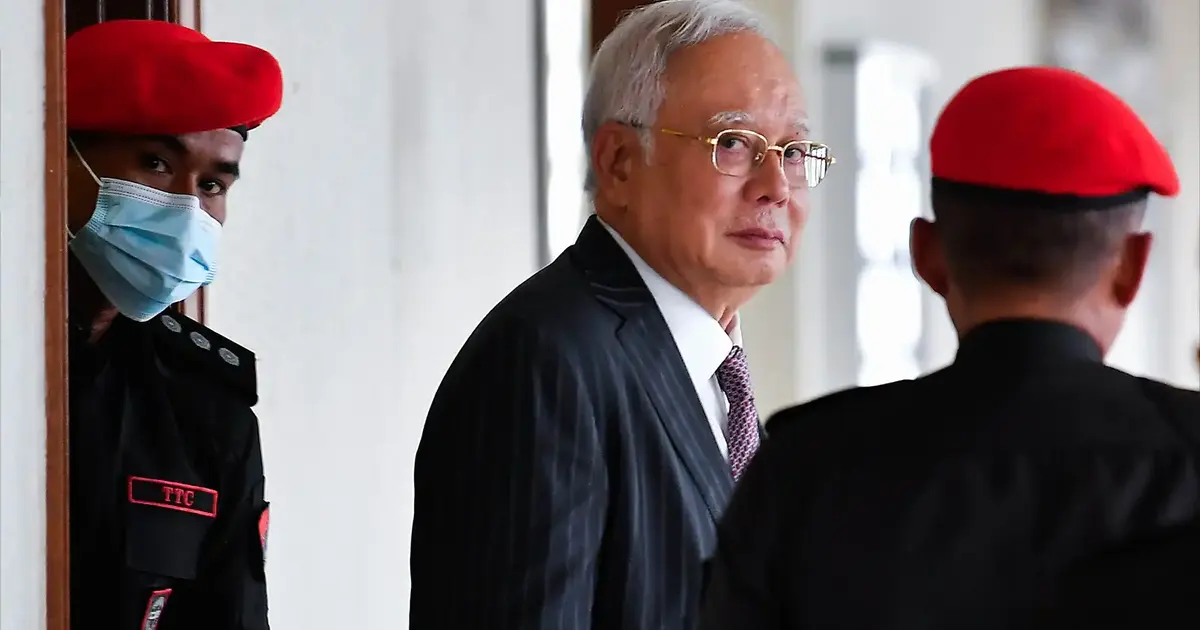
Former prime minister Najib Razak's defence team has mounted a fresh challenge against the 1MDB fraud investigation, focusing on the timing and potential bias of the inquiry into a US$620 million fund movement. Senior counsel Shafee Abdullah argued that Kroll Advisory Ltd's investigations director Richard Templeman commenced the probe two months after 1MDB launched its lawsuit against Najib, raising questions about the sequence of events and the investigator's independence in examining the contentious transaction.
The timing argument represents a strategic shift in Najib's legal defence, moving beyond factual disputes about the movement of funds to challenge the foundation of the investigation itself. By highlighting the chronology of events, the defence suggests that the investigation may have been initiated with a predetermined conclusion regarding Najib's culpability, rather than as an impartial examination of what actually transpired with the disputed US$620 million. This approach reflects a broader defence strategy that seeks to undermine the credibility of the prosecution's key investigative findings.
Kroll Advisory Ltd, a subsidiary of Kroll Inc., was engaged to investigate 1MDB's financial activities and trace missing funds. The firm's work has been instrumental in supporting claims that Najib orchestrated an elaborate scheme to misappropriate public money through the sovereign wealth fund. However, the defence contention raises fundamental questions about whether an investigator tasked with examining allegations made by 1MDB against Najib could maintain objectivity when the investigation was launched after 1MDB had already taken adversarial legal steps.
The dispute over the US$620 million has been central to the 1MDB scandal, one of the most significant financial crimes in Malaysian history. This sum represents a portion of the billions allegedly siphoned from the fund during Najib's tenure as prime minister and finance minister. Understanding the legitimate flow of these funds versus alleged misappropriation has been crucial to establishing either Najib's guilt or his claims of innocence regarding criminal conspiracy and abuse of power.
Shafee Abdullah's intervention through the senior counsel suggests that Najib's legal team believes the investigation's timing renders it insufficiently independent to serve as credible evidence in court proceedings. If an investigator begins their inquiry after a claimant has already framed the narrative through litigation, there exists an inherent risk that the investigation becomes confirmatory rather than exploratory. This distinction matters significantly in legal proceedings where the burden of proof and the independence of evidence are paramount considerations.
The challenge to Richard Templeman's probe comes as Malaysia's legal system continues grappling with the complex 1MDB case, which has spawned numerous trials, appeals, and international investigations. The investigations have involved authorities in several countries, including the United States, Singapore, and the United Kingdom, reflecting the cross-border nature of the alleged fraud. Kroll's investigation was considered particularly important because it attempted to trace the movement of funds internationally and identify beneficiaries of the alleged scheme.
For Malaysian readers and observers of the ongoing legal saga, this challenge underscores the contentious nature of determining facts in such complex financial crime cases. The defence's argument essentially questions whether investigations initiated after litigation has commenced can meet the standard of impartiality expected in criminal proceedings. Such arguments are not uncommon in high-profile cases where the sequence of investigation and legal action becomes itself a subject of legal contention.
The broader implications of this challenge extend to how Malaysia's courts assess investigative evidence and expert findings. If defence arguments about investigative bias gain traction, it could establish important precedents about the admissibility and weight of evidence gathered by third-party investigators who are engaged after parties have initiated adversarial legal proceedings. This principle could affect not only Najib's case but also other complex fraud investigations in Malaysia.
Regionally, the 1MDB case has attracted significant attention because it involves substantial sums of international capital and implicates governance questions relevant across Southeast Asia. The dispute over investigative impartiality reflects broader concerns about how high-stakes financial crimes are examined and adjudicated in the region. Malaysia's handling of such challenges influences perceptions about the maturity and independence of the country's legal institutions.
The defence team's focus on Templeman and Kroll's investigation timeline also reflects the sophisticated legal strategies employed in major financial crime cases. Rather than simply contesting facts, Najib's lawyers are contesting the foundation upon which certain facts were allegedly established. This approach requires the court to examine not merely what happened to the US$620 million, but whether the investigative process that uncovered allegations about its movement possessed sufficient independence and objectivity.
As the case proceeds, the courts will need to weigh Shafee Abdullah's timing argument against the substance of Kroll's findings. The fundamental question becomes whether the sequence of events—litigation first, investigation second—should diminish or eliminate the evidentiary weight of Kroll's conclusions. This determination will shape not only Najib's legal fortunes but also establish important principles about investigative standards in Malaysian courts for years to come.
The ongoing dispute demonstrates that high-profile financial crime cases in Malaysia operate at the intersection of complex factual questions and procedural challenges. Success for Najib's defence may ultimately depend less on disproving specific fund movements than on convincing the court that the evidence supporting such allegations was gathered through a compromised investigative process that began under partisan circumstances.

