The National Information Dissemination Centre's Mahir initiative represents a practical response to a persistent challenge facing Malaysian households: the upfront cost of school uniforms at the start of the academic year. By introducing an instalment payment system, the programme allows parents to spread the expense over time rather than bearing the full financial hit immediately, a relief particularly significant for lower-income families juggling multiple back-to-school expenses alongside other household obligations.
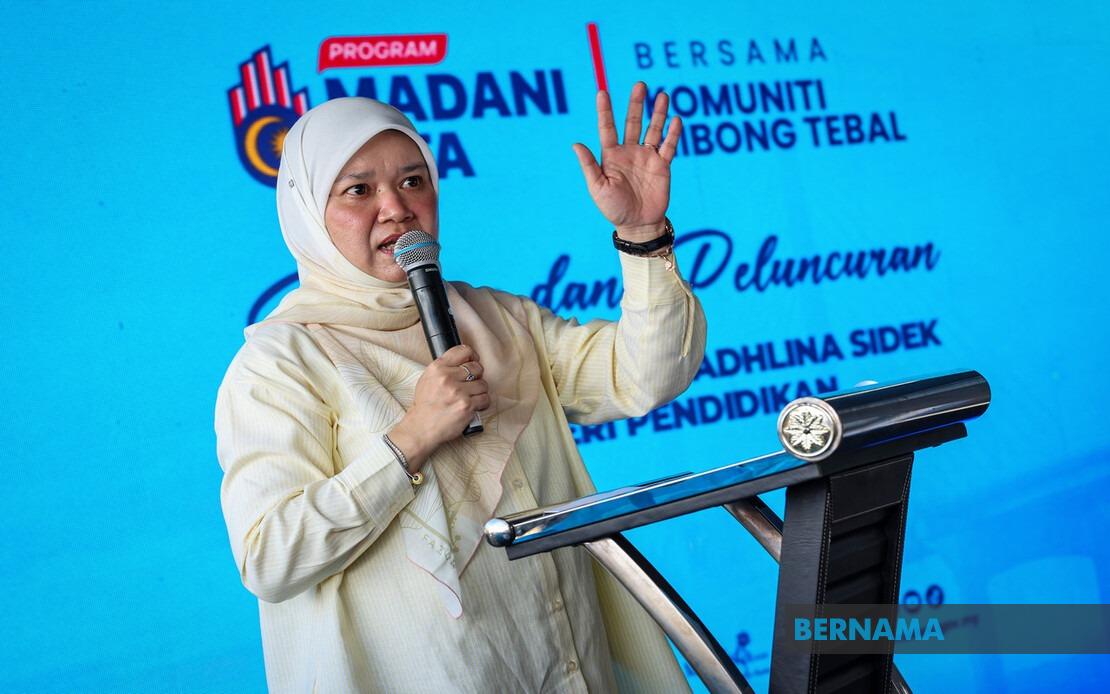
Education Minister Fadhlina Sidek underscored the dual benefit of the scheme during her visit to Nibong Tebal, where she officiated the MADANI Kita programme. Beyond easing parental finances, the initiative simultaneously nurtures entrepreneurship among local tailors and small business owners operating under NADI's structured framework. This model transforms what could be a purely transactional service into a community development tool, creating sustainable income streams for skilled professionals who might otherwise struggle to establish viable operations in competitive markets.
The backbone of the NADI Mahir Jahit programme lies in its training component. One hundred and twenty alumni have completed comprehensive skills development through NADI's Pintar Services before launching their own uniform production enterprises. These individuals represent a success cohort within Malaysia's broader informal economy, having transitioned from trainees into independent operators. Their transition demonstrates how targeted vocational training, when coupled with market access and business guidance, can generate meaningful livelihoods while addressing genuine community needs.
Fadhlina's comments reflect her perspective as both a national policymaker and the Member of Parliament for Nibong Tebal, positioning her to observe direct impacts at constituency level. Her dual vantage point allowed her to connect individual entrepreneurial stories with aggregate programme statistics, illustrating how national initiatives translate into localized benefits. For Nibong Tebal specifically, the programme has achieved tangible results that resonate with constituents concerned about cost-of-living pressures affecting school-age children.
The NADI ecosystem extends considerably beyond uniform procurement. The organisation has operationalized multiple complementary initiatives addressing different community needs and demographic groups. The NADI Tuisyen Rakyat tutoring programme has enrolled over 42,000 students across Malaysia, with more than 73 participants in Nibong Tebal alone. These numbers suggest substantial reach into areas where private tutoring fees would otherwise exclude economically disadvantaged students from supplementary academic support. The programme's demonstrated success in producing 65 outstanding performers in the 2025 Sijil Pelajaran Malaysia examination validates the quality and effectiveness of its pedagogical approach.
Youth engagement represents another strategic pillar within NADI's portfolio. The NADI E-Sukan platform positions esports and competitive gaming as legitimate avenues for talent identification, character development, and confidence-building among young Malaysians. This recognition aligns with global trends acknowledging esports' capacity to develop strategic thinking, teamwork, and resilience. Nibong Tebal's achievements—including the national NADI E-Sukan MADANI Mobile Legends title and various state-level placements—suggest that the programme successfully identifies and nurtures genuine competitive talent within the demographic cohort it targets.
The incorporation of artificial intelligence exposure through initiatives such as the 1 NADI 1 Prompt Engineer programme reflects institutional recognition of Malaysia's need to build capability in emerging technology domains. With eleven participants already enrolled in Nibong Tebal, the programme begins addressing skills gaps that will increasingly define future workforce competitiveness. Early introduction to AI applications and prompt engineering equips young Malaysians with literacy in tools reshaping global labour markets, positioning them advantageously for knowledge economy participation.
NADI's multi-programme approach reflects sophisticated understanding of how socioeconomic support functions most effectively. Rather than concentrating resources on single interventions, the organisation addresses education access, skills development, entrepreneurship enablement, youth engagement, and technology exposure simultaneously. This holistic strategy recognises that comprehensive community uplift requires addressing financial barriers to education, supplementing classroom learning, creating income opportunities, developing non-academic capabilities, and preparing participants for technological futures.
The initiative also carries implications for understanding how Malaysian government agencies can leverage existing institutional structures to address cost-of-living challenges without requiring massive new budget allocation. By structuring school uniform provision as an instalment-based system rather than traditional subsidy, NADI has created a model that maintains supplier viability while genuinely reducing burden on parents. This approach contrasts with some assistance programmes that operate through direct subsidies, instead creating sustainable market mechanisms that continue functioning across economic cycles.
For policymakers monitoring the effectiveness of community development programming, NADI's track record in Nibong Tebal provides measurable outcomes across multiple dimensions: parental financial relief, entrepreneur income generation, student educational achievement, youth talent development, and technology skills introduction. These metrics collectively demonstrate whether community-focused initiatives successfully translate policy intent into tangible household-level improvements. As Malaysia continues refining its social protection architecture, examining how programmes like NADI Mahir deliver multiple benefits through integrated service delivery becomes increasingly valuable for future programme design across education, entrepreneurship, and skill development portfolios.

