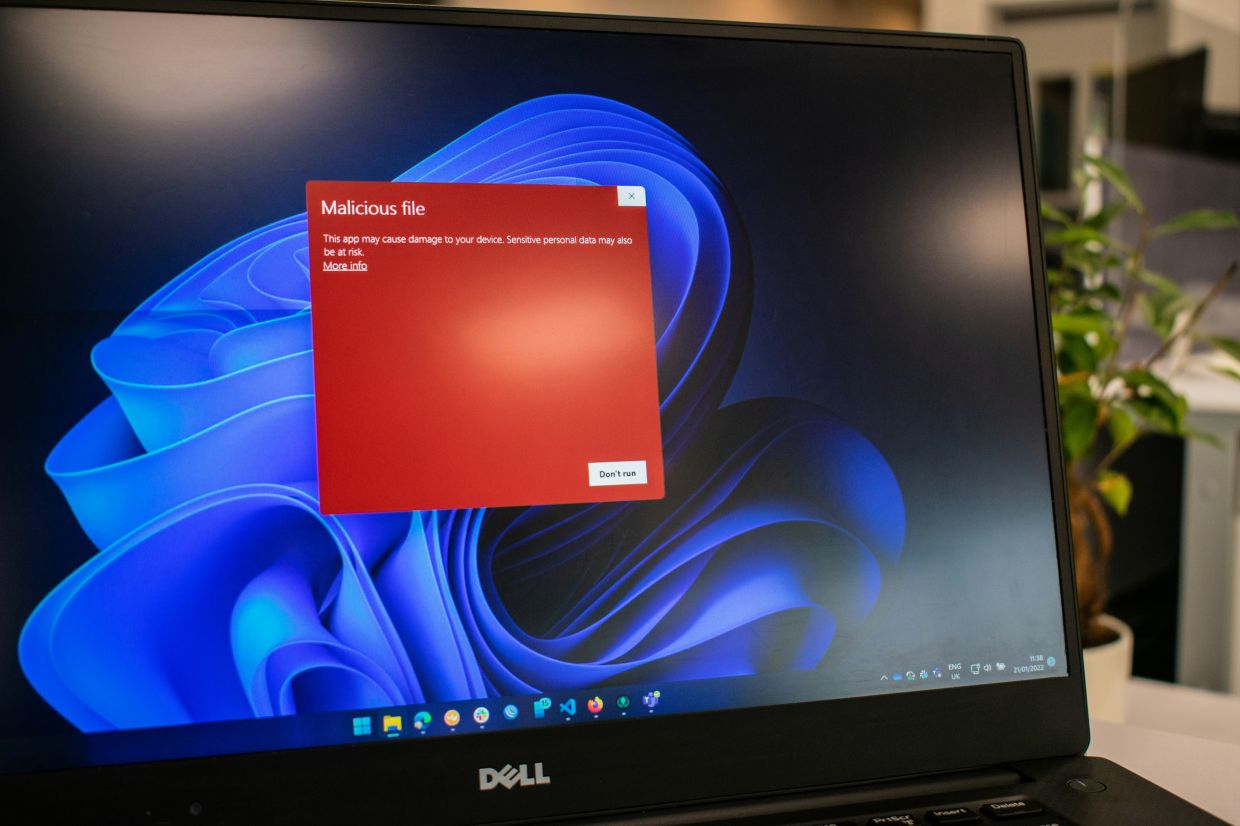
Malaysia's Computer Emergency Response Team (MyCert) has issued a critical warning about malware actively spreading through WhatsApp Web and Desktop platforms, with Windows-based computers as the primary targets. The attack employs carefully crafted social engineering tactics, where malicious actors send unsuspecting victims messages containing attachments that masquerade as routine legal, financial, or debt-related documents—exactly the kinds of files Malaysian users regularly receive in their professional and personal lives.
The deception runs deeper than simple file naming conventions. Attackers have employed filenames such as "Acknowledgment of Debt.vbs", "Sila semak bil anda.vbs", "December statement of account.vbs", and "Reconciliation.vbs" that strongly suggest the enclosed files are innocent PDF documents. In reality, these are Visual Basic Script files with executable capabilities. The psychological trickery is deliberate: the Malay-language filename in one example demonstrates how attackers specifically tailor their approach to regional audiences, increasing the likelihood that recipients will trust and open the files without hesitation.
The infection mechanism is deceptively simple yet remarkably effective. Once a user opens or executes these disguised script files, the malware immediately springs into action, triggering an automated installation process that deploys multiple malicious components onto the victim's machine. The primary payload is typically a Remote Access Trojan, or RAT, which functions as a backdoor allowing attackers complete supervisory control over the compromised device. This level of access persists even after the user restarts their computer, establishing a persistent foothold that enables ongoing exploitation.
What makes this threat particularly insidious is its ability to operate silently beneath the surface of normal system activity. The malware systematically disables critical security prompts and notifications that would normally alert users to suspicious activity. This stealth capability allows the RAT to conduct its nefarious operations—capturing keystrokes, screenshots, and clipboard data—without triggering standard antivirus detection mechanisms or generating any visible warning signs to the user. Banking credentials, personal identification numbers, and one-time passwords entered on the infected machine become immediately compromised and available to the attacker.
For Malaysian users who conduct significant banking and financial transactions online, this threat carries substantial implications. The ability to harvest both static passwords and dynamic one-time authentication codes means that standard two-factor protection becomes ineffective once a device is compromised. Attackers can monitor all information flowing through the infected computer, positioning themselves to intercept transactions before they complete or to reset account access credentials for secondary exploitation.
MyCert's guidance emphasizes immediate protective measures for users who suspect infection. The first critical step involves physically disconnecting the affected device from internet connectivity to sever the attacker's remote control channel. For those using corporate devices, simultaneous notification to organizational IT security teams ensures that network-level detection and response protocols can be activated. This dual approach prevents the infection from potentially spreading to other connected systems within institutional networks, a significant concern in Malaysian organizations with shared infrastructure.
Password management after potential exposure requires careful protocol. Users must assume that any credentials entered on a compromised device have been captured and are now accessible to attackers. Consequently, all passwords should be changed exclusively from a separate clean device—never from the potentially infected machine, which could transmit the new credentials directly to waiting attackers. This includes passwords for banking applications, email accounts, social media platforms, and any other sensitive services, as attackers typically attempt systematic access across multiple platforms using harvested credentials.
Professional remediation becomes essential because standard antivirus software frequently proves inadequate against sophisticated RATs. The malware's design specifically circumvents common detection signatures and heuristic scanning methods that consumer-grade security tools rely upon. Engaging qualified cybersecurity professionals who understand the specific behaviors and hiding mechanisms of these threats becomes the most reliable path to genuine system restoration. Attempting to remove the malware through standard antivirus scans alone risks leaving dormant components that can reactivate after the user believes the threat has been eliminated.
Reporting mechanisms exist for users to contribute to broader threat intelligence gathering. MyCert accepts detailed reports through the Cyber999 email address ([email protected]), with users encouraged to provide screenshots of malicious messages, precise timestamps, and sender phone numbers. This information helps Malaysian cybersecurity authorities track infection patterns, identify attack infrastructure, and issue more targeted warnings to vulnerable populations. Users should notably avoid replying to sender messages or confirming receipt, as such responses validate active phone numbers and often trigger additional targeted attacks.
The deployment of this malware through WhatsApp rather than email represents an evolution in attack strategy, as messaging platforms often receive lower user skepticism than traditional email vectors. WhatsApp's integration of Web and Desktop clients means that Malaysian workers juggling both mobile and computer-based workflows may inadvertently expose themselves through either platform. The cross-platform nature of the threat means that cybersecurity awareness must extend beyond traditional email security training to encompass message-based communication across all popular platforms.

