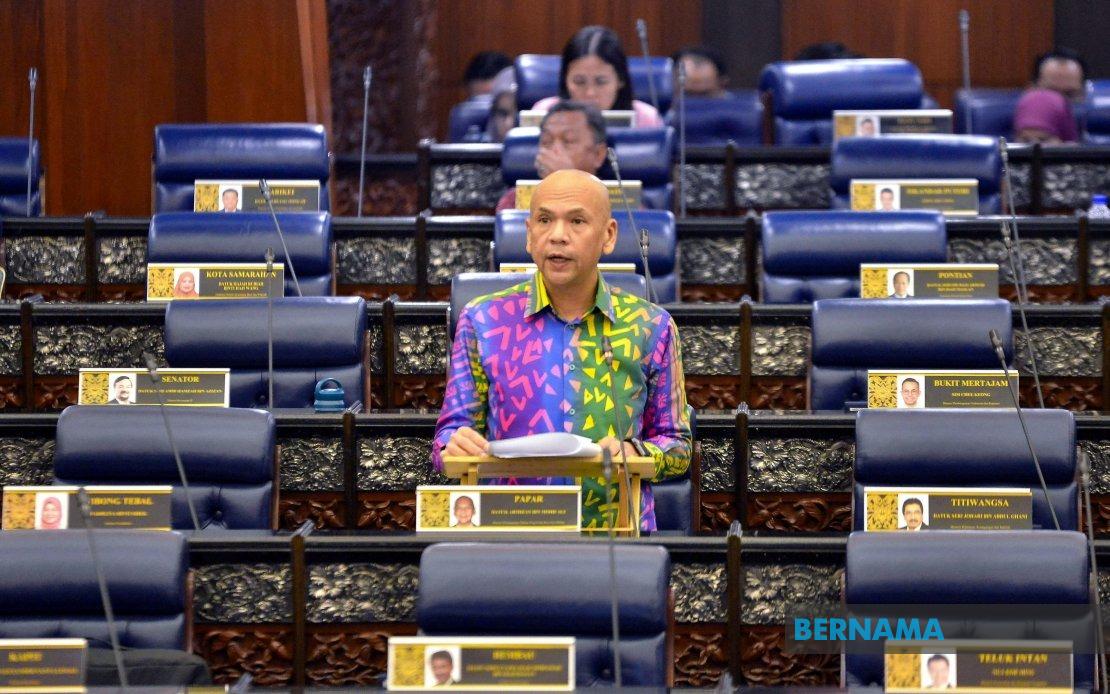
Malaysia's competition watchdog is poised to receive substantially enhanced investigative firepower following Parliamentary approval of sweeping amendments designed to dismantle cartel networks more effectively. The Competition (Amendment) Bill 2026, which cleared its policy stage debate at the Dewan Rakyat, introduces two pivotal mechanisms that reshape how the Malaysia Competition Commission tackles anti-competitive conduct. Domestic Trade and Cost of Living Minister Datuk Armizan Mohd Ali outlined these provisions as critical additions that address longstanding gaps in the nation's enforcement arsenal, particularly in addressing collusive behaviour that distorts prices and stifles market competition across industries.
The cornerstone of the reform involves establishing financial incentives for individuals prepared to expose cartel operations from within their own organisations. Under the proposed Section 64B, the MyCC will possess explicit authority to distribute cash rewards to whistleblowers whose disclosure directly enables authorities to identify and investigate cartel arrangements. This departure from Malaysia's existing framework represents a significant recognition that individuals with firsthand knowledge of illegal price-fixing, market allocation, or output restriction schemes often face substantial personal and professional risks when coming forward. By introducing tangible financial recognition, policymakers aim to overcome the psychological and practical barriers that have historically prevented employees from reporting misconduct, even when aware of practices that harm consumers and legitimate competitors.
Equally transformative is the Settlement Offer mechanism introduced under Section 38A, which fundamentally alters the incentive structure for companies found to have participated in cartel activity. Enterprises that voluntarily acknowledge their involvement and accept liability at an early investigative stage now qualify for penalty reductions reaching 40 per cent of what they would otherwise face. This approach recognises a economic reality: expedited resolution through early admission allows the MyCC to redeploy investigative resources toward other violations, while companies secure measurable financial relief without protracted legal battles. Minister Armizan characterised this mechanism as essential for resource optimisation, explaining that by circumventing lengthy investigation timelines and subsequent litigation, the Commission can accelerate enforcement across a broader spectrum of anti-competitive conduct.
Crucially, the amendments address a critical legal lacuna that previously left competition whistleblowers without formal protection frameworks. The existing Whistleblower Protection Act 2010 narrowly confines protected disclosures to criminal offences or disciplinary breaches, but competition violations constitute civil matters under Malaysian law. This definitional mismatch left individuals reporting cartel conduct without statutory safeguards against retaliation. The new Sections 64A and 64B establish dedicated protective protocols specifically calibrated for civil competition cases, ensuring that sources cannot be dismissed, demoted, or otherwise penalised for providing information to authorities. This distinction matters profoundly because competition law enforcement fundamentally depends on inside information; external investigators alone cannot readily detect the clandestine agreements and coordination that characterise modern cartels.
The legislative package also substantially expands the MyCC's jurisdictional reach through a revised definition of "enterprise." Previously anchored to explicitly commercial activities, the broadened interpretation now encompasses all economic actors engaged in any form of economic activity. This expansion directly targets industry associations—bodies that ostensibly exist to represent member interests but frequently function as coordination mechanisms for anti-competitive price and output decisions. Malaysian manufacturers, retailers, and service providers have long operated within sectoral associations whose decisions on pricing guidelines or supply restrictions effectively bind members without formal legal force. By explicitly extending oversight to such organisations, the amendments acknowledge that cartel behaviour frequently operates through association-level coordination rather than direct company-to-company agreements, enabling authorities to pursue collective misconduct that previously fell into regulatory grey areas.
The timing of these amendments reflects growing recognition across Southeast Asia that cartel enforcement requires sophisticated tools matching the complexity of modern anti-competitive conduct. Malaysia's consumer sector has periodically encountered price coordination affecting everything from construction materials to pharmaceutical costs, with investigations frequently hampered by difficulty in securing internal evidence. The reward structure and settlement mechanism operate synergistically: individuals motivated by financial recognition provide the evidentiary foundation, while the settlement option converts that evidence into expedited liability findings without requiring companies to proceed through potentially multi-year litigation. This combination creates a self-reinforcing dynamic where cartel participation becomes increasingly risky and costless.
Regional implications should not be understated. As ASEAN nations progressively strengthen competition enforcement frameworks, Malaysia's reforms position the country as a serious enforcement jurisdiction within a region where cartel activity historically faced minimal consequences. Multinational enterprises operating across ASEAN supply chains now face heightened risk in the Malaysian market, particularly for industries like pharmaceuticals, automotive components, and building materials where price coordination has proven endemic. The cash reward mechanism explicitly signals that Malaysia will cultivate domestic informant networks, a development that naturally extends to cross-border conduct affecting Malaysian consumers and businesses.
Implementation details remain to be worked out during the committee stage proceedings scheduled to commence following the policy debate conclusion. Questions linger regarding the magnitude of whistleblower rewards, the triggering thresholds for penalty reductions, and the procedural mechanisms for applications under the settlement framework. The parallel Competition Commission (Amendment) Bill 2026, scheduled for second reading the same week, presumably addresses institutional and procedural dimensions required to operationalise these substantive reforms. These companion pieces must work harmoniously to avoid creating administrative bottlenecks that undermine the intended acceleration of enforcement.
For Malaysian businesses operating in cartel-vulnerable sectors, the amendments create immediate compliance imperatives. Companies must reassess whether existing pricing arrangements, customer allocation agreements, or coordinated bidding practices violate the Competition Act, as the enhanced enforcement apparatus substantially increases detection probability. Simultaneously, corporate leaders face a new personnel management challenge: employees aware of cartel conduct now possess both legal protection and financial incentive to become informants, fundamentally altering the information security environment within organisations engaged in collusive conduct. The psychological effect may prove as significant as the formal legal changes—knowing that a colleague could receive substantial compensation for exposure creates internal monitoring pressures that no external regulator could independently generate.
The consumer protection dimension underscores why these reforms extend beyond technical competition law adjustments. Cartels impose invisible but persistent costs on Malaysian households through artificially elevated prices for essential goods and services. Construction cartels inflate housing costs, pharmaceutical price-fixing raises medication expenses, and automotive parts coordination increases vehicle maintenance charges. By creating whistleblower incentives and settlement expedients, policymakers directly target mechanisms that perpetuate consumer detriment. The reward system essentially harnesses profit motive toward consumer protection, converting the financial self-interest that originally motivated cartel participation into the foundation for cartel destruction.
The Parliamentary passage represents a notable policy achievement for the Domestic Trade and Cost of Living Ministry, reflecting sustained advocacy for competition law modernisation. However, effectiveness ultimately depends on implementation quality and institutional commitment. The MyCC must develop transparent guidelines for reward calculation, efficient settlement assessment procedures, and robust whistleblower protection protocols that match legislative intent. Early signals from implementation will determine whether these provisions catalyse genuine cartel dismantle or merely create cosmetic enforcement enhancements. Malaysian consumers, businesses seeking fair competition, and policymakers focused on economic efficiency will closely monitor whether the amendments translate political commitment into tangible marketplace transformation.

