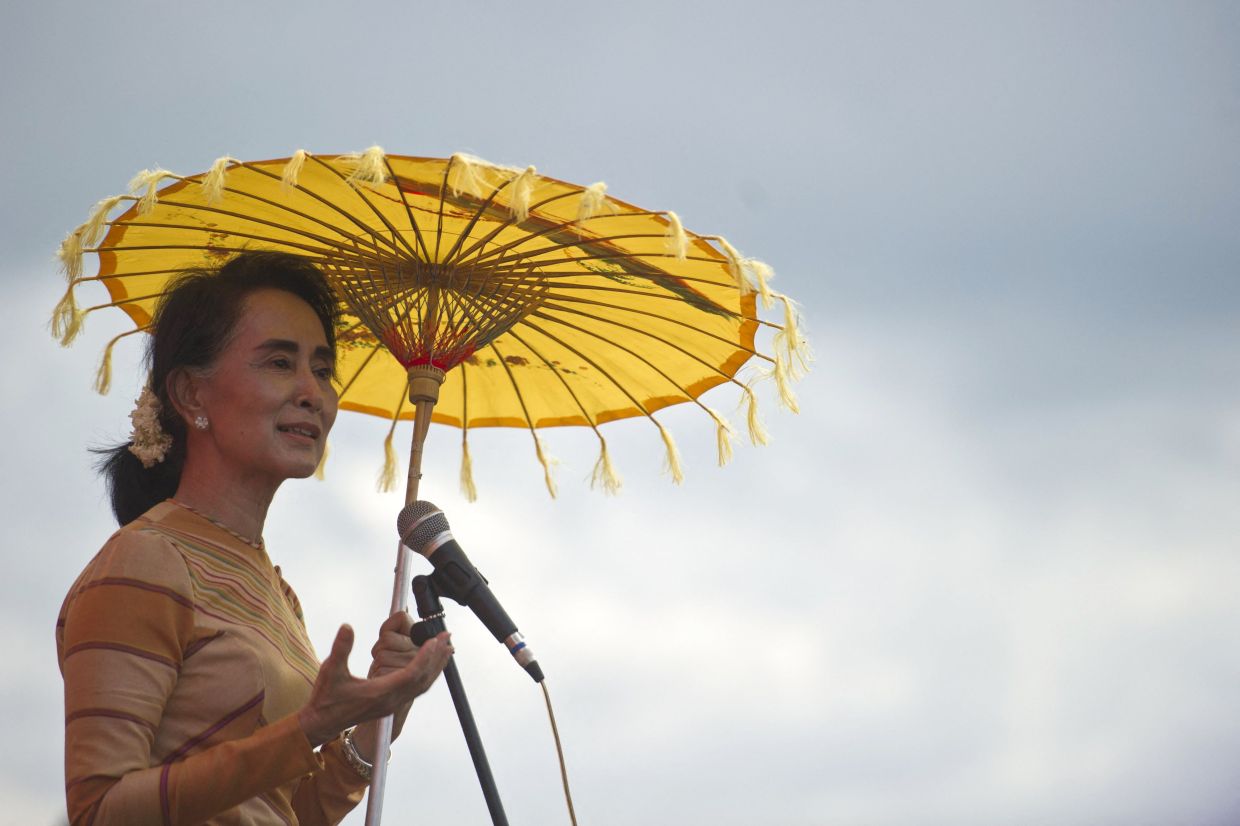
Myanmar's military regime has once more rejected an Asean request to visit deposed leader Aung San Suu Kyi, a gesture that analysts view as far more significant than a routine diplomatic snub. In late June, when Philippines Foreign Secretary Maria Theresa Lazaro sought access to the 81-year-old former prime minister during her tenure as Asean chair, Myanmar's spokesperson Khaing Khaing Soe flatly refused, citing her status as a convicted prisoner serving an 18-year sentence. The response underscores a pattern of calculated defiance by the junta leadership that carries profound implications not just for Myanmar but for Asean's credibility as a regional institution.
This marks the second such rejection directed at Lazaro, who previously failed to secure a meeting with Suu Kyi during a January visit to Naypyitaw. The repetition is deliberate rather than accidental. Myanmar's military leadership under General Min Aung Hlaing appears determined to demonstrate that it will not bend to pressure from the regional bloc, regardless of how diplomatically couched or multilaterally framed the requests may be. By turning away the Asean chair herself—a position that traditionally carries considerable symbolic weight—the junta sends a message that territorial boundaries between domestic and regional concerns remain entirely within Naypyitaw's control to define.
Research fellows and analysts tracking the Myanmar situation have identified a troubling asymmetry in the power dynamics between the junta and Asean. Hunter Marston of the Lowy Institute articulates this plainly: the Myanmar regime believes Asean needs Myanmar more than Myanmar needs Asean. This calculation reflects geopolitical reality as much as it reflects the junta's reading of institutional weakness. Myanmar occupies a strategic position bordering China, Thailand, Laos, Bangladesh, and India, making it a pivotal player in regional security architecture. The junta's confidence that it can weather Asean's displeasure stems partly from this geographic value and partly from the grouping's historical reluctance to impose serious consequences for non-compliance with collective decisions.
The regime's approach to managing international access to Suu Kyi reveals sophisticated understanding of diplomatic leverage. Only two foreign officials have been granted meetings with her in recent years: former Thai Foreign Minister Don Pramudwinai in July 2023 and Chinese Foreign Minister Wang Yi in April 2024. The selectivity is unmistakable. Thailand maintains complex historical ties and shares borders with Myanmar; China is the junta's most significant economic and military patron. Everyone else, including fellow Asean members, receives denial. This messaging tells regional neighbours that the junta prioritises relationships with those it perceives as powerful and reliable partners, while regarding Asean collective pressure as mere inconvenience.
At the heart of this dispute lies Asean's Five-Point Consensus, a peace framework adopted immediately following the February 2021 coup that was supposed to guide Myanmar's transition back toward democracy. The plan explicitly calls for dialogue with all stakeholders, humanitarian aid access, and an end to violence. It implicitly assumes Asean retains some supervisory capacity over Myanmar's internal settlement. Myanmar's military government rejects this premise entirely. Phyo Win Latt, an independent historian of Myanmar, frames the junta's refusal to grant access as a rejection of any implication that Asean possesses legitimate authority to supervise Myanmar's political situation. In the junta's reading, Asean recognition of its government is acceptable; Asean scrutiny is not.
The human cost of this standoff remains staggering. Since the coup, armed conflict across Myanmar has claimed at least 100,000 lives according to independent monitors. Suu Kyi herself, convicted on charges widely regarded as politically motivated and fabricated, has been held largely incommunicado. Reports indicate she was placed under house arrest in April 2024 and has not been seen or heard by independent international sources since that time. Her family members, including her 48-year-old son Kim Aris, have not been permitted contact for five years, a deprivation that extends family separation into territory suggesting either punishment or precaution about what outsiders might learn from direct communication with her.
The regime's stated justification for restricting Suu Kyi's visitors—that she is a convicted prisoner and therefore ineligible for international meetings—rings hollow against the backdrop of selective enforcement. If this were a genuine legal principle, it would apply consistently. Instead, the regime has weaponised prison status as pretext, allowing visitors it deems acceptable while blocking those it does not. Amara Thiha, a fellow at the Stimson Centre, characterises her continued detention as a diplomatic card that the junta retains as leverage. By controlling who may see her and what information emerges from such encounters, the military maintains what it perceives as strategic advantage in its relationship with Asean and the broader international community.
Min Aung Hlaing's consolidation of power offers additional insight into the regime's confidence. After orchestrating what international observers dismissed as a sham election in early 2024, he relinquished his formal military chief position to assume the presidency in April, creating an appearance of civilian rule while retaining absolute control. This manoeuvre suggests a junta comfortable enough with its position to manage international perception through procedural adjustments rather than substantive governance changes. The Five-Point Consensus remains largely unimplemented, violence continues, and humanitarian needs escalate, yet the regime persists in its chosen course.
The junta's perspective on Asean's double standards deserves consideration, even if it does not justify obstruction. Myanmar observers note that Asean maintains conspicuous silence regarding other territorial disputes among members, particularly the long-running Thai-Cambodian border disagreement. Min Aung Hlaing's government views the consensus framework as selectively applied, with Myanmar treated as exceptional while other members escape comparable scrutiny. This reading, whether accurately reflecting Asean's actual practice or not, provides the junta with a rhetorical shield against compliance demands. From Naypyitaw's perspective, Asean lacks consistency and therefore lacks moral authority to impose conditions.
For more than five years, Asean has maintained a ban on Min Aung Hlaing attending the organisation's leaders' summits, withholding this recognition pending implementation of the peace plan. Yet this sanction has produced minimal observable pressure toward compliance. The regime appears content to remain excluded from these forums if the alternative is accepting Asean supervision of its internal political settlement. Meanwhile, deepening ties with China provide alternative pathways for economic engagement and diplomatic validation. The junta's calculus suggests that Asean expulsion from the table costs far less than capitulation to regional demands.
The broader question facing Asean concerns institutional credibility. How does a regional organisation maintain relevance when a significant member state flagrantly disregards collective decisions and individual member states cannot secure basic diplomatic access? Suu Kyi's continued isolation from the international community represents not merely a human rights concern but a test of whether Asean possesses mechanisms to enforce its own principles. The regime's repeated rejections of Asean requests constitute direct challenges to the grouping's authority, delivered with confidence that consequences will remain limited. That confidence, validated repeatedly over nearly four years, suggests Asean faces a structural crisis of enforcement capacity that extends well beyond Myanmar's borders.
Kim Aris's observations about his mother's forced isolation carry weight beyond family tragedy. He notes that the regime's refusal to allow contact raises fundamental questions about what it seeks to hide through continued incommunicado detention. If Suu Kyi were genuinely in good health and fairly convicted as the junta claims, transparency would strengthen rather than undermine the regime's position. The resort to isolation instead implies consciousness of vulnerability, whether regarding her physical condition, the illegitimacy of her detention, or her continued symbolic power. For Myanmar's neighbours and for the region more broadly, the junta's behaviour suggests a government aware of its fragility despite its military dominance, determined to maintain control through information suppression and isolation tactics rather than through persuasion or legitimate governance.

