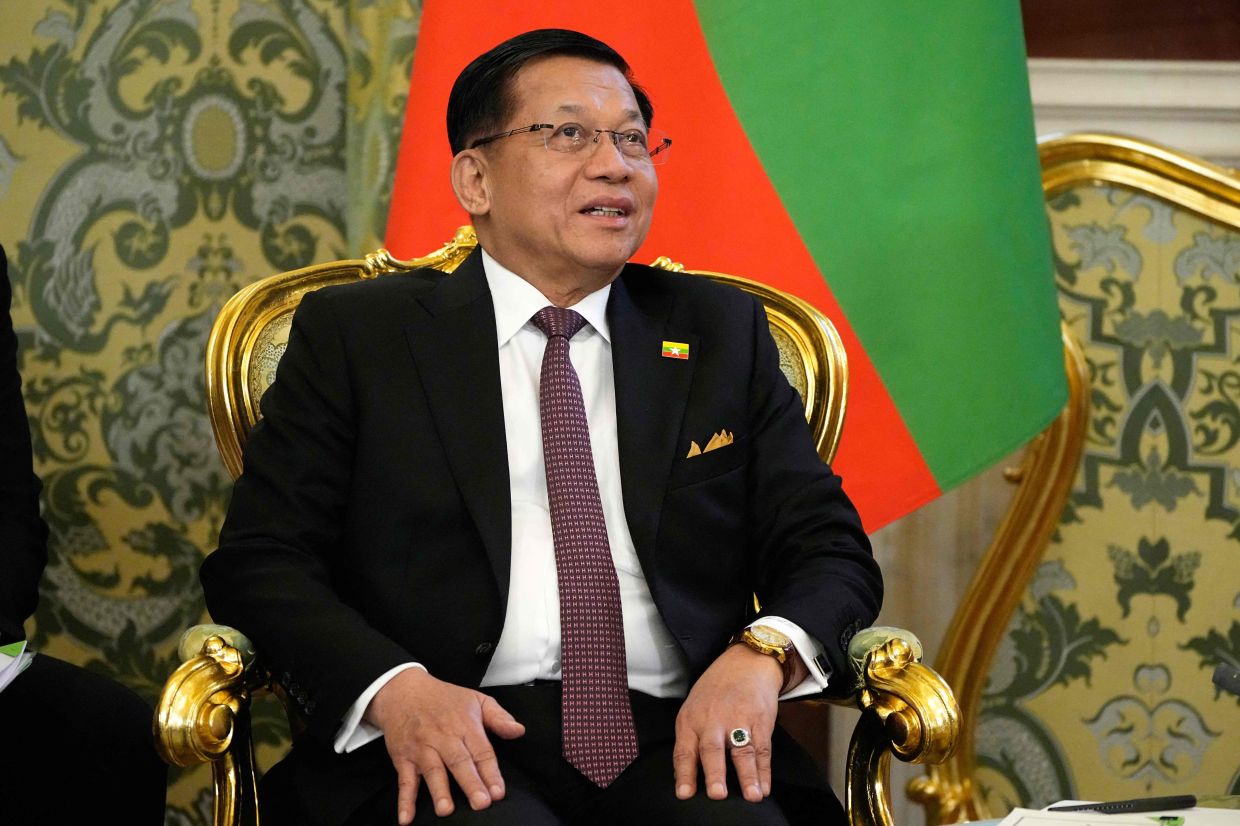
Myanmar's military leader Min Aung Hlaing is set to arrive in Cambodia in early September for an official visit designed to deepen ties between the two Southeast Asian neighbours. Cambodian officials, including palace and festival planning authorities, have begun preparing ceremonial arrangements to receive the Myanmar general. The timing follows a pattern of similar visits to neighbouring and distant capitals, a diplomatic strategy that observers suggest represents an attempt to normalise his position and international standing following Myanmar's turbulent political upheaval in recent years.
The Cambodian Senate confirmed the visit through an official statement emphasising the opportunity to strengthen bilateral relations and mutual cooperation. Chea Thyrith, spokesperson for the Senate president, characterised the engagement as a natural continuation of friendship between two members of the Association of Southeast Asian Nations. However, the framing of such interactions masks deeper geopolitical complexities and humanitarian concerns that have come to define Myanmar's international isolation under military rule.
Since his April election as president—an outcome widely dismissed by democracy advocates and international observers as lacking legitimacy—Min Aung Hlaing has embarked on an ambitious foreign tour. India, China, Laos, Thailand and Russia have all hosted official delegations from the Myanmar leader, and Cambodia's upcoming reception marks his sixth significant bilateral engagement. This flurry of diplomatic activity reflects a calculated approach to international relations, whereby state visits serve as symbolic recognition of his authority and political legitimacy on the global stage.
The broader context for these visits cannot be overlooked. In 2021, Min Aung Hlaing orchestrated a military coup that toppled the democratically elected government of Aung San Suu Kyi, who remains detained under military jurisdiction. The takeover triggered widespread civil unrest, mass arrests of activists and political prisoners, and documented allegations of systematic human rights violations. International human rights organisations have documented thousands of arbitrary detentions, while democracy advocates continue to voice alarm over the suppression of dissent and the militarisation of governance structures throughout Myanmar.
These concerns have manifested in Myanmar's exclusion from high-level Asean summits, a significant diplomatic sanction within the regional bloc. The Association has applied a five-point consensus framework aimed at encouraging Myanmar's return to democratic norms, but progress has stalled amid competing national interests and the military junta's resistance to meaningful political reform. Cambodia's approach to hosting Min Aung Hlaing, therefore, must be understood against the backdrop of these unresolved tensions within Asean's consensus-building mechanisms.
Kin Phea, president of the International Relations Institute of Cambodia, offered a nuanced assessment of the visit's significance. He acknowledged that the engagement represents a deliberate effort by Min Aung Hlaing to accumulate international recognition and bolster his domestic authority through foreign validation. Yet Phea also suggested that Cambodia's role could extend beyond merely facilitating legitimacy, noting that the Southeast Asian nation possessed unique experience in post-conflict reconciliation and nation-building drawn from its own historical trajectory. Such knowledge-sharing could theoretically inform Myanmar's recovery, though he cautioned that external diplomatic gestures alone cannot substitute for internal political transformation.
Phea's remarks highlighted a crucial distinction regarding Cambodia's formal position: while individual nations may choose to receive visiting leaders, such bilateral interactions operate independently from Asean's collective framework. The decision to restore Myanmar's participation in regional summits ultimately depends on demonstrable progress toward the five-point consensus, not on bilateral state visits or bilateral recognition by particular member states. This separation between individual nation-to-nation diplomacy and bloc-level consensus represents a significant constraint on any single country's ability to legitimise the Myanmar regime through engagement.
The Cambodia visit exemplifies the delicate balancing act that regional states must navigate in their Myanmar diplomacy. On one hand, maintaining diplomatic channels with Myanmar remains pragmatic, as complete isolation risks entrenching the military's position and reducing external influence over potential political transitions. On the other hand, high-profile state visits risk appearing to endorse or normalise a regime that continues to face credible allegations of serious human rights abuses. For Cambodia, which has itself grappled with complex questions about transitional justice and national reconciliation, hosting Min Aung Hlaing carries particular symbolic weight.
The timing of the Cambodia visit also reflects Myanmar's strategic priorities within Southeast Asia. By cultivating relationships with sympathetic or non-aligned regional partners, Min Aung Hlaing aims to counterbalance international criticism and establish a veneer of regional acceptance. The visits to Russia and China particularly underscore Myanmar's pivot toward authoritarian partners willing to engage without attaching political conditionality. Within this context, Cambodia's willingness to receive the Myanmar leader signals a degree of diplomatic flexibility that may offer the military regime valuable political cover.
For Malaysia and other regional observers, the Cambodia visit represents a broader pattern in Southeast Asian international relations. The region's commitment to non-interference in internal affairs and pragmatic diplomacy sometimes creates space for controversial figures to rehabilitate their international standing through strategic engagement. Yet this approach carries real costs: it risks undermining Asean's credibility on human rights and democracy, and it may inadvertently encourage other member states or neighbouring leaders to pursue similar strategies for consolidating authoritarian control.
Looking forward, the Myanmar question will likely remain a persistent challenge for Asean cohesion. Cambodia's choice to host Min Aung Hlaing reflects both the organisation's commitment to dialogue and its inability to enforce unified responses to serious breaches of democratic norms. Whether such engagements ultimately facilitate Myanmar's return to democratic governance or merely provide convenient legitimacy for continued military rule remains an open question that will shape regional stability for years to come.

