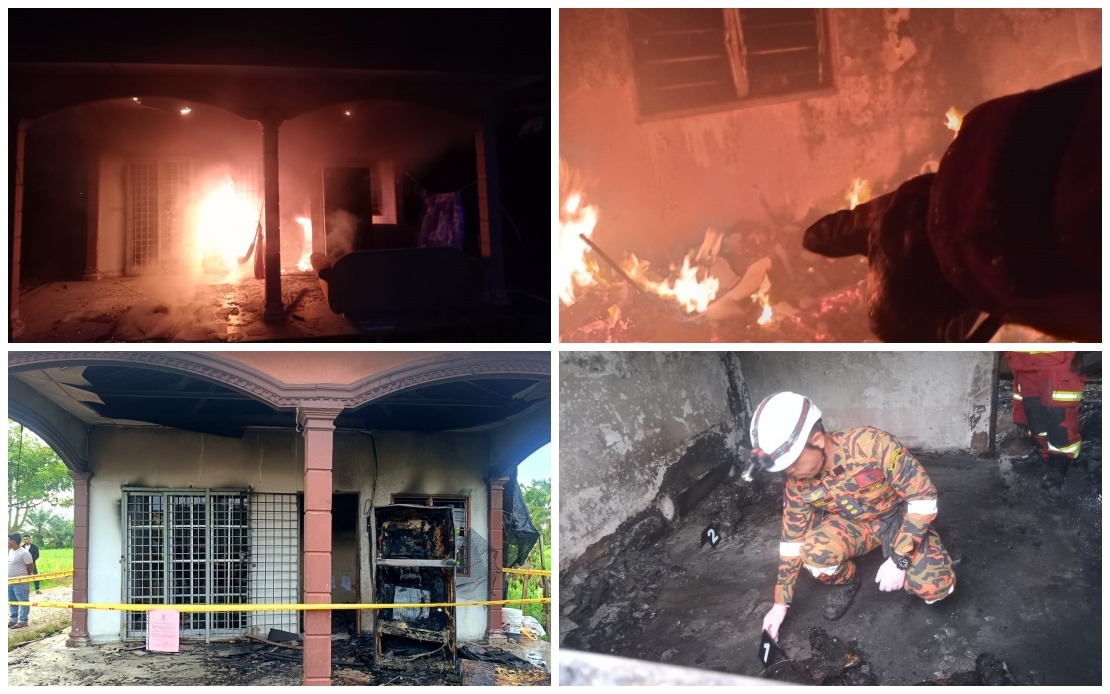
A devastating house fire in the early hours of Friday claimed the lives of a Myanmar refugee man and his two young sons in Bagan Serai, Perak, leaving the family's mother critically injured and raising fresh concerns about the safety conditions faced by displaced communities in Malaysia. The tragedy unfolded in Taman Serai Maju when firefighters arrived to find the residential structure engulfed in flames, with rescuers discovering three bodies inside the building while the children's mother was found outside, suffering severe thermal injuries.
The victims have been identified as Mohd Yunus Nor Ali, 27, and his sons Muhammad Woheed Mohd Yunus, aged six, and Mohamad Aheed Mohd Yunus, aged three. The family's mother, Saniya Jahan Juma Abul Kasim, 24, sustained burns to her hands and feet during the incident. All four individuals are Myanmar refugees residing in Malaysia. The family of seven was occupying a Class A residential structure measuring 20 feet by 40 feet at the time of the fire.
According to Perak Fire and Rescue Department director Datuk Sayani Saidon, emergency services received the distress call at 5.17 am on Friday morning through the MERS 999 line. The first fire truck arrived at the Bagan Serai location at 5.30 am to find approximately 70 per cent of the house consumed by flames. The rapid spread of the fire across the building left occupants with minimal time to escape, and the mother's account to firefighters indicated her husband and children were trapped inside.
Firefighters initiated a search and rescue operation employing the RECEO concept—a systematic approach prioritising rescue, exposing hidden fire, extinguishing flames, confining the blaze, and overhaul operations. This procedure proved critical in locating the three casualties inside the building's first room, which appeared to be the fire's point of origin. Medical personnel from the Ministry of Health confirmed all three victims were deceased upon examination, while the injured mother received immediate first aid treatment before being transported to hospital via Emergency Medical Rescue Services vehicle.
Investigators have determined that the fire originated in the first room where the victims were discovered, though the precise cause remains under active investigation by the Perak Fire and Rescue Department's forensic team. Authorities have not yet released findings regarding potential contributing factors such as faulty electrical wiring, combustible materials, or other ignition sources. The incomplete investigation means authorities cannot yet determine whether the fire's rapid spread resulted from structural vulnerabilities, inadequate fire safety measures, or other preventable circumstances.
The incident has been handed over to the Royal Malaysia Police for further enquiries and formal investigation procedures. Firefighters brought the blaze under control by 6.20 am and completed all operations by 7.35 am. The fire's intensity and speed suggest the building may have lacked proper fire suppression systems or escape routes adequate for occupants, particularly young children who would be unable to evacuate independently.
This tragedy illuminates persistent safety challenges confronting Malaysia's refugee populations, who often occupy overcrowded residential spaces with minimal regulatory oversight. Myanmar refugees constitute one of Southeast Asia's largest displaced populations, and many in Malaysia reside in substandard housing arrangements where landlords may prioritise profit over habitability standards. The seven individuals inhabiting this modest 800-square-foot structure suggests inadequate living space per occupant, which could have impeded evacuation and rescue efforts.
For Malaysian readers, this incident underscores the human consequences of housing insecurity among vulnerable foreign populations residing within the nation's borders. While Malaysia hosts approximately 177,000 registered refugees according to UNHCR figures, many thousands more remain undocumented, forcing them into informal rental arrangements lacking proper safety certification. The Bagan Serai fire represents one of several tragedies affecting refugee communities in recent years, suggesting systemic gaps in housing standards and fire safety enforcement.
The loss of young children in this fire raises broader questions about Malaysia's responsibilities toward displaced families within its territory. While the nation is not a signatory to the 1951 Refugee Convention, it has committed to humanitarian principles in hosting refugee populations. Current housing policies and rental regulations do not adequately protect foreign nationals from fire hazards and other structural dangers, leaving families vulnerable to preventable disasters.
Local authorities and the Perak state government may face pressure to strengthen fire safety inspections in areas with high concentrations of refugee populations. Such measures could include mandatory fire extinguishers, proper electrical certification, clearly marked escape routes, and regular safety audits. However, implementation remains challenging given the informal nature of much refugee housing and limited resources dedicated to enforcement.
The mother's survival with burns injuries suggests she may have been able to escape the rapidly advancing fire, though unable to reach her trapped family members. Her recovery and eventual statements to authorities may provide crucial information about the fire's speed and the circumstances preventing a successful family evacuation. Investigators will likely examine whether any warning systems, such as smoke detectors or fire alarms, were present or functional in the residence.
This tragedy will likely prompt renewed discussions within humanitarian organisations and government agencies regarding refugee welfare and housing standards. Malaysian civil society groups working with displaced communities have previously called for stronger enforcement of rental housing codes in areas housing significant refugee populations, though such initiatives have received limited political attention or budgetary support.
The Bagan Serai fire serves as a stark reminder that behind statistics about Malaysia's refugee populations are real families facing genuine dangers in their daily lives. The death of a young father and his two small children represents not merely a fire safety failure but a broader indictment of inadequate protections for some of the world's most vulnerable populations living within Malaysia's borders.

