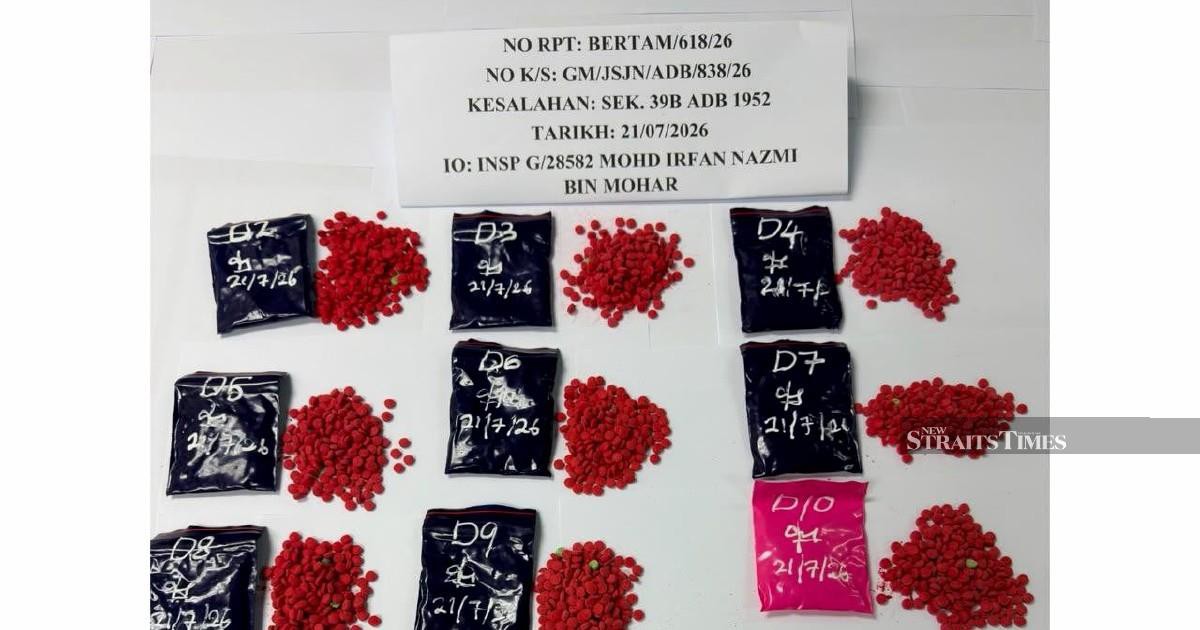
Law enforcement authorities in Kelantan have apprehended two nationals from Myanmar following a pursuit that culminated in the seizure of a substantial quantity of methamphetamine-based yaba pills in the Gua Musang district yesterday. The arrest marks another significant interception in the ongoing battle against synthetic drug trafficking along Malaysia's borders, particularly in the northern corridor where porous crossings have long facilitated illicit substance flows into the country.
The operation unfolded when police officers identified a vehicle of interest during routine patrols. Upon recognising the enforcement presence, the occupants attempted to evade authorities, triggering a brief but decisive chase through local roads. The apprehended individuals, both from Myanmar, were unable to elude the responding officers, who executed a controlled interception and secured custody of the suspects at the scene.
Investigating units subsequently discovered and confiscated 6,000 yaba tablets concealed within the vehicle during a thorough search. The pharmaceutical-grade tablets, identifiable by their distinctive red colouring and stamped markings, are widely produced in clandestine laboratories operating from border regions of Myanmar and northern Thailand. These pills command significant value in Southeast Asian illicit markets, with street valuations typically ranging from RM8 to RM12 per unit depending on purity and local demand dynamics.
At current market rates, the seized consignment carries an estimated street value of approximately RM60,000, representing a substantial financial blow to trafficking operations. This valuation underscores the economic scale of yaba distribution networks operating within the region, where profit margins continue to attract organised criminal syndicates despite escalating enforcement pressure. The pills are engineered to deliver rapid stimulant effects, creating high addiction potential and significant public health consequences across affected communities.
The Gua Musang corridor remains strategically significant within transnational drug smuggling routes. Located in the interior of Kelantan, this district sits within proximity to established trafficking pathways that extend from Thailand and Myanmar through Malaysia's interior regions toward population centres in the Klang Valley and northern Selangor. Law enforcement agencies have historically documented elevated trafficking volumes through this geography, necessitating continuous intelligence-led operations and checkpoint deployments.
Yaba trafficking constitutes a persistent challenge for Malaysian law enforcement, with seizures demonstrating consistent monthly interception volumes. The drug's relatively low cost compared to other synthetics, combined with its potent psychoactive properties, has established substantial consumer demand particularly among younger demographics and in urban recreational settings. Treatment facilities across the country report escalating admissions of yaba-dependent individuals, reflecting deepening social penetration of the substance.
Investigators have commenced detailed interrogation protocols to establish the intended destination of the seized consignment and to identify any intermediaries or distributors operating within Malaysian territory. Such intelligence gathering often reveals operational structures spanning production, transportation, distribution, and street-level retail networks. The cooperation of Myanmar-national suspects, where secured, frequently illuminates cross-border logistical coordination mechanisms and payment methodologies utilised by transnational trafficking syndicates.
The arrests correspond with documented enforcement strategies prioritising border areas and transit corridors. Malaysian police have intensified operations along the Thai-Malaysia border and interior trafficking routes following intelligence assessments highlighting increased smuggling activities. These initiatives, coordinated through the Royal Malaysian Police's Narcotics Crime Investigation Department, balance deterrence objectives with resource-efficient deployment patterns.
Regional cooperation frameworks have expanded investigative capacity, enabling information-sharing protocols with Thai and Myanmar authorities regarding known trafficking routes and suspect networks. Diplomatic engagement has secured improved cross-border coordination, though operational constraints persist due to jurisdictional limitations and varying enforcement capabilities across the region. The interception yesterday exemplifies tangible outcomes from these cooperative mechanisms.
For Kelantan authorities, the operation reinforces sustained commitment to narcotic interdiction despite the persistent supply pressures characterising border states. Provincial police commands have elevated yaba suppression as an institutional priority, recognising the substance's disproportionate impact on rural and semi-urban communities across Peninsular Malaysia. Yesterday's operation adds to cumulative enforcement statistics reflecting thousands of monthly yaba tablets removed from circulation throughout the nation.
The detained Myanmar nationals face charges under Malaysia's Dangerous Drugs Act, with maximum penalties including extended imprisonment and substantial financial penalties depending on categorisation of trafficking culpability. Magistrate courts will determine custody status during preliminary proceedings, typically involving assessment of flight risk and community safety considerations. Formal charging procedures typically advance within established procedural timeframes following investigation completion.
This seizure underscores enduring vulnerabilities within Malaysian border security and the sophisticated operational capacity of transnational trafficking organisations. Sustained investment in enforcement infrastructure, intelligence capabilities, and international cooperation will remain necessary to meaningfully diminish yaba circulation and protect vulnerable population segments from pharmaceutical-grade narcotics.

