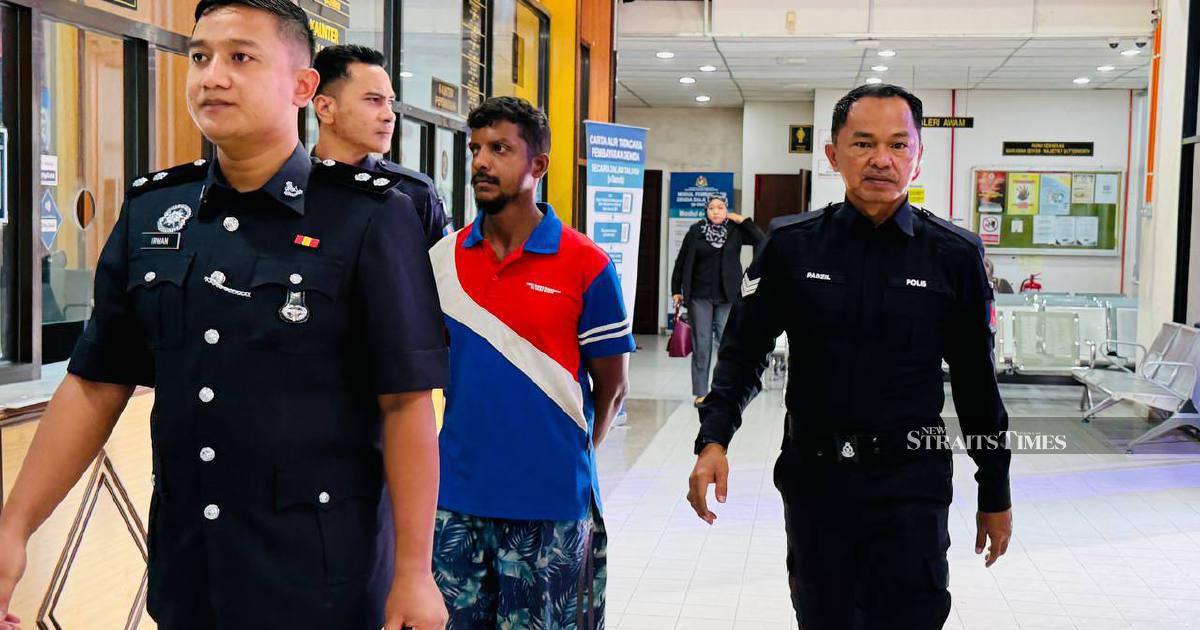
A Myanmar national made his first court appearance in Butterworth today on charges of inflicting grievous hurt during an alleged assault on a fellow citizen earlier this week. The accused entered a not guilty plea to the serious charge, which carries potential imprisonment and fines under Malaysian law for causing severe bodily injury.
The court proceedings took place in the Sessions Court at Butterworth, with the presiding judge refusing to grant bail at this initial hearing. This refusal represents a significant setback for the defendant's family and legal representatives, as it means he will remain in custody whilst his case progresses through the Malaysian justice system. The judge's decision to withhold bail hinged specifically on outstanding identification verification matters, indicating that authorities have not yet satisfactorily confirmed the accused's personal details and background.
The alleged incident occurred within the past seven days, involving what prosecutors described as a violent altercation between two Myanmar nationals. The specifics of the confrontation—including the precise location, the weapons or means used to inflict injury, and the current condition of the alleged victim—were not disclosed during today's brief court session. Such restraint in releasing details is customary in Malaysian courts, particularly in the early stages of prosecution when investigations remain ongoing.
The refusal to grant bail pending identification documentation raises broader questions about how Myanmar nationals are processed through Malaysia's criminal justice system. Identity verification can be especially complicated for foreign nationals, particularly those from Myanmar, where displaced populations and refugees often lack conventional government-issued documents. The accused may hold alternative forms of identification or documentation from his home country that Malaysian authorities must validate before proceeding with bail consideration.
This incident reflects persistent challenges within Malaysia's migrant worker communities and cross-border populations, particularly along the northern corridor connecting Penang and Perlis to Myanmar. Violent incidents among nationals of the same country occasionally arise from disputes over employment, accommodation, money lending, or personal matters. When such conflicts escalate to causing grievous hurt, which legally requires evidence of serious bodily injury such as fractures, severe lacerations, or damage to organs, the consequences become substantial for both perpetrator and victim.
Malaysia's grievous hurt provisions under the Penal Code are distinct from simple hurt charges and carry much harsher penalties. Conviction can result in imprisonment ranging from one to five years, coupled with fines of up to five hundred ringgit. The seriousness with which courts treat such charges underscores the gravity of the alleged injuries inflicted, and the court's decision to remand the accused in custody suggests prosecutors presented compelling evidence during the initial hearing.
The withholding of bail pending identification verification also indicates potential administrative complexities surrounding the accused's immigration status in Malaysia. Authorities may be uncertain whether the defendant entered the country legally, possesses valid work permits, or holds current travel documents. These details significantly impact both the court's assessment of flight risk and the appropriate handling of the case. If the accused's status proves irregular, additional charges related to immigration violations could be filed, complicating his legal situation further.
The Malaysian criminal justice system's handling of foreign nationals from Myanmar has become increasingly important given the substantial Myanmar population resident in Malaysia, both documented and undocumented workers. Courts must balance respect for international due process standards with the practical necessity of confirming that defendants are who they claim to be and are subject to Malaysian jurisdiction. The requirement for satisfactory identification represents a procedural safeguard that protects the integrity of criminal proceedings.
For Malaysian legal observers and the Myanmar community here, this case exemplifies the complex interplay between immigration control, criminal justice, and transnational dispute resolution. The accused now faces an uncertain timeline for bail reconsideration, dependent entirely on how quickly identification documents can be located, transmitted, and verified. During this period, he remains confined whilst investigations continue and prosecutors build their case. His next court appearance will likely involve progress updates on document verification and potentially a renewed bail application with proper credentials established.
The lack of bail carries substantial personal consequences beyond mere detention. Without freedom of movement, the accused cannot work to fund legal representation, cannot gather evidence to support his defence, and cannot maintain employment or family support obligations in Malaysia. This creates pressure for swift resolution, though the pace of Malaysian court proceedings often frustrates defendants seeking expedited trials. The intersection of identity verification requirements with bail determination thus serves as a critical juncture where numerous procedural and substantive justice issues converge.