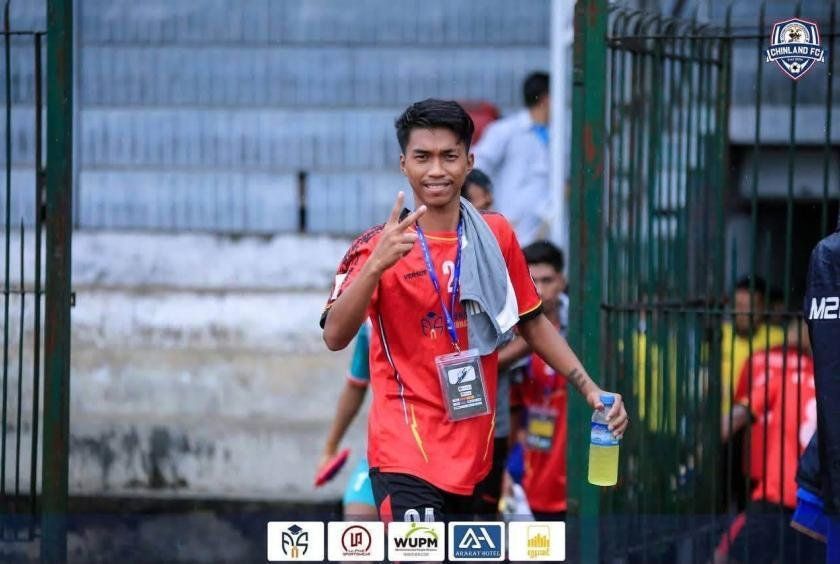
Chinland Football Club in Myanmar confirmed on the evening of August 29 that Pa Lung, a player who had vanished from contact for seven days, had been found and was back with his family. The club disclosed the outcome through a Facebook announcement, bringing an end to a search effort that had involved multiple layers of Myanmar's sports and law enforcement infrastructure during an anxious period for the athletic community.
The circumstances surrounding Pa Lung's disappearance revealed a common challenge in crisis situations where competing urgent priorities override standard communication protocols. The footballer had departed abruptly to his hometown after learning of his mother's deteriorating medical condition, a development serious enough to warrant his immediate departure. However, the rushed nature of his exit meant he could not alert Chinland FC officials or teammates before leaving, setting in motion a chain of events that would escalate concern among club leadership and the wider football fraternity.
Communication barriers compounded the initial absence into a full missing-person situation. During his journey back to his hometown, Pa Lung's mobile phone battery depleted, cutting off his ability to contact the club or keep them informed of his status. Beyond the simple technical failure, he encountered additional obstacles in maintaining connectivity, which collectively created a communication blackout that left Chinland FC without any reassurance about his whereabouts or wellbeing. This combination of factors—urgent family circumstances, dead battery, and patchy telecommunications—transformed what might have been a simple leave of absence into an alarming disappearance.
The club's response reflected both diligence and growing concern as the days passed without word. Within the initial window following Pa Lung's disappearance, Chinland FC filed an official missing-person report with the appropriate police authorities, triggering a formal investigation channel. Club officials did not rely solely on official procedures, however, and instead mobilised their own search efforts, deploying staff and resources for five consecutive days to track down their missing player. The intensity of this parallel search operation underscored the genuine anxiety felt by the organisation as the absence extended beyond a few hours into days.
When internal efforts and initial police inquiries failed to produce results or contact, Chinland FC escalated the matter through a public appeal for assistance. This decision represented a pivot toward crowdsourced information gathering, an increasingly common tactic when conventional channels exhaust their immediate potential. The club released an official public statement requesting community assistance in locating Pa Lung, casting a wider net across Myanmar's football-following public and media landscape. Such appeals carry particular weight in a country where social media connectivity and community networks can mobilise quickly around high-profile cases.
The resolution brought relief not only to the club but to the broader ecosystem of Myanmar football governance. The Myanmar Football Federation and the Myanmar National League, both governing bodies with institutional stakes in player welfare, had been engaged in coordinating aspects of the search effort. Police authorities had conducted investigations on the missing-person report filed by the club. Media organisations had amplified the appeal for information. This multi-institutional response reflected the seriousness with which Myanmar's football community takes player safety and the welfare concerns that accompany unexplained disappearances from professional teams.
Chinland FC's concluding statement offered appreciation to the constellation of organisations and individuals who contributed to the successful outcome. Beyond the official football bodies, the club acknowledged support from media outlets, the Myanmar Police Force, and various other responsible organisations whose personnel had participated in search and inquiry operations. This comprehensive acknowledgment highlighted how resolving such situations in practice requires coordination across sectors—government enforcement, sports governance, media platforms, and community networks—each playing complementary roles in the investigative process.
The case illuminates the vulnerabilities faced by athletes in Southeast Asian football leagues, where family emergencies can arise suddenly and where the cultural imperative to respond to parental health crises may override institutional protocols. For Malaysian readers familiar with similar sporting structures in the region, the episode serves as a reminder of how quickly communication gaps can create institutional anxiety, even when the underlying situation involves legitimate personal circumstances rather than actual harm. The resolution also demonstrates that despite occasional tensions between professional sporting obligations and family responsibilities, Southeast Asian football clubs increasingly recognise the legitimacy of pressing family matters and manage them with understanding.
Moving forward, the incident may prompt Chinland FC and other Myanmar National League clubs to review their emergency communication procedures, ensuring that players can notify leadership of urgent departures through alternative channels when primary methods fail. The experience gained through this search operation has already demonstrated the value of rapid institutional coordination and public engagement in resolving welfare concerns. For the broader Myanmar football ecosystem, the successful location of Pa Lung represents a reminder that even in challenging circumstances—communication failures, urgent family situations, and institutional resource constraints—coordinated response from multiple stakeholders can achieve positive outcomes and restore peace of mind to sporting communities.

