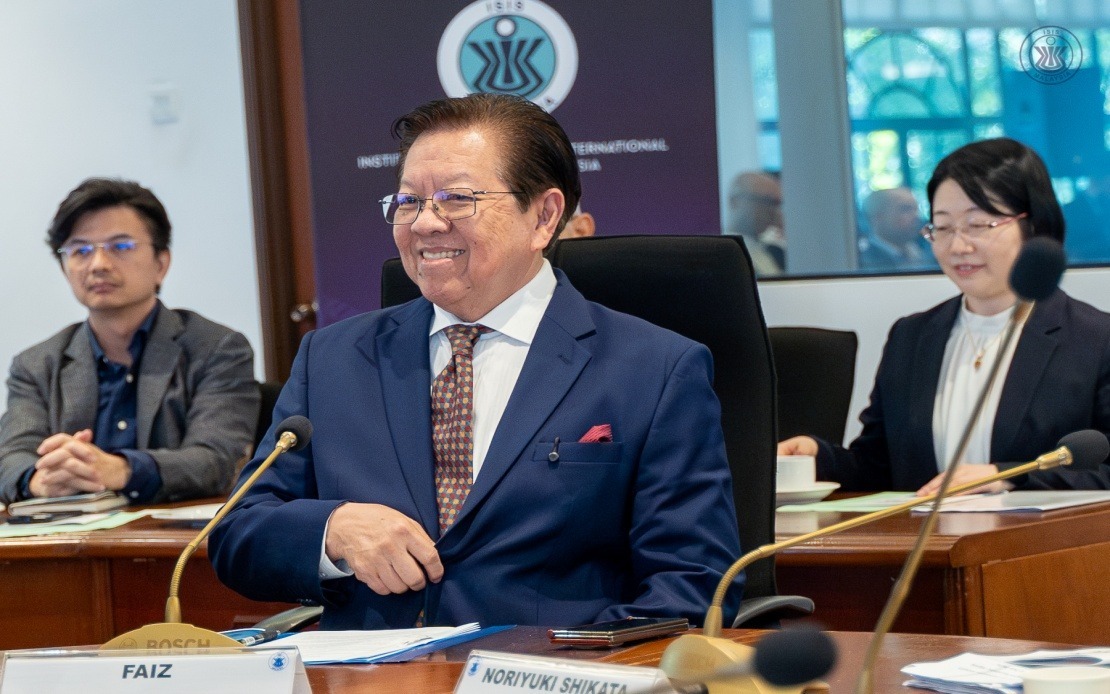
The 39th Asia-Pacific Roundtable commencing on June 30 will devote substantial analytical resources to the Myanmar crisis through a dedicated caucus, according to the Institute of Strategic and International Studies (ISIS) Malaysia. The decision reflects growing recognition that official ASEAN forums have sidestepped frank engagement with the country's deteriorating humanitarian and security situation, with diplomatic language often masking deeper regional anxieties.
Datuk Prof Dr Mohd Faiz Abdullah, executive chairman of ISIS Malaysia, highlighted this gap when he noted that the recent ASEAN Summit in Cebu, Philippines, kept discussion of Myanmar relatively constrained, limited largely to carefully calibrated diplomatic statements reflecting individual government positions rather than candid policy examination. This procedural constraint, common in formal multilateral settings where consensus-seeking predominates, has left space for unofficial forums to address what governments acknowledge privately but hesitate to explore publicly.
The APR's approach differs fundamentally from ASEAN's diplomatic protocols. By convening practitioners, policy researchers, and Myanmar specialists in an informal setting, the roundtable creates an environment where participants can engage substantive policy questions without the constraints of representing official positions. This Track 2 mechanism has proven invaluable across Asia-Pacific security debates, allowing genuine intellectual exchange that frequently informs government decision-making indirectly. The intensity of discussion anticipated at this year's caucus underscores how urgently regional analysts view the Myanmar situation.
Beyond Myanmar, the three-day conference running through July 2 will tackle several interconnected regional challenges. The South China Sea remains a focal point given ongoing maritime tensions and competing territorial claims involving multiple ASEAN members. Developments in West Asia carry implications for trade routes passing through Southeast Asian waters and for regional stability more broadly. Trade protectionism and tariff escalation directly affect ASEAN economies dependent on open markets. Energy security concerns have intensified following supply disruptions globally, with implications for the region's industrial development and affordability for ordinary citizens.
Artificial intelligence emerges as an increasingly pressing theme across APR agendas, reflecting recognition that AI advancement will reshape everything from economic competitiveness to security architectures and social stability. Malaysian policymakers have particular interest in how the region can harness AI benefits while managing risks including job displacement, data sovereignty concerns, and potential weaponization. The conference's inclusion of this forward-looking issue signals that the Asia-Pacific community understands strategic challenges extend beyond traditional security concerns.
The APR's continued expansion demonstrates its entrenchment as a premier regional dialogue platform. This year's edition attracts approximately 400 participants representing 30 countries, a remarkable growth trajectory from the modest gatherings of 39 years earlier when only 30 to 40 participants attended the inaugural roundtable. This scaling reflects deepening recognition among government officials, corporate leaders, and academics that Asia-Pacific security and prosperity issues demand sustained, sophisticated conversation among diverse stakeholders.
The conference's evolution also mirrors the region's increasing complexity. Early APRs addressed relatively straightforward Cold War residuals and postcolonial state-building. Contemporary agendas reflect multipolar competition, transnational threats spanning terrorism to pandemics, economic interdependencies creating mutual vulnerabilities, and technological transformation outpacing governance frameworks. The theme selected for this year's roundtable—"Accelerating agency and action"—acknowledges that understanding regional challenges has become less problematic than mobilising coordinated responses amidst divergent national interests.
Identifying "regional catalysts and leadership" in this context proves particularly challenging for the APR given the geopolitical fractures now visible across Asia-Pacific. ASEAN unity increasingly shows strain as member states calibrate responses to great power competition differently. China's rising influence, American strategic rebalancing, and India's growing activism create crosscutting pressures. For Malaysia, these dynamics require careful navigation given its interests in maintaining balanced relationships, protecting sovereignty, and pursuing economic development without becoming entangled in external conflicts.
The roundtable operates as a signature initiative of ISIS Malaysia on behalf of ASEAN-ISIS, the network of leading Southeast Asian policy institutes and think tanks. This institutional arrangement allows the APR to claim ASEAN-wide legitimacy while maintaining intellectual independence from government control. The network approach has proven effective for channelling specialist expertise from across the region, ensuring that discussions draw on the region's deepest analytical talent. Regular APR gatherings attract more than 300 leading thinkers who engage in what organisers characterise as frank, lively, and constructive dialogue.
For Malaysian participants and observers, the APR offers several advantages beyond intellectual stimulation. The conference provides opportunities to understand how regional peers assess shared challenges, potentially informing Malaysian foreign policy and business strategy. Discussions at APR gatherings frequently circulate among government advisory circles, creating informal channels through which policy analysis can influence decision-making. The Myanmar caucus specifically offers Malaysian observers insights into how neighbouring countries assess the crisis and what policy options they consider viable.
The roundtable's positioning among the world's top 20 strategic-security-focused conferences enhances its influence in shaping Asia-Pacific discourse. This ranking reflects not merely participant numbers but the quality of analysis and the subsequent circulation of insights through both official and academic networks. When ISIS Malaysia convenes the APR, it creates moments when the region's strategic community assembles to think systematically about futures that governments cannot yet articulate publicly. The Myanmar caucus represents exactly this function—providing space for serious analysis of a problem that demands urgent attention despite diplomatic awkwardness surrounding it.

