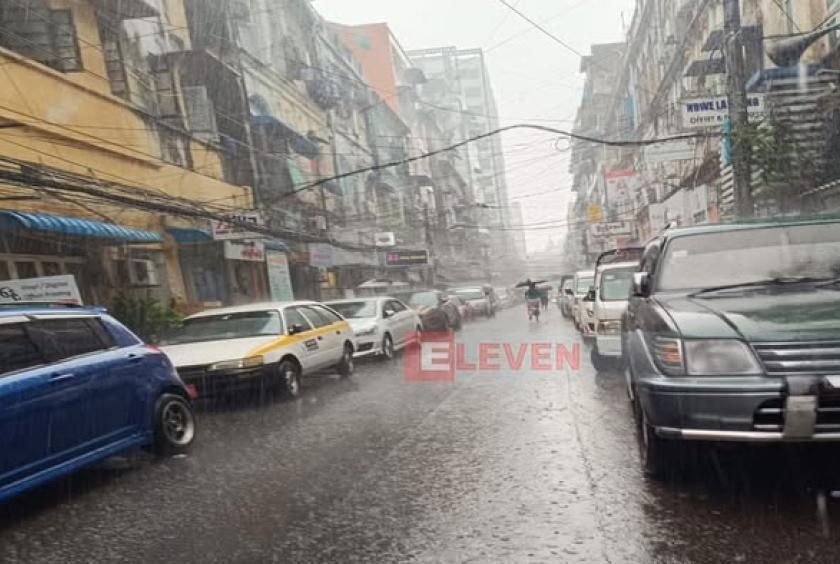
Myanmar's Department of Meteorology and Hydrology has issued a formal alert that El Niño conditions originating in the Pacific Ocean are poised to strengthen considerably beginning in August 2026, signalling a period of heightened climate volatility for the region. The weather agency noted that current sea surface temperatures and atmospheric dynamics across the tropical Pacific near the equatorial zone remain at moderate El Niño intensity, but international forecast models consistently project a transition to substantially stronger conditions within months.
The trajectory outlined by meteorological agencies points toward a two-stage escalation. First, forecasters expect the phenomenon to intensify into a strong phase during August itself, then potentially progress to very strong El Niño conditions by the final months of 2026. This progression matters significantly because the strength of El Niño directly correlates with the magnitude of climate disruptions experienced globally, including across Southeast Asia where Myanmar sits as a crucial regional economy.
While El Niño originates specifically within the Pacific Ocean basin where equatorial waters warm abnormally, its atmospheric and oceanic teleconnections transmit impacts across continental and hemispheric distances. Myanmar and its Southeast Asian neighbours experience these distant Pacific conditions through altered jet stream patterns, shifted monsoon behaviour, and reorganised atmospheric circulation systems. The interconnectedness of Earth's climate means that temperature anomalies thousands of kilometres away directly reshape precipitation regimes and storm patterns locally.
Historically, strong El Niño phases generate a recognisable suite of weather disruptions. Rainfall becomes erratic and often deficient across large agricultural zones, creating drought stress on rain-dependent farming systems. Simultaneously, irregular storm formation can produce unexpected flooding in other locations. Higher daytime temperatures during summer months intensify heat stress on crops, livestock, and human populations. Extended dry spells deplete groundwater and surface water reserves. These compounding effects create substantial challenges for water security, food production, and public health.
For Myanmar specifically, such conditions carry particular weight given the nation's agricultural character and dependence on seasonal monsoons. The country's farming sector, which employs millions and anchors rural livelihoods, faces heightened vulnerability during strong El Niño episodes when precipitation patterns deviate from historical norms. Irrigation systems, reservoir management, and crop planning all depend on reasonably predictable rainfall timing and volume. An intensifying El Niño threatens this predictability precisely when water demands peak during dry seasons.
The Southeast Asian region more broadly has historical experience with powerful El Niño impacts. Previous very strong episodes produced widespread drought across Thailand, Laos, Cambodia, and neighbouring areas, stressing hydroelectric generation, agricultural output, and freshwater availability. Regional interconnectedness through shared river basins, trade networks, and cross-border water infrastructure means Myanmar's climate stress reverberates through its neighbours' economies. Thai and Laotian hydropower stations, which depend on Mekong flows influenced by Myanmar's rainfall, could face reduced generation capacity during prolonged dry periods.
The Department of Meteorology and Hydrology's alert represents a proactive stance toward climate hazard communication, encouraging relevant sectors to undertake advance preparations. Government agencies responsible for water resources, agriculture, and disaster management can utilise this extended warning period to review contingency plans, stockpile emergency supplies, and coordinate cross-sector responses. Farmers might adjust planting schedules or crop selection toward more drought-tolerant varieties. Water authorities can assess reservoir levels and consumption strategies. Energy planners can anticipate potential constraints on hydroelectric generation.
International meteorological coordination increasingly provides Myanmar and other developing nations with science-based forecasts several months in advance, a capability that earlier generations lacked. The Global Producing Centres of Long-Range Forecasts, operated by agencies including NOAA and Japan's Meteorological Agency, distribute consensus predictions that help national weather services calibrate their own assessments. Myanmar's reliance on these international models reflects both the global nature of climate phenomena and the practical limitations facing any single nation's observational capacity.
The projected intensification to very strong El Niño by late 2026 warrants particular attention because such episodes typically persist for twelve to eighteen months, meaning impacts could extend well into 2027. Agricultural planning horizons, water allocation schemes, and disaster preparedness protocols all function on annual timescales, but very strong El Niño episodes often demand multi-year adjustment strategies. Myanmar's policymakers must consider not merely August 2026 preparedness but sustained contingency approaches extending through 2027.
Climate science increasingly demonstrates that El Niño variability interacts with longer-term warming trends driven by greenhouse gas accumulation. While El Niño represents a natural oscillation that has influenced regional climates for millennia, anthropogenic climate change may be altering the frequency and intensity of extreme El Niño episodes. Myanmar and Southeast Asia thus confront a compound challenge: navigating traditional climate variability whilst simultaneously adjusting to shifting baseline conditions from global warming.
The Department of Meteorology and Hydrology's commitment to issue timely updates reflects recognition that climate forecasts require continuous refinement as new data arrive. Monthly and seasonal outlooks will track whether projections materialise and whether El Niño intensity and timing match current expectations. This adaptive information flow allows farmers, water managers, and disaster agencies to adjust strategies responsively rather than relying on single point-in-time warnings.
For Malaysia and other ASEAN members closely watching Myanmar's climate vulnerabilities, the El Niño alert carries implications for regional food security and energy markets. Myanmar's agricultural production influences regional supply chains. Drought-induced energy constraints in hydropower-dependent nations cascade through interconnected electricity grids. Myanmar's experience with intensifying El Niño thus previews potential challenges across the broader region, warranting collective Southeast Asian attention to adaptation strategies and climate resilience planning.

