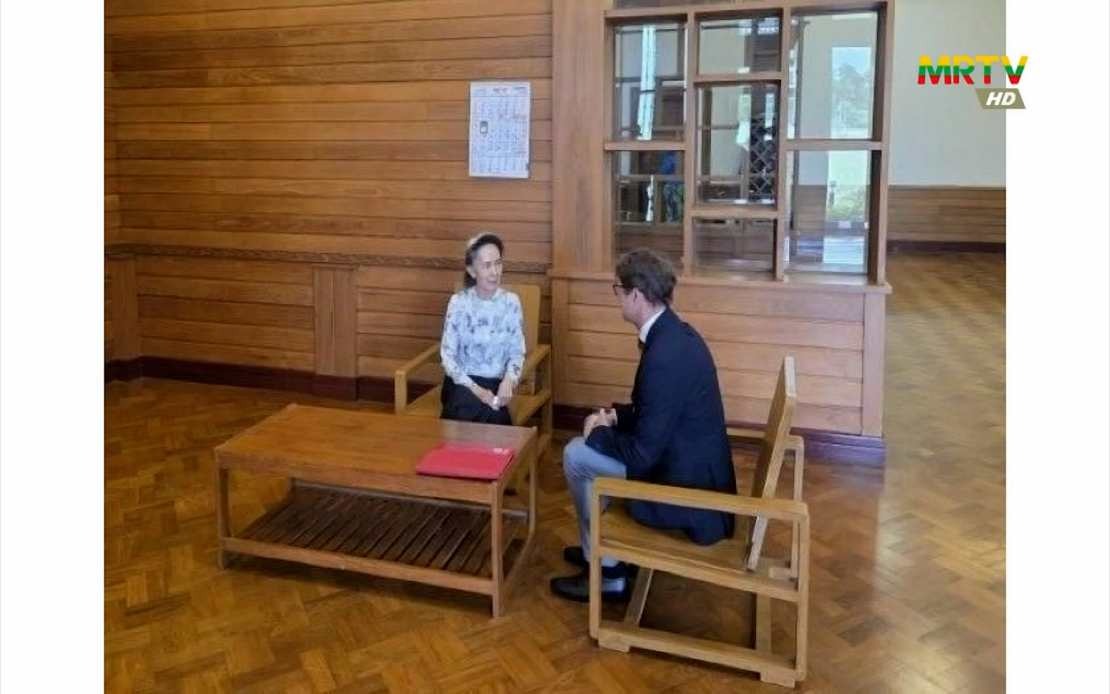
Myanmar's military-backed administration has permitted an International Committee of the Red Cross official to meet with detained former leader Aung San Suu Kyi in Naypyitaw, according to a statement from government spokeswoman Khine Khine Soe on Monday. The encounter represents the first publicly confirmed meeting between the 81-year-old Nobel Peace Prize winner and a foreign representative since her detention began in February 2021, offering a narrow window into the circumstances surrounding one of Southeast Asia's most closely watched political prisoners.
The meeting between Suu Kyi and Arnaud de Baecque, the ICRC's Resident Representative to Myanmar, occurred against a backdrop of intensifying international concern regarding her health and detention conditions. For over three years, her exact whereabouts and physical condition have remained largely opaque, with the military regime providing only vague assurances about her wellbeing while consistently preventing independent verification by foreign governments or international organisations.
Photographic evidence released by the government showed Suu Kyi, dressed in traditional Burmese attire, seated in what appeared to be a sparsely furnished room with minimal furnishings—merely two chairs and a desk. The images offered limited insight into her living conditions, though additional photographs depicted her marking what authorities indicated was her birthday, with a cake inscribed with her name visible in the frame. However, Reuters was unable to independently confirm the timing or location of these photographs, raising questions about their authenticity and currency.
The significance of this encounter extends beyond mere diplomatic courtesy. Since the military's February 2021 coup that toppled her democratically elected government, Suu Kyi has faced a relentless campaign of legal action orchestrated by the junta. She was convicted in secretive trials of charges ranging from corruption and incitement of election fraud to violations of state secrecy laws, resulting in an initial sentence of 33 years. Successive judicial decisions have reduced her sentence to 18 years remaining, though legal observers and human rights organisations argue the charges were politically engineered to neutralise Myanmar's most charismatic opposition figure.
The detention of Suu Kyi represents a dramatic reversal of fortune for the woman who spent fifteen years under previous junta rule confined to her lakeside residence in Yangon, where she delivered celebrated speeches to gathered supporters beyond her property's metal gates. Her father, independence hero General Aung San, remains revered as the architect of Myanmar's independence, a legacy that amplifies her symbolic importance within the nation of 51 million people. Her continued imprisonment symbolises the military's determination to prevent the re-emergence of civilian democracy that had briefly flourished before the 2021 coup plunged the country into multifaceted crisis.
Family members have expressed deepening alarm regarding Suu Kyi's health trajectory. Her son, Kim Aris, disclosed to international media last year that he receives only sporadic, second-hand information about his mother's physical condition, including reports of cardiac problems, bone deterioration, and dental issues. The absence of direct communication with his mother over an extended period prompted him to voice fears about her potentially passing away without his knowledge, reflecting the profound isolation in which she is held.
The military administration has repeatedly dismissed health concerns, issuing blanket statements that Suu Kyi enjoys "good health" despite mounting international scepticism. Following a military-orchestrated election in late April that installed former junta chief Min Aung Hlaing as president, authorities claimed Suu Kyi had transitioned to house arrest, potentially improving her conditions. Yet this assertion remains unverified by independent observers or international organisations.
Regional pressure on Myanmar's government has intensified significantly. During an ASEAN foreign ministers' gathering in Bangkok last month, Thailand's chief diplomat Sihasak Phuangketkeow articulated regional frustration, explicitly calling for access to Suu Kyi to independently corroborate the government's health claims. The Philippines previously requested permission for an ASEAN special envoy to visit Suu Kyi, a request the military administration has declined, exposing the limits of Myanmar's willingness to embrace regional scrutiny.
The ICRC's presence in Myanmar positions the organisation as a potential avenue for international monitoring, though its traditional role emphasises confidentiality regarding detainees and prison conditions. The organisation's reluctance to immediately comment on Monday's meeting reflects this diplomatic approach. Nonetheless, the ICRC's engagement signals possible acceptance by Myanmar's authorities of at least limited international supervision, potentially opening pathways for future humanitarian access.
For Malaysian policymakers and regional observers, Myanmar's cautious opening to international contact carries broader implications for ASEAN's capacity to influence member states' human rights practices. The bloc's principle of non-interference has traditionally constrained its ability to address democratic backsliding and arbitrary detention, as evidenced by its muted response to the 2021 coup and subsequent crackdown. Suu Kyi's detention embodies the tension between ASEAN's consensus-based diplomacy and the international community's expectations regarding democratic norms and individual liberties.
The verification problem surrounding Suu Kyi's condition illustrates a critical weakness in Myanmar's governance architecture. The military regime's control over information flows, photographic evidence, and public narratives allows authorities to shape international perceptions without subjecting claims to independent scrutiny. The carefully curated photographs released by government officials—notably including birthday imagery—appear designed to counter narratives of harsh confinement while remaining susceptible to questions about timing, authenticity, and representativeness of her actual circumstances.
Looking forward, Myanmar's apparent willingness to facilitate the ICRC meeting may reflect calculations about the reputational costs of complete isolation juxtaposed against the political imperatives of maintaining Suu Kyi's imprisonment. The tension between these competing interests suggests that future access may remain episodic and heavily managed rather than establishing sustainable international oversight mechanisms. The region's trajectory toward democratic consolidation or further authoritarian entrenchment may depend significantly on whether such access arrangements expand or contract in the coming months.

