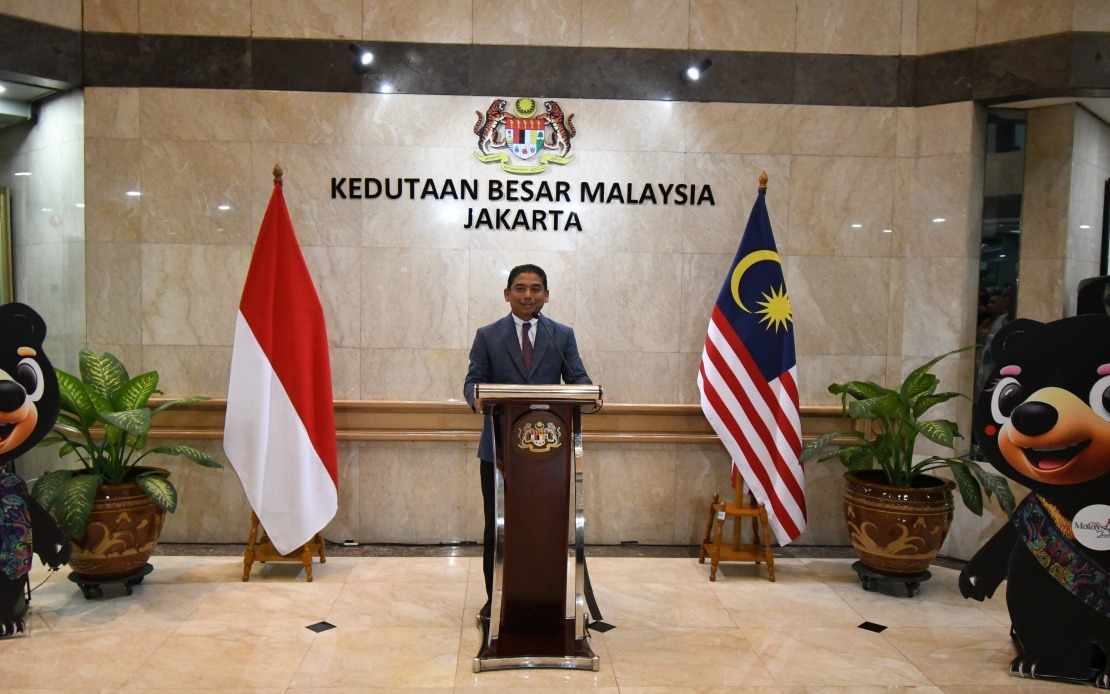
Datuk Muzafar Shah Mustafa has officially commenced his duties as Malaysia's Ambassador to Indonesia, arriving in the Indonesian capital on August 10 following his recent appointment to the strategic posting. The arrival marks a transition for the seasoned diplomat, who spent nearly three years representing Malaysia's interests in New Delhi before departing India on July 9. The embassy confirmed the commencement of his tenure through a social media announcement, noting that Muzafar completed his initial reporting procedures at the diplomatic mission on his first day in Jakarta.
The posting to Indonesia represents another significant chapter in Muzafar's extensive career within Malaysia's foreign service. His appointment was formally endorsed through the traditional diplomatic channel when he received his letter of credence from Yang di-Pertuan Agong Sultan Ibrahim at Istana Negara on July 14, underscoring the ceremonial importance placed on ambassadorial assignments. The timing of his transition occurred smoothly, with only a brief interval between his departure from India and arrival in Indonesia, allowing for continuity in diplomatic representation during what proved to be a seamless handover period.
The ambassador's appointment to Jakarta comes at a particularly important juncture in bilateral relations between Malaysia and Indonesia. As Southeast Asia's two largest Muslim-majority nations and founding members of ASEAN, the relationship encompasses significant economic, security, and cultural dimensions. Malaysia's diplomatic presence in Indonesia requires experienced leadership capable of navigating complex regional issues, managing bilateral trade relationships, and coordinating on multilateral initiatives within ASEAN frameworks. Muzafar's appointment demonstrates Kuala Lumpur's commitment to maintaining high-level diplomatic engagement with its closest regional neighbour and strategic partner.
Muzafar's professional trajectory reveals a diplomat deeply versed in managing Malaysia's interests across diverse geopolitical contexts. Since joining the Foreign Ministry in 1995, he has accumulated experience serving in multiple continents and varying diplomatic environments. His previous posting to India from October 2023 provided exposure to managing relations with a major regional power and a fellow member of the Non-Aligned Movement. That tenure came after a significant five-year assignment to Latin America, where he served as Ambassador to Mexico from 2018 to 2023 while simultaneously representing Malaysia in Belize, Costa Rica, El Salvador, Guatemala and Honduras.
Before establishing himself as a senior diplomat in the Americas, Muzafar served as Ambassador to Venezuela from 2016 to 2018, a posting that required navigating a particularly complex regional political environment. His earlier career included an appointment as counsellor at the Malaysian Embassy in Berlin from 2007 to 2011, exposing him to European diplomatic practice and Central European affairs during a period of significant regional realignment following the global financial crisis. He also undertook a posting as second secretary at the Malaysian Embassy in Baghdad from 1999 to 2003, reflecting his willingness to serve in challenging security environments during a turbulent period in Middle Eastern geopolitics.
The breadth of Muzafar's diplomatic experience spanning Asia, Europe, Latin America and the Middle East equips him with valuable insights into diverse diplomatic cultures and bilateral relationships. This comprehensive background suggests the Foreign Ministry views the Indonesia posting as a position requiring someone with sophisticated understanding of varying approaches to international relations and proven ability to adapt to distinct regional contexts. The progression from relatively junior roles in challenging posts to senior ambassadorial positions in strategically important countries illustrates career advancement within Malaysia's foreign service meritocratic framework.
Muzafar's personal background reflects the stability typically associated with senior Malaysian diplomats. Married to Datin Najwa Zainal and father of four children, he maintains the family-oriented profile common among Malaysia's diplomatic corps. Such personal circumstances often provide grounding for diplomats engaged in extended overseas postings, where maintaining family continuity during frequent transfers represents a significant logistical and personal challenge. The existence of a stable family structure typically enhances a diplomat's capacity to engage effectively in social and cultural dimensions of bilateral relations, which form important components of contemporary diplomacy.
The appointment arrives as Malaysia and Indonesia navigate an increasingly complex regional environment. ASEAN continues facing pressures from great power competition, particularly as the United States and China maintain competing interests throughout Southeast Asia. Within this context, strong Malaysia-Indonesia bilateral relations serve as a stabilising force within the organisation and provide a foundation for coordinated ASEAN positions on contentious issues. Muzafar's appointment signals Kuala Lumpur's intention to maintain high-level diplomatic engagement on matters ranging from maritime security cooperation to economic integration initiatives.
Trade and investment relationships between Malaysia and Indonesia constitute another critical dimension requiring robust diplomatic attention. As neighbouring economies with significant regional business communities, Malaysia and Indonesia maintain complex commercial networks spanning manufacturing, energy, agriculture and services sectors. The Ambassador's role in facilitating business engagement and resolving commercial disputes requires someone with experience managing relationships with diverse stakeholder groups. Muzafar's previous postings in economically significant locations should provide relevant experience in this dimension of contemporary diplomacy.
Cultural and people-to-people dimensions of Malaysia-Indonesia relations also require consistent diplomatic nurturing. The shared Islamic heritage, linguistic connections, and historical ties create unique opportunities for deepening bilateral understanding beyond formal governmental channels. Ambassadorial postings typically include responsibility for cultivating cultural exchanges, supporting academic and artistic collaborations, and facilitating interactions between civil society organisations across borders. These softer dimensions of bilateral relations frequently contribute as significantly to overall relationship health as formal diplomatic negotiations.
Muzafar's transition to the Indonesia posting represents a natural progression for a diplomat with his experience profile and seniority level. The posting positions him at the apex of his career, managing one of Malaysia's most strategically important bilateral relationships at a time requiring sophisticated diplomatic engagement. His appointment reflects confidence within Malaysia's foreign service establishment that he possesses the requisite skills, experience and judgment to represent Malaysia's interests effectively in Jakarta during a period of considerable regional complexity and change.

