Penang's ambitious Mutiara Line Light Rail Transit project has entered a decisive new phase with Malaysia Rapid Transit Corporation confirming the award of a RM3.028 billion System Turnkey Contract to a joint venture between Malaysian Resources Corporation Berhad and Theta Edge Berhad. This substantial contract represents a watershed moment for the infrastructure initiative, allowing sophisticated railway systems design work to proceed simultaneously with the advancing construction programme on the ground.
The scale of the systems contract underscores the technical complexity underlying what will become one of Southeast Asia's modern urban transit corridors. Seven interconnected railway systems packages form the backbone of this agreement, spanning everything from the procurement and installation of electric trains and associated depot infrastructure through to the sophisticated signalling architecture and automatic platform gate systems that will manage passenger flow. The contract also encompasses trackwork installation, conductor rail assembly, dedicated maintenance vehicles, and the comprehensive electrical distribution network that powers the entire operation.
Beyond these foundational physical systems, the turnkey arrangement includes the railway supervisory control and data acquisition system, a computerised maintenance management platform designed to optimise asset performance throughout the line's operational lifespan, and integrated telecommunications and information technology infrastructure. The automatic fare collection mechanism rounds out the package, ensuring seamless passenger experience across the transit network. For Malaysian stakeholders and observers, this breadth of systems integration signals confidence in the project's technical feasibility and represents a substantial mobilisation of engineering expertise.
Parallel progress on the civil construction front demonstrates MRT Corp's commitment to maintaining momentum. The Civil Main Contract 1, covering the alignment extending from Silicon Island through to Komtar, continues expanding across fourteen of the nineteen planned construction sections. Construction crews have already completed forty-five pile caps and thirty-two pier columns, visible indicators of the physical transformation reshaping Penang's transport landscape. This design-and-build methodology allows field teams to advance construction while engineers simultaneously finalise detailed designs, a approach that maximises efficiency and reduces overall project duration.
Land acquisition, historically a potential bottleneck in Malaysian infrastructure projects, has achieved remarkable progress with ninety-three percent of the total land required for the CMC1 package now available for development. This substantial acquisition rate reflects intensive coordination between the Federal Government, Penang State Government, and multiple agencies, suggesting effective inter-governmental collaboration on a project of regional significance. For Malaysian readers, this success story offers a model of how institutional coordination can accelerate land-dependent infrastructure delivery.
The CMC2 tender process, encompassing the extension from Komtar to Penang Sentral, remains on trajectory with evaluations currently underway and contract award anticipated by November 2026. This methodical progression indicates confidence in both the technical and financial parameters guiding the project's expansion phases. The staggered contracting approach allows learning from CMC1 implementation to inform CMC2 execution, potentially enhancing cost management and construction efficiency.
Local industry participation has exceeded expectations, with Bumiputera contractors now accounting for more than twenty percent of CMC1's total contract value. This performance strengthens the project's contribution to Malaysian industrial capability development and demonstrates how major infrastructure can serve dual purposes: delivering essential transport assets while simultaneously nurturing domestic supply chains. For Malaysian businesses, particularly those within the construction and engineering sectors, the Mutiara Line represents sustained employment and technical skill-building opportunities over several years.
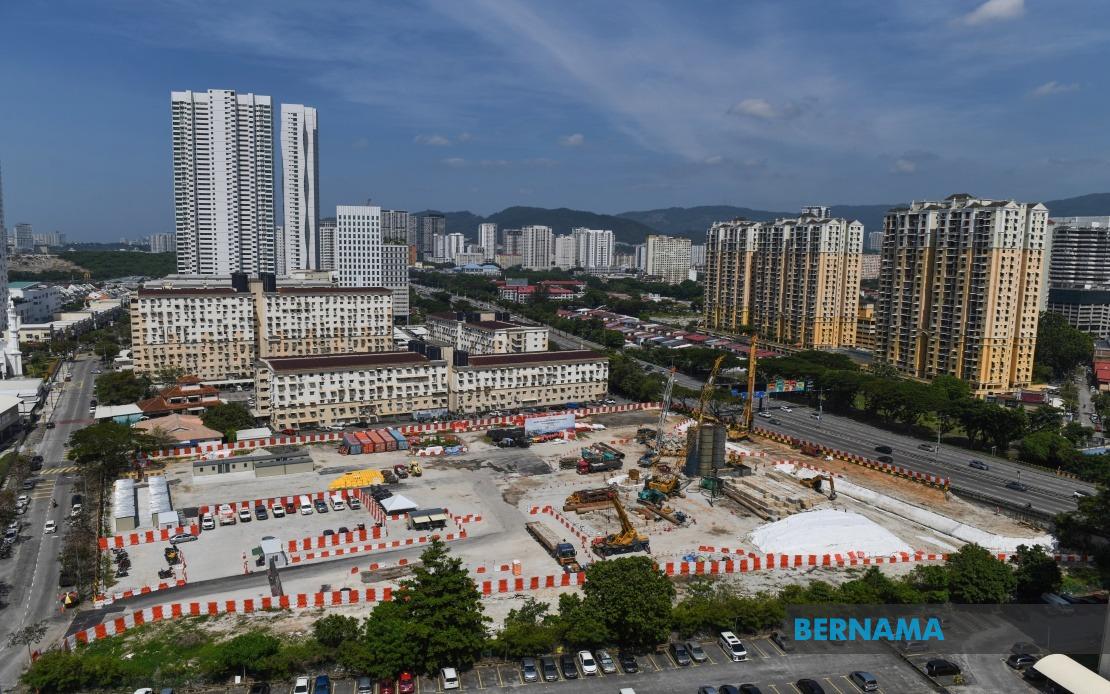
At Silicon Island, the future depot site is now undergoing soil investigation works, a prerequisite for constructing the maintenance and storage facilities that will support operational trains once the line becomes active. The Penang State Government's April 2026 handover of the Tapak Pesta site represents another administrative milestone, with MRT Corp already completing structural demolition and site preparation activities. This readiness to commence depot construction within the coming months suggests the project is systematically addressing every component of the complete transport system.
The Mutiara Line occupies particular significance within Malaysia's broader urban development strategy, positioning Penang to accommodate anticipated population growth and commercial expansion while reducing private vehicle dependency. For a state that has historically relied on aging public transport infrastructure, this project represents transformative potential for daily commuting patterns and commercial competitiveness. The parallel systems and civil construction approach actually compresses overall delivery timelines compared to sequential implementation, meaning the travelling public could benefit from operational service within a more accelerated timeframe than initially projected.
Regionally, the Mutiara Line demonstrates Malaysia's continued commitment to large-scale urban transit infrastructure investment, placing it alongside comparable projects in Singapore and Thailand. The sophistication of integrated systems design and the scale of the financial commitment signal Malaysia's determination to position itself as a centre of modern urban living and sustainable transportation solutions. For investors and observers tracking Southeast Asian infrastructure development, such projects indicate the region's institutional capacity to manage complex, multi-billion-ringgit undertakings.
Stakeholders should note that maintaining current construction schedules depends heavily on sustained political commitment, adequate funding flows, and absence of major unforeseen complications. The project's progression across multiple state and federal jurisdictions also introduces coordination dependencies that require continuous attention. Nevertheless, the systematic advancement evident across all contract packages suggests the Mutiara Line is firmly established on its implementation trajectory, with sufficient institutional support and technical capability to deliver this transformative infrastructure within realistic timeframes.

