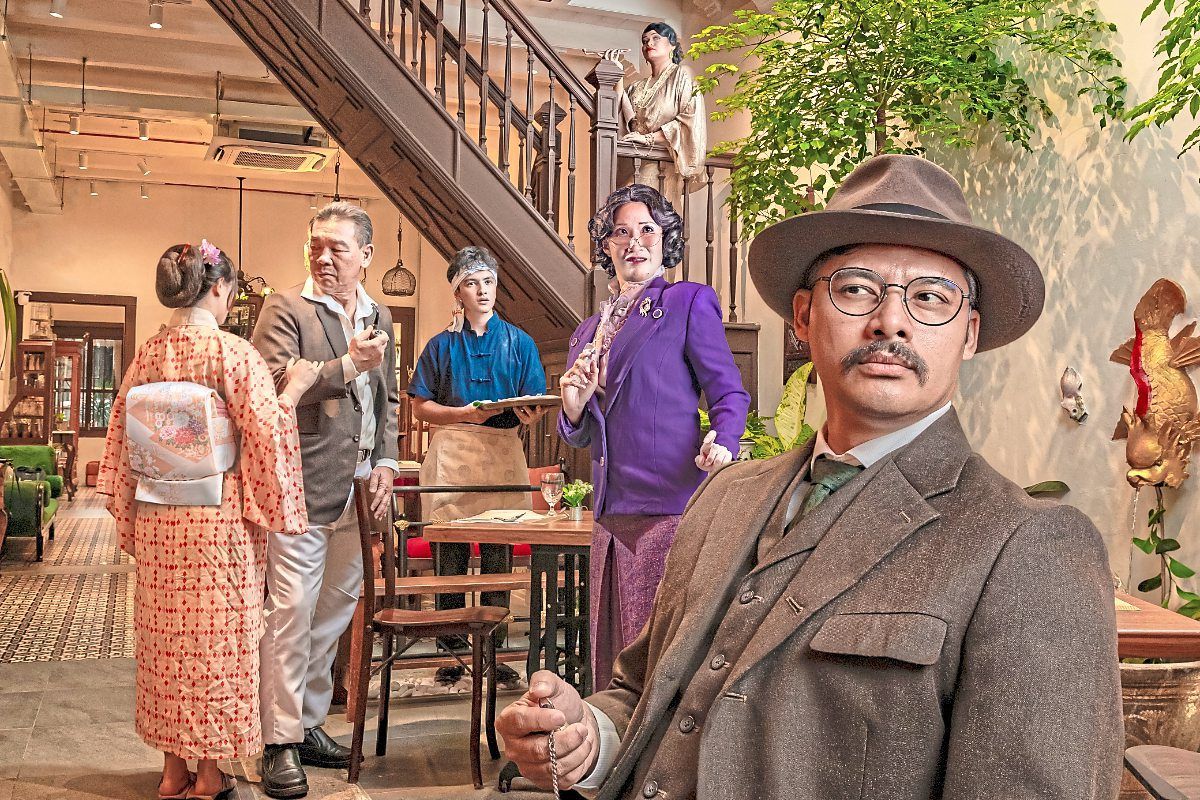
Melaka's cultural landscape is set to deepen this summer with an unconventional theatrical venture that marries the region's storied Peranakan heritage with contemporary interactive storytelling. Over four weekends spanning July and August, Krate Creative Space has partnered with The Garden@Heeren, a meticulously preserved Peranakan mansion on Jalan Tun Tan Cheng Lock, to present an immersive murder mystery experience that positions diners as active investigators rather than passive observers.
The experience unfolds across two-and-a-half hours in the elegant halls of the heritage venue, beginning with an authentic multi-course Peranakan dinner featuring traditional dishes such as pie tee, pongteh chicken and cincalok omelette. As guests progress through the meal, a carefully orchestrated mystery gradually emerges from the shadows of elegance and tradition. The narrative premise centres on the grand reopening of a celebrated restaurant helmed by the renowned Chef Fa, where what begins as a jubilant celebration transforms abruptly when a shocking death occurs at the gathering.
What distinguishes this production from conventional murder mystery entertainment is its structure of genuine choice and participation. Attendees may elect to remain peripheral observers to events unfolding around them, or alternatively step fully into investigative roles alongside Detective Raymond, the character tasked with leading the inquiry. This flexibility allows the experience to accommodate varying comfort levels with performance and engagement, making it accessible to diverse audience preferences. Throughout the evening, participants will navigate the rooms of the house, interrogate suspects embodied by a professional cast, collect scattered clues and collectively construct their own interpretation of guilt and innocence.
The cast comprises experienced performers from Krate's previous productions, including Francis Augustine in the lead role of Detective Raymond, Sonia Lee as Miss Irene, Lee You Meng as Baba Pang, Elijah Skye as Peter Pang and Neena Shu as Mama Maria. These ensemble members move seamlessly between their narrative roles and their function as interactive storytellers, responding to audience questions and adjusting their performance based on participant momentum and direction. This responsiveness creates a fundamentally unpredictable theatrical event wherein no two performances follow identical trajectories.
A deliberate structural innovation deepens the replay value and encourages multiple visits. The production features two distinct endings: audiences attending the initial two weekends will experience one resolution, while those attending the latter two weeks will encounter an entirely different conclusion. This bifurcated approach rewards repeat attendance by essentially offering two substantially different mysteries within the same venue, preventing predictability or redundancy even for those experiencing the show multiple times. At the evening's conclusion, participants must reach their own verdict and formally declare whom they believe perpetrated the crime, adding accountability and personal stakes to their investigation.
Krate Creative Space writer and developer Wee, who has authored all of the organization's interactive productions, articulated the creative vision underlying this venture. The convergence of a suitable venue and committed collaborators proved decisive in bringing the murder mystery concept to fruition. The Garden@Heeren's authentic heritage architecture and period character provided exactly the atmospheric foundation such a production required. As Wee explained, the classical proportions and historical resonance of a heritage house naturally invite mystery and suspense, lending themselves intuitively to narrative complexity and theatrical intrigue.
Melaka's pronounced association with distinctive culinary traditions factored prominently into the production's conceptual framework. Rather than positioning dining and theatre as separate experiences, Krate sought to synthesize them into a cohesive sensory journey. Participants are transported imaginatively to the 1930s through comprehensive deployment of environmental design, costuming, period-appropriate music and direct social interaction. The authenticity of the Peranakan cuisine becomes integral to temporal immersion, grounding the theatrical fantasy in concrete, embodied experience that engages taste, sight, sound and interpersonal engagement simultaneously.
Wee emphasized that audience agency fundamentally shapes each performance's trajectory and emotional resonance. The investigative process itself varies meaningfully depending on which questions participants pose, which clues they prioritise and how they position themselves relative to suspects. Different groups will organically construct divergent narratives from identical pieces of evidence, demonstrating how investigation functions as an inherently interpretive process. The alternate-ending structure further amplifies this unpredictability, ensuring that even audiences who have experienced one version of events will encounter substantially different dramatic and investigative pathways during a second visit.
Krate Creative Space, established in 2016, has positioned itself as Melaka's pioneering independent organisation dedicated to customised, interactive and multi-disciplinary live performance. Across nine years of operation, the organization has produced over ten original works, cultivating a devoted audience community and establishing credibility for theatrical experiences that meaningfully connect participants to narratives, historical spaces and collective cultural identity. This accumulation of reputation reflects sustained artistic ambition and consistent execution despite the precarious financial circumstances facing independent theatre organizations across Malaysia.
The organization's geographical reach extends considerably beyond Melaka's boundaries. Although approximately half of Krate's audience comprises local residents, substantial numbers travel from the Klang Valley, Penang, Johor and even Singapore to attend performances. The company has additionally attracted international tourists seeking authentic cultural engagement that transcends conventional heritage-site tourism. This expanding audience demonstrates growing appetite for theatrical experiences that integrate local cultural specificity with contemporary performance methodologies.
Maintaining institutional continuity has required adaptive business strategies extending beyond theatrical production alone. Krate's creative hub in Bukit Beruang functions simultaneously as a rehearsal facility, studio space and operational cafe, diversifying revenue streams and increasing daily operational sustainability. This multipurpose approach reflects pragmatic response to the economic challenges independent theatremakers navigate within Malaysia's cultural sector. Yet despite these adaptations, Wee acknowledged the persistent difficulty of remaining operationally viable as an independent entity.
Looking forward, Krate harbours ambitions of establishing a permanent, dedicated venue within Melaka where heritage-inspired immersive experiences could be staged regularly throughout the year rather than in episodic bursts. Such institutional permanence would theoretically enable both local residents and visiting tourists consistent access to original Malaysian theatrical narratives rooted in regional history and cultural specificity. Wee envisions immersive theatre as a potentially significant pillar within Malaysia's cultural tourism infrastructure, particularly in historically rich urban centres like Melaka where architectural and cultural heritage provide natural scaffolding for narrative complexity. The organization's previous venture bringing an original production titled The Best Nyonya to Penang's Georgetown Mansion signals willingness to expand beyond Melaka's borders while maintaining thematic and cultural coherence.
This murder mystery production ultimately represents something broader than entertainment tourism. It reflects an artistic commitment to activating historical spaces through contemporary performance methodologies, inviting audiences to experience heritage not as passive museum content but as living, interactive narrative space. By positioning Melaka's Peranakan architectural and culinary legacy as the foundation for theatrical investigation, Krate offers a model for how traditional cultural knowledge might be meaningfully integrated with immersive performance practice, potentially inspiring similar ventures across Southeast Asia's heritage-rich cities.

