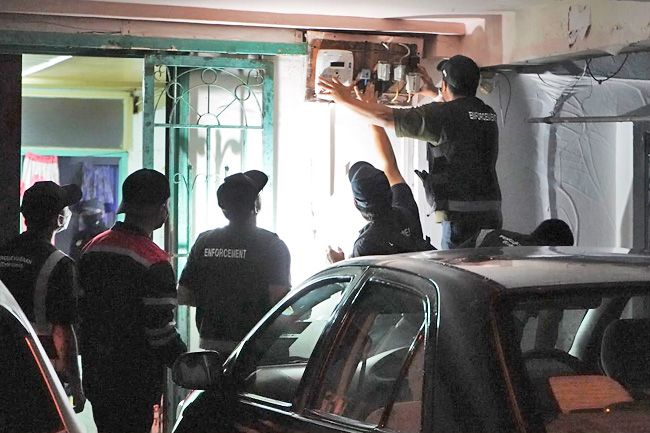
Brunei's law enforcement agencies have concluded a substantial multi-departmental operation in Bandar Seri Begawan that resulted in the detection of numerous regulatory violations spanning labour standards, immigration compliance, and electrical safety. The coordinated effort, overseen by Superintendent Mohamad Noor Abd Rahman as Acting Commanding Officer of the Brunei-Muara Police District, mobilised more than 200 personnel across two separate locations within the capital district, showcasing an integrated approach to maintaining public order and workplace safety standards across the sultanate.
The Immigration and National Registration Department (INRD) apprehended two foreign nationals—one male and one female—during the operation, detaining them for further investigation under the Immigration Act. These detentions represent the most direct enforcement action emerging from the sweep, suggesting potential irregularities in visa status, documentation, or residency permissions among the foreign workforce operating within the jurisdiction. The cases remain under investigation, with outcomes likely to inform ongoing immigration policy discussions regarding worker verification protocols.
The Labour Department's findings proved particularly substantial, uncovering five distinct violations spread across two categories of workplace offences. Three breaches fell under Section 81 of labour regulations, centring on employer failures to furnish adequate worker accommodation and maintain environmental hygiene standards as mandated by law. These infractions highlight persistent challenges in the enforcement of occupational health and safety provisions, particularly within sectors relying heavily on migrant labour. The remaining two violations involved breaches of Section 86, specifically the failure to register worker accommodation details within the Foreign Worker Licence framework, indicating administrative lapses in documentation and worker management systems that employers must maintain.
From an electrical safety perspective, the Department of Electrical Services identified two separate offences under the Electricity Act (Chapter 71), though specifics regarding the nature of these violations remained undisclosed. These findings underscore the regulatory attention paid to building code compliance and electrical infrastructure standards, areas that frequently pose safety risks when oversight is inadequate, particularly in commercial and industrial establishments housing significant worker populations.
A critical component of the operation involved the Human Trafficking Investigation Unit, which conducted interviews with 19 individuals across both enforcement sites. Despite this substantial investigative effort, no human trafficking offences were detected during the operation. This outcome, while positive, reflects broader regional concerns regarding labour trafficking networks that exploit vulnerable migrant workers through debt bondage, document confiscation, and wage manipulation schemes endemic to Southeast Asian supply chains.
The scale of this enforcement initiative—mobilising personnel from twelve separate government agencies—demonstrates institutional coordination mechanisms designed to address multiple regulatory domains simultaneously. Beyond the police and immigration authorities, the operation drew resources from the Narcotics Control Bureau, Royal Customs and Excise Department, Internal Security Department, Labour Department, Department of Electrical Services, Bandar Seri Begawan Municipal Department, and Religious Enforcement Division. This comprehensive inter-agency approach reflects contemporary compliance strategies that recognise regulatory violations rarely occur in isolation but rather cluster within establishments with broader operational deficiencies.
For Malaysian stakeholders and regional observers, the Brunei operation carries implications regarding labour standards enforcement practices across Brunei and broader ASEAN labour mobility frameworks. Brunei's reliance on migrant workers for construction, domestic service, and manufacturing sectors places significant responsibility on enforcement agencies to prevent exploitation while maintaining worker confidence in formal employment channels. The detection of accommodation and licensing violations suggests that standard-setting alone proves insufficient; regular verification and surprise inspections remain essential enforcement tools.
The operation's timing and scope reflect Royal Brunei Police Force (RBPF) commitment to public safety priorities beyond traditional crime domains, extending institutional capacity toward regulatory compliance and worker protection. Acting Commanding Officer Superintendent Mohamad Noor Abd Rahman's leadership of the initiative signals senior police commitment to these enforcement priorities, positioning such operations as integral to the RBPF's strategic mandate rather than peripheral activities.
Regional labour migration patterns ensure that violations occurring within Brunei's borders affect worker populations from neighbouring jurisdictions, including Malaysian citizens employed in the sultanate. The consistent detection of workplace standard breaches underscores the importance of bilateral labour agreements and diplomatic coordination mechanisms that protect workers' rights across borders. Malaysia's labour attaché services and regional ASEAN labour forums increasingly address cross-border workplace compliance issues, making transparency regarding Brunei's enforcement actions valuable for broader regional policy development.
Looking forward, the frequency and intensity of such coordinated operations will significantly influence employer compliance trajectories. Establishments facing regulatory consequences typically accelerate adoption of compliant practices, while others may attempt to evade detection through concealment or relocation. The RBPF and partnering agencies will likely continue prioritising accommodation standards and worker documentation practices, areas where violations clustered most prominently during this operation. Ongoing pressure through regular enforcement cycles represents the most effective compliance mechanism, particularly within sectors where informal employment arrangements and wage suppression remain economically tempting to certain operators.
The absence of human trafficking detections, while encouraging, warrants cautious interpretation given that trafficking investigations typically require sustained investigation beyond initial enforcement contact. Follow-up investigation of the detained foreign nationals and other interviewed individuals may yet yield additional findings. Regardless, the operation demonstrates institutional capacity for large-scale multi-agency coordination, a capability increasingly essential as globalised labour markets generate complex cross-border regulatory challenges that single-agency responses cannot adequately address.

