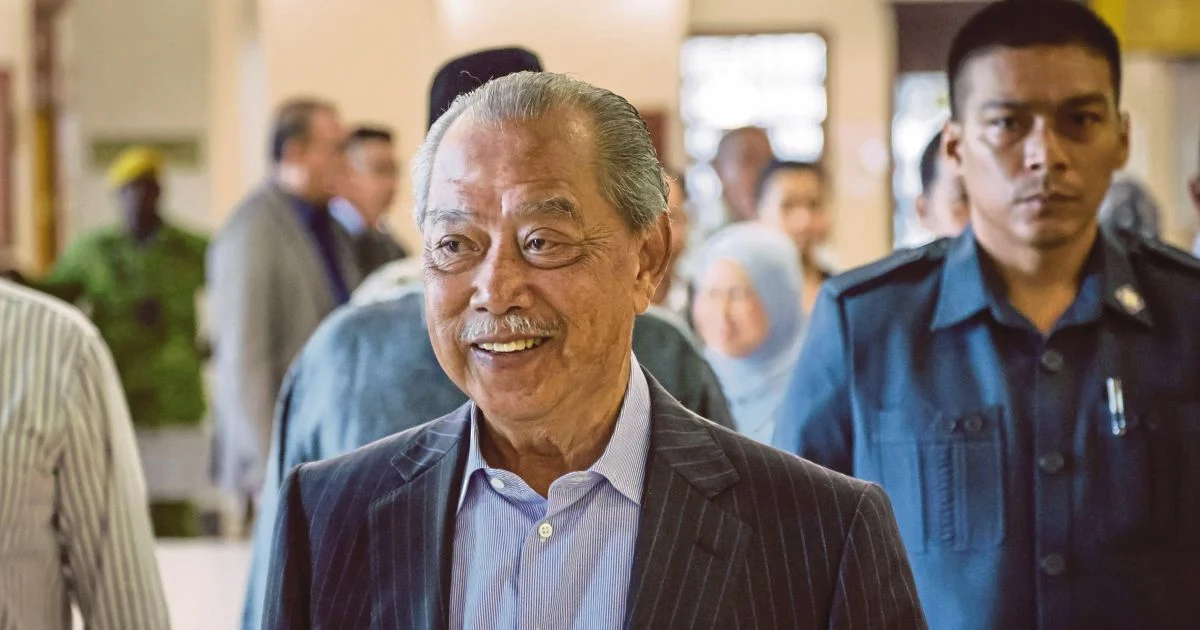
Bersatu president Tan Sri Muhyiddin Yassin has signalled optimism about Perikatan Nasional's prospects in the forthcoming Johor state election, asserting that the opposition coalition maintains a credible pathway to state power despite adopting a selective rather than comprehensive electoral strategy. Speaking in Pagoh, Muhyiddin's home constituency, the veteran politician downplayed concerns that contesting barely a third of the 56 available state assembly seats would hamper the coalition's ability to secure a governing mandate. His confidence reflects broader calculations within PN's leadership regarding both the political landscape in Malaysia's southernmost peninsula state and the dynamics of coalition politics at state level.
The decision to contest only 33 seats represents a significant strategic departure from conventional opposition tactics, which typically emphasize broad geographic coverage to maximize voter choice and demonstrate full commitment to contesting every possible constituency. By limiting its electoral footprint, PN signals either a targeted focus on winnable constituencies or alternatively, a pragmatic acknowledgment of resource constraints that affect opposition parties operating outside the federal establishment. For Malaysian observers, this approach mirrors evolving practices in competitive democracies where opposition coalitions sometimes prioritize concentrated strength over comprehensive participation, betting that concentrated support in key areas can yield disproportionate legislative gains.
Johor's electoral context carries particular significance for PN's national trajectory. The state has long been considered a Barisan Nasional (BN) stronghold, and any improvement in PN's fortunes there would signal meaningful penetration into traditionally non-competitive territory. Conversely, strong performance in Johor could enhance PN's credentials as a government-in-waiting ahead of potential federal elections. The state election therefore functions as a crucial testing ground for the opposition coalition's organizational capacity, message resonance, and ability to compete effectively even from a structurally disadvantaged position.
Muhyiddin's public optimism must be understood within the context of internal PN dynamics and broader coalition strategies. Perikatan Nasional comprises multiple parties with distinct regional strongholds and political priorities. Bersatu, while leading the coalition, does not exercise unilateral control over electoral decisions or campaign messaging. The decision about how many seats to contest likely involved negotiation and compromise among coalition partners, each calculating how the election outcome would affect their respective standing and future bargaining power. Muhyiddin's confidence-building statements therefore serve multiple audiences: party activists requiring morale-boosting reassurance, coalition partners needing validation of their strategic choices, and the broader Malaysian electorate evaluating whether PN represents a genuinely competitive alternative government.
The mathematics of forming government in Johor requires winning 29 of the 56 state assembly seats for an outright majority. Contesting 33 seats means PN could theoretically achieve majority control by winning approximately 88 percent of those seats it contests, while simultaneously requiring either significant defections from BN, support from independent candidates, or both. This calculation depends heavily on what happens in the 23 seats where PN is not fielding candidates. If BN's vote is sufficiently fragmented or if PN's campaign successfully influences voter behaviour in non-contested constituencies, the coalition's prospects could improve substantially. Alternatively, if BN consolidates support across all constituencies, PN's limited contest footprint becomes an insurmountable disadvantage.
Historical precedents in Malaysian state politics demonstrate that coalition-building after elections remains fluid and negotiable. Elected representatives from BN and independent candidates have previously switched allegiance to opposition coalitions following elections, particularly when electoral outcomes appear closely contested or when state governments face political instability. Muhyiddin's confidence may therefore rest partly on expectations that post-electoral realignments could yield sufficient additional support for PN to govern, even if direct electoral competition appears limited.
For Malaysian voters and regional observers, PN's Johor election strategy highlights broader questions about opposition viability in the Malaysian context. The coalition must simultaneously convince voters that it merits their support while also managing expectations about what limited electoral participation signifies for its seriousness about actually governing. Strong performance in 33 seats could appear impressive as a vote-share achievement, but it may provide insufficient legislative representation to claim a genuine electoral mandate. Conversely, poor performance would reinforce narratives about PN's limited appeal and organizational capacity.
The opposition coalition's approach also reflects practical considerations about campaign resources, organizational reach, and volunteer mobilization capacity. Mounting effective campaigns across all 56 constituencies demands substantial funding, trained campaign workers, and sophisticated communications infrastructure. For opposition parties perpetually disadvantaged by state resources and media access, concentrating efforts on 33 carefully selected constituencies may represent a more rational allocation of finite resources than attempting comprehensive but potentially superficial coverage of all seats.
Muhyiddin's statements arrive amid broader political recalibration in Malaysia. Federal politics remains fluid following recent parliamentary developments, and strong opposition performance in any state election carries implications far beyond that state's boundaries. A credible PN showing in Johor could reinvigorate the coalition's national standing, while disappointing results might intensify pressure on coalition partners to reconsider their strategic alignments. The Johor election thus functions simultaneously as a state-level contest and as a significant data point in the ongoing competition for Malaysian voters' confidence in potential alternative governments.
The coming weeks will test whether Muhyiddin's optimism reflects genuine strategic sophistication or represents aspirational thinking disconnected from ground realities. PN's performance across its 33 contested seats will reveal whether selective participation proves electorally efficient or whether comprehensive absence from two-fifths of constituencies proves strategically counterproductive. Either way, the Johor election promises meaningful insights into Malaysia's opposition coalition dynamics and the evolving rules governing how political competition functions at state level.

