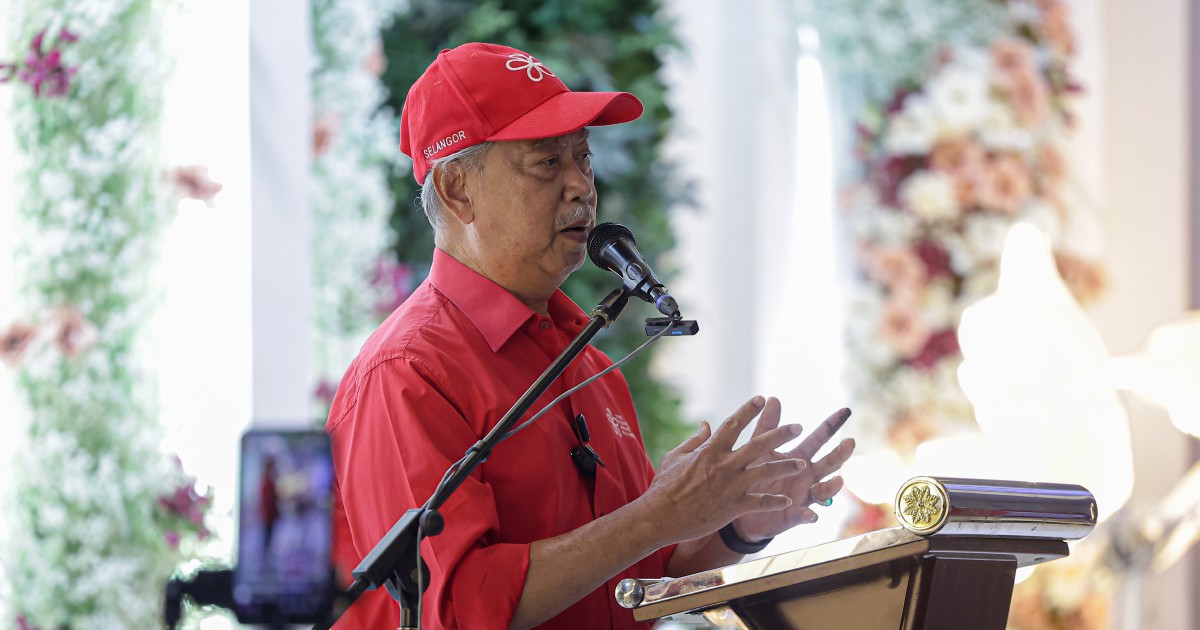
Bersatu president Tan Sri Muhyiddin Yassin has firmly rejected accusations from Umno vice-president Datuk Seri Mohamed Khaled Nordin that his party functions as a spoiler in the forthcoming Negri Sembilan state election. The sharp rebuke underscores deepening fractures within the ruling coalition and raises questions about the viability of maintaining electoral cooperation ahead of crucial state polls.
Khaled's description of Bersatu's candidacy as destabilising comes amid broader concerns within Umno that fielding multiple parties in the same constituencies could fragment the Malay-Muslim vote and damage the coalition's electoral prospects. This criticism reflects a longstanding source of tension in Malaysian coalition politics, where smaller parties occasionally contest seats that larger partners considered part of their traditional stronghold. For Negri Sembilan, a state where Umno traditionally enjoys significant influence, the prospect of Bersatu candidates competing directly against Umno nominees has evidently triggered alarm within the larger party's leadership.
The underlying dispute touches on fundamental questions about coalition management and political leverage. Bersatu, despite being numerically smaller than Umno, has sought to establish itself as an indispensable coalition partner by expanding its electoral footprint across multiple states. By participating in the Negri Sembilan contest, Muhyiddin's party aims to demonstrate autonomous political capacity and negotiate from a position of greater strength within broader coalition structures. This strategic calculus creates inevitable friction with Umno, which has historically resisted sharing electoral territory with coalition allies.
Muhyiddin's counterargument likely emphasises Bersatu's right to contest elections as a democratically legitimate political force and its contributions to the broader coalition framework. The Bersatu president can point to his party's previous performance in various state elections and federal parliament as evidence of genuine support that warrants independent representation. By framing Umno's complaint as an attempt to monopolise political space, Muhyiddin positions himself as defending democratic principles against what he might characterise as heavy-handed domination by larger partners.
From a Malaysian governance perspective, this dispute illustrates the persistent challenges facing multi-party coalitions attempting to maintain unity while accommodating the individual political ambitions of member parties. The Perikatan Nasional (PN) coalition, which includes Bersatu alongside other parties, has repeatedly confronted similar tensions when negotiating seat allocations and electoral participation across different states and federal territory contests. These internal frictions, while manageable during periods of strong centralised leadership, can become destabilising when coalition discipline weakens or when partners perceive unequal treatment in candidate selection processes.
For Negri Sembilan specifically, the state has held considerable symbolic importance within Malay-Muslim politics, and its electoral outcomes carry implications for national coalition dynamics. The presence of competing Bersatu and Umno candidates in the same constituencies potentially complicates campaign strategies, splits resources, and may even suppress voter turnout if supporters perceive insufficient differentiation between coalition partners. Conversely, some analysts argue that allowing different coalition members to contest different seats actually optimises representation across diverse constituencies and regional preferences.
The timing of this public dispute also merits attention. By openly criticising Bersatu's electoral participation, Khaled has escalated what might otherwise have remained internal coalition negotiations into a matter of public record. Such escalation can harden positions on both sides, making compromise more difficult and potentially emboldening other coalition members to voice their own grievances. Media coverage amplifying this conflict may also constrain negotiators' flexibility, as retracting previously publicised positions becomes politically costly.
Within the broader Southeast Asian context, Malaysia's experience demonstrates how even dominant electoral coalitions must constantly negotiate between centripetal forces favouring unity and centrifugal forces driving individual party ambitions. Comparisons to similar coalition structures in Thailand, Indonesia, and the Philippines reveal that this tension is nearly universal among multi-party governing arrangements in the region. The ability of coalition leaders to manage these disputes through compromise or, alternatively, through hierarchical assertion of authority, ultimately determines coalition stability and electoral effectiveness.
Looking forward, the resolution of this Muhyiddin-Khaled dispute will signal the current state of coalition health and the relative bargaining power of Bersatu versus Umno. Should Muhyiddin prevail in securing Bersatu's electoral participation despite Umno's objections, this would suggest that the smaller party has successfully asserted its autonomy. Conversely, if Bersatu candidates are withdrawn from contested seats, this would indicate that Umno's leverage remains decisive and that Bersatu must accommodate larger partners' preferences regarding electoral boundaries. For Malaysian voters and observers of coalition politics, this upcoming resolution offers important clues about the underlying power dynamics that will shape the nation's political trajectory in the coming years.

