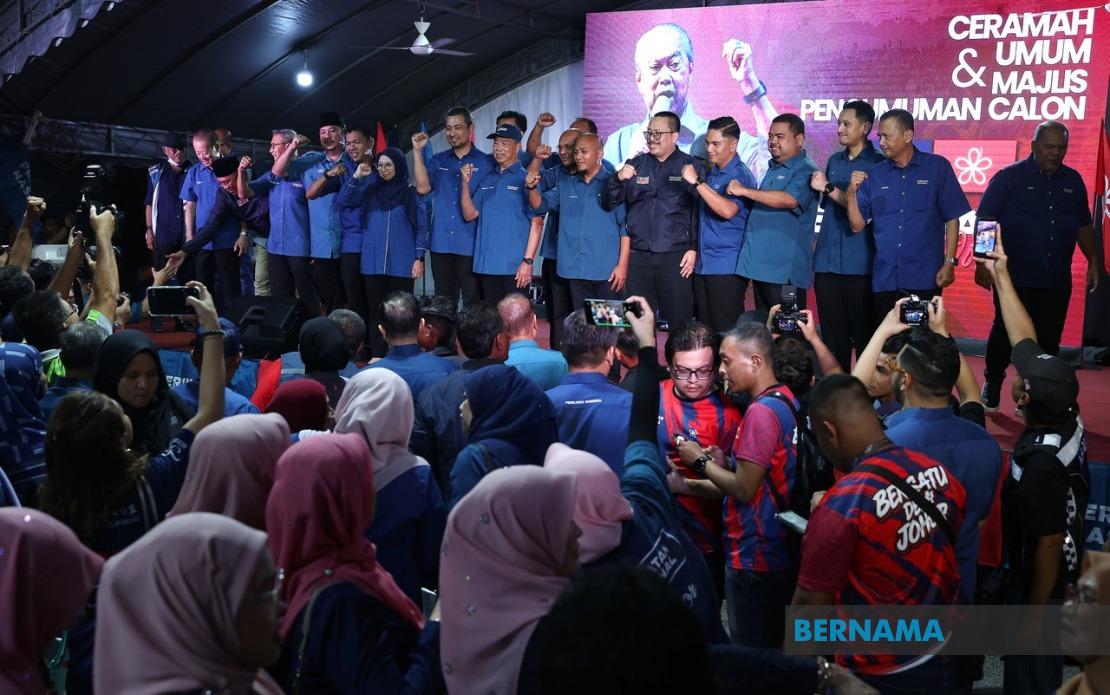
Tan Sri Muhyiddin Yassin, president of Parti Pribumi Bersatu Malaysia, has officially presented the party's complete roster of 16 candidates for the Johor State Election at a candidates announcement ceremony held at the Pagoh Parliamentary Service Centre in Taman Pagoh Jaya. The unveiling signals Bersatu's readiness to compete in what will be a closely watched state-level contest in Malaysia's southernmost peninsula state, where electoral fortunes could significantly influence the broader political landscape.
The nomination period for prospective candidates commenced following the Election Commission's setting of June 27 as the formal nomination day, a date that marks the official entry point for all parties contesting the election. The actual polling will take place on July 11, providing candidates and their parties with a limited campaign window to mobilise voters and articulate their platforms. This compressed timeline reflects the urgency with which the state has moved to conduct fresh elections following the dissolution of the Johor State Assembly on June 1, which terminated the previous legislature's mandate.
Bersatu's decision to field 16 candidates across the same number of state seats indicates the party's commitment to contesting every constituency in the state, a significant undertaking that requires substantial organisational capacity and financial resources. The complete slate encompasses candidates from diverse backgrounds, with Mohd Idzharruddin Mohd Nasirruddin representing the party's nomination for the N8 Bukit Pasir seat, exemplifying the range of candidates the party has selected to pursue office. This comprehensive approach differs from strategies some smaller parties adopt, whereby they concentrate resources on a subset of winnable seats.
For Malaysian political observers, Bersatu's full participation in the Johor election carries broader implications beyond the state itself. As a component of the ruling Perikatan Nasional coalition at the federal level, the party's electoral performance in Johor will serve as a barometer of its grassroots organisational strength and voter appeal in one of Malaysia's most politically significant states. Johor has historically been a powerhouse of Malaysian politics, and control of its state government carries substantial symbolic and practical weight within coalition negotiations at the national level.
The party's ability to field a complete slate suggests internal cohesion and adequate financing, factors that have occasionally been challenged within Bersatu's ranks following its formation and subsequent political realignments. The formal announcement ceremony, which included a public ceramah or political talk, allowed Bersatu to simultaneously launch its candidates and present its policy platform directly to Johor voters. Such events serve as crucial touchpoints for parties seeking to build momentum during the compressed campaign period.
For regional observers across Southeast Asia, Malaysia's state elections demonstrate how federalised systems manage political competition and voter choice. The staggered nature of state elections across Malaysia's 13 states and three federal territories means that electoral attention shifts periodically from one region to another, preventing the kind of nationwide campaign fatigue that would accompany simultaneous nationwide contests. Johor's status as the wealthiest state and historically the most influential in determining federal outcomes means its election will attract scrutiny from political analysts tracking Malaysia's evolving coalition dynamics.
Bersatu's full candidacy list in Johor also underscores the party's strategy of maintaining political presence and relevance across all electoral contests, rather than ceding ground to rival coalition partners or opposition parties. This approach necessitates recruiting, training, and supporting viable candidates across diverse constituencies, each with distinct demographic characteristics, economic profiles, and voter preferences. The quality and acceptability of candidates to local voters will likely prove decisive in determining how many seats the party ultimately converts from nominations into actual electoral victories.
The Election Commission's administrative management of the nomination period and subsequent polling demonstrates Malaysia's institutional capacity to conduct regular elections with clear timelines and procedures. Voters in Johor will have the opportunity to select new representatives through a democratic process that, while sometimes contested, maintains fundamental procedural legitimacy. The establishment of clear nomination and polling dates allows parties, candidates, and voters to plan their activities accordingly within a structured framework.
Looking ahead to the July 11 polling date, the performance of Bersatu's candidates will be carefully analysed not merely for the number of seats won, but for the party's vote share, the consistency of its support across different constituency types, and whether it gains or loses ground relative to its performance in previous electoral contests. These metrics will inform assessments of Perikatan Nasional's overall strength as Malaysia approaches the next federal general election, which must be held by August 2025. Johor's election thus functions as a significant data point in the ongoing evolution of Malaysia's political competition at both state and federal levels.

