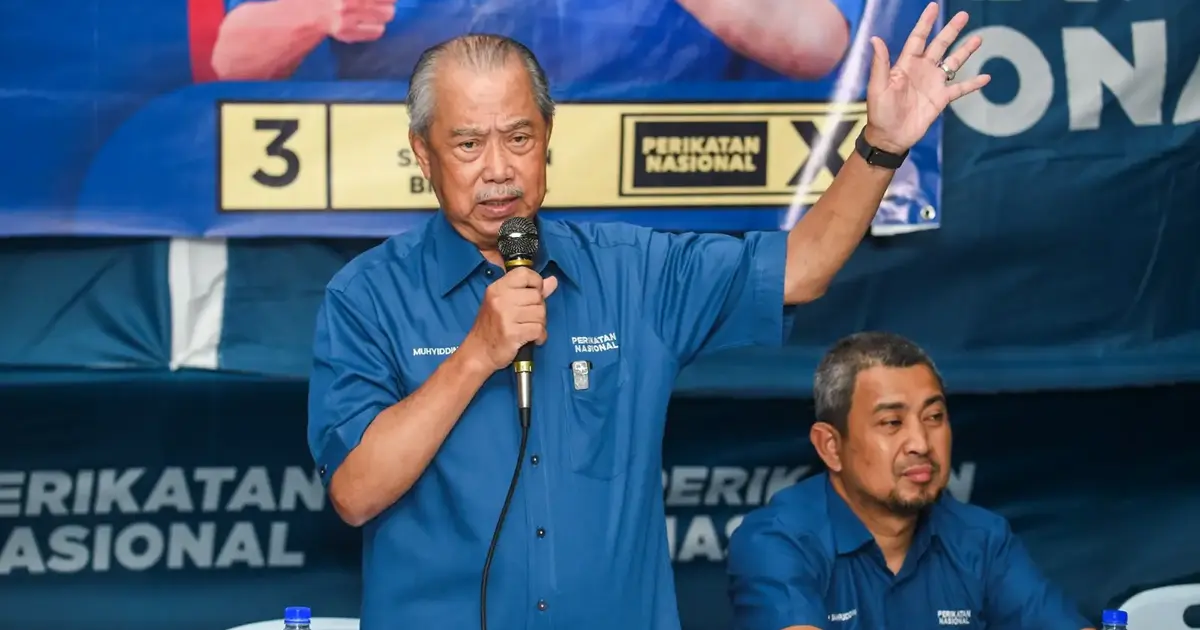
Political tensions in Malaysia's power corridor have intensified as Bersatu president Muhyiddin Yassin raised questions about the relationship between potential moves to free former Prime Minister Najib Razak and upcoming electoral contests in Johor, one of the peninsula's most consequential states. Muhyiddin's remarks reflect growing scrutiny within the ruling coalition regarding the timing and motivations behind any action that could alter Najib's legal status, even as party leaders publicly discuss various pathways forward.
The issue strikes at the heart of Malaysia's ongoing political restructuring. Najib was convicted in 2020 of criminal breach of trust related to the 1Malaysia Development Berhad scandal, one of the largest corporate fraud cases in modern Asian history. Despite his conviction and subsequent sentence, speculation about potential pardons or sentence reductions has periodically surfaced as factions within the government debate his political future and rehabilitation. Muhyiddin's intervention into this conversation signals that senior coalition members view Najib's fate as inseparable from immediate electoral priorities.
Johor, which elects its state assembly separately from the federal parliament, occupies a unique position in Malaysian politics. The state has traditionally been a Barisan Nasional stronghold and remains economically vital to the nation. Any state-level election there could reshape the government's composition and provide momentum or setbacks for broader coalition stability. Muhyiddin's suggestion that Najib's release is contingent upon or strategically timed around Johor's electoral calendar reflects calculations about how different constituencies might respond to such a move.
Muhyiddin's positioning also reveals fractures within the ruling coalition itself. By explicitly raising the connection between Johor politics and Najib's potential freedom, the Bersatu leader appears to be cautioning against what he views as opportunistic deployment of executive clemency powers. His emphasis on Najib's convicted status underscores that any release would not erase the underlying crimes but would represent a political intervention into the judicial process. This framing is significant because it challenges any narrative that might portray clemency as a mere administrative matter.
The broader context involves competition among coalition partners for electoral advantage. Different components of the government coalition have divergent interests regarding Najib's future. Some view him as a political asset whose rehabilitation could energize certain voter segments or party machinery, while others fear that embracing him could alienate urban and younger voters who view the 1MDB scandal as emblematic of entrenched corruption. Muhyiddin's comments suggest he belongs to the latter camp, or at least wants to appear as a restraining influence on what he considers rash political calculations.
For Malaysian voters and observers, Muhyiddin's intervention illustrates how justice and clemency decisions remain thoroughly entwined with electoral strategy. The suggestion that a former prime minister's release might be contingent on or coordinated with state elections challenges any pretense that such matters are determined purely on legal or humanitarian grounds. This intersection of the judicial and political spheres raises questions about institutional independence and the rule of law in Southeast Asia's largest democracy.
Muhyiddin's remarks also carry implications for Johor's political trajectory specifically. If significant numbers of voters believe that Najib's release is being weaponized for electoral purposes, it could shape how they approach upcoming contests. Conversely, if supporters of Najib view Muhyiddin as obstructing his rehabilitation, it might deepen coalition divisions heading into campaigning. The state's political economy, already influenced by its economic importance and strategic geography near Singapore, becomes further complicated by these national political dramas.
The timing of Muhyiddin's statement reflects the Malaysian political calendar's intensity. With various electoral contests approaching and coalition partners jockeying for position, high-profile figures are staking out positions on controversial matters that might previously have been handled quietly. By bringing the Najib-Johor connection into public discourse, Muhyiddin forces other leaders to either defend, deny, or reframe the strategic relationship between clemency and elections.
Looking forward, Muhyiddin's intervention suggests that any move regarding Najib's status will face internal scrutiny and political contestation regardless of the technical legal grounds invoked. The fact that senior coalition members are publicly discussing these calculations indicates that private negotiations about Najib's future remain contested terrain. Whether Johor's eventual election timing becomes explicitly linked to developments in Najib's case will likely depend on how coalition dynamics evolve in coming months and how political actors calculate electoral risks and rewards across competing priorities and constituencies.

