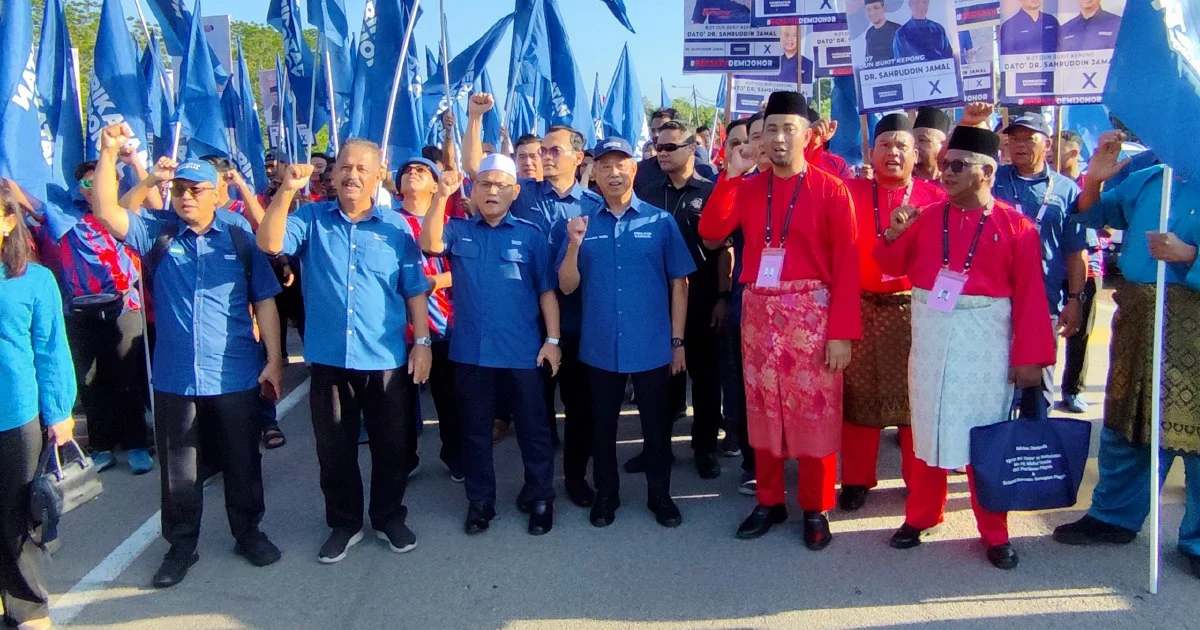
Bersatu president Tan Sri Muhyiddin Yassin made an early appearance at the nomination centre in Pagoh on Wednesday, arriving at the Pagoh Sports Complex Hall at 8.45 am to personally back his party's candidate in one of the closely watched contests in the Johor state election. The move underscores the strategic importance Bersatu places on the Bukit Kepong seat and signals leadership commitment to the nomination process for candidate Sahruddin.
Muhyiddin's decision to accompany Sahruddin during the formal nomination proceedings reflects the broader political dynamics within Johor's electoral landscape, where several coalitions and independent candidates are vying for state assembly seats. The Bukit Kepong constituency has emerged as a focal point for several parties hoping to strengthen their representation in the southern state, making the high-profile presence of the Bersatu president a calculated move to energise party supporters and demonstrate institutional backing.
The Johor state election has become increasingly significant for Malaysia's broader political trajectory, as control of the state carries implications for federal politics and coalition stability. For Bersatu, which has experienced significant fluctuations in its political fortunes since the party's formation, securing and expanding seat counts in state elections remains critical for maintaining relevance within Malaysia's competitive multi-party system. Muhyiddin's personal involvement in campaign activities demonstrates the party leadership's hands-on approach to crucial electoral contests.
Sahruddin's candidacy in Bukit Kepong represents Bersatu's effort to defend or expand ground in a constituency where the party believes it can achieve electoral success. The nomination process itself marks a formal commitment of resources and political capital, and the presence of Muhyiddin suggests internal party confidence in the candidate's viability. Such high-level endorsements can prove influential in swaying undecided voters and consolidating party membership support during campaign periods.
The timing of Muhyiddin's appearance carries additional weight, coming as the formal nomination procedures began. Early attendance by senior leadership often signals urgency and demonstrates to party workers and supporters that central leadership prioritises the particular contest. This strategy has become standard practice in Malaysian electoral politics, where symbolic gestures and leadership visibility are considered significant confidence-building measures.
Within the context of Johor's political composition, the Bukit Kepong seat occupies particular strategic value depending on the current composition of the state assembly and the mathematical requirements for any coalition to command a majority. The state remains pivotal within Malaysia's political architecture, and electoral outcomes here frequently influence broader national political realignments and coalition negotiations. Bersatu's performance in Johor therefore extends beyond state-level governance concerns.
Muhyiddin's track record in Malaysian politics, including his previous role as Prime Minister, grants his endorsement particular weight among traditional voters and party loyalists. His continued active participation in campaign activities maintains his profile as Bersatu's chief strategist and public face, despite the various leadership transitions and internal restructuring the party has undergone in recent years. Such visibility reinforces his authority within party structures and among grassroots supporters.
The nomination centre at Pagoh Sports Complex Hall serves as the formal venue where candidates officially register their candidacy and submit required documentation. The presence of senior party figures during these proceedings typically generates media coverage and public attention, extending campaign visibility beyond the immediate campaign period. Bersatu's orchestration of Muhyiddin's attendance demonstrates sophisticated understanding of media and political communication dynamics in contemporary Malaysian elections.
For Malaysian voters and political observers, such high-profile campaign activities provide windows into how major political parties allocate their resources, signal internal priorities, and project confidence regarding electoral prospects. The presence of Bersatu's top leadership at nomination proceedings for the Bukit Kepong seat communicates to both supporters and rival parties the importance the party attaches to securing this particular constituency during the broader Johor election campaign.

