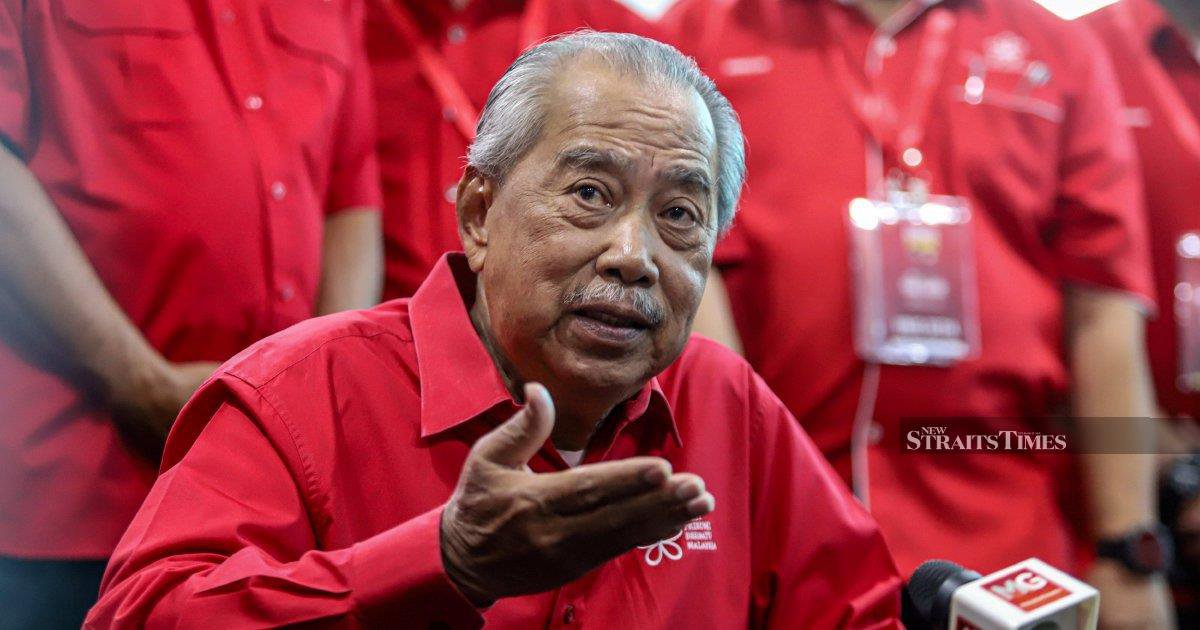
Tan Sri Muhyiddin Yassin has pushed back strongly against claims made by Tan Sri Annuar Musa regarding the circumstances surrounding Bersatu's departure from Perikatan Nasional, particularly over the handling of the Negri Sembilan election. The former Prime Minister's response comes as tensions within the opposition coalition continue to simmer over fundamental disagreements about electoral strategy and candidate selection in key state contests.
Muhyiddin's rebuttal targets Annuar's characterisation of Bersatu's exit as a voluntary decision. According to Muhyiddin, the framing fundamentally misrepresents what transpired between the two parties and the underlying factors that led to the split. The distinction between being forced out and choosing to leave carries significant weight in Malaysian political discourse, where perceptions of organisational strength and leadership credibility weigh heavily on party supporters and potential coalition partners.
The Negri Sembilan election has emerged as a flashpoint within Perikatan Nasional, revealing deep fissures in how the coalition approaches electoral contests and allocates candidacies. Rather than a simple disagreement over a single state election, the dispute appears to reflect broader strategic differences between Bersatu and other Perikatan components about the coalition's trajectory and decision-making processes. These tensions have proven difficult to contain within the opposition alliance's existing governance structures.
Muhyiddin's public contradiction of Annuar represents an escalation in what had previously been handled through more behind-the-scenes negotiations. By choosing to respond directly and forcefully, Muhyiddin signals that Bersatu leadership views the narrative being constructed by Perikatan components as sufficiently damaging to warrant immediate public clarification. Such interventions typically indicate that internal mediation attempts have either failed or remain ongoing but insufficient to resolve the underlying disputes.
The mufarakah concept, drawn from Islamic jurisprudence, carries particular resonance in Malaysian political vocabulary. By using this term, Annuar was framing the separation as a mutual and perhaps even ceremonial parting of ways. Muhyiddin's objection suggests that he views this characterisation as misleading about the power dynamics at play. The terminology matters because it shapes how Bersatu members, Perikatan Nasional supporters, and the broader Malaysian public understand the reasons for the split and where responsibility lies.
For Malaysian voters and political observers, these internal opposition squabbles carry direct implications for political stability and coalition viability. The Perikatan Nasional represents a significant counterweight to the Barisan Nasional-led federal government, and its internal cohesion affects the broader electoral landscape. When major components of the opposition alliance engage in public disputes, it raises questions about whether the coalition can effectively present a unified alternative to current governance arrangements or whether it remains fractured by personality clashes and strategic disagreements.
Bersatu's position within Perikatan Nasional has been inherently complex since the party's formation and subsequent pivots in alignment. The party has previously been part of the federal government through its partnership with Umno and PAS, then shifted to opposition politics through its alignment with Perikatan. These manoeuvres have created perceptions of inconsistency in some quarters, making the party's public statements about forced departures versus voluntary exits particularly sensitive to how external stakeholders interpret the party's reliability and strategic clarity.
The Negri Sembilan situation reflects deeper questions about how opposition coalitions in Malaysia can manage candidate selection and electoral strategy across states with different political dynamics and local power structures. States where traditional Malay-Muslim politics remain dominant, like Negri Sembilan, present particular challenges for coalitions attempting to balance PAS's Islamic messaging with Bersatu's multiethnic credentials and other parties' distinct platforms. Resolving these tensions through agreed-upon mechanisms has proven elusive for Perikatan Nasional.
Muhyiddin's response also carries implications for his personal standing within Bersatu and the broader opposition ecosystem. By publicly challenging Annuar's narrative, he is reasserting leadership authority and signalling that Bersatu will not accept characterisations it views as inaccurate without contestation. In Malaysian politics, where personal credibility and the perception of being wronged or underestimated can shift political calculations significantly, such public disputes often serve as proxies for deeper confidence issues within alliances.
Moving forward, how Perikatan Nasional addresses these internal divisions will significantly influence its capacity to mount effective electoral challenges. The coalition must either develop clearer mechanisms for resolving candidate selection disputes or risk further public conflicts that undermine its appeal to voters seeking a credible alternative government. The Muhyiddin-Annuar exchange demonstrates that procedural and governance questions within opposition formations remain live issues that can trigger significant political friction.
The broader Southeast Asian context also matters here. Neighbouring countries have experienced opposition coalitions fracturing over similar disputes regarding internal democratic processes and candidate selection. How Perikatan Nasional navigates these challenges could influence regional discussions about opposition coalition management and provide lessons for other Southeast Asian political actors managing multiparty alliances.

