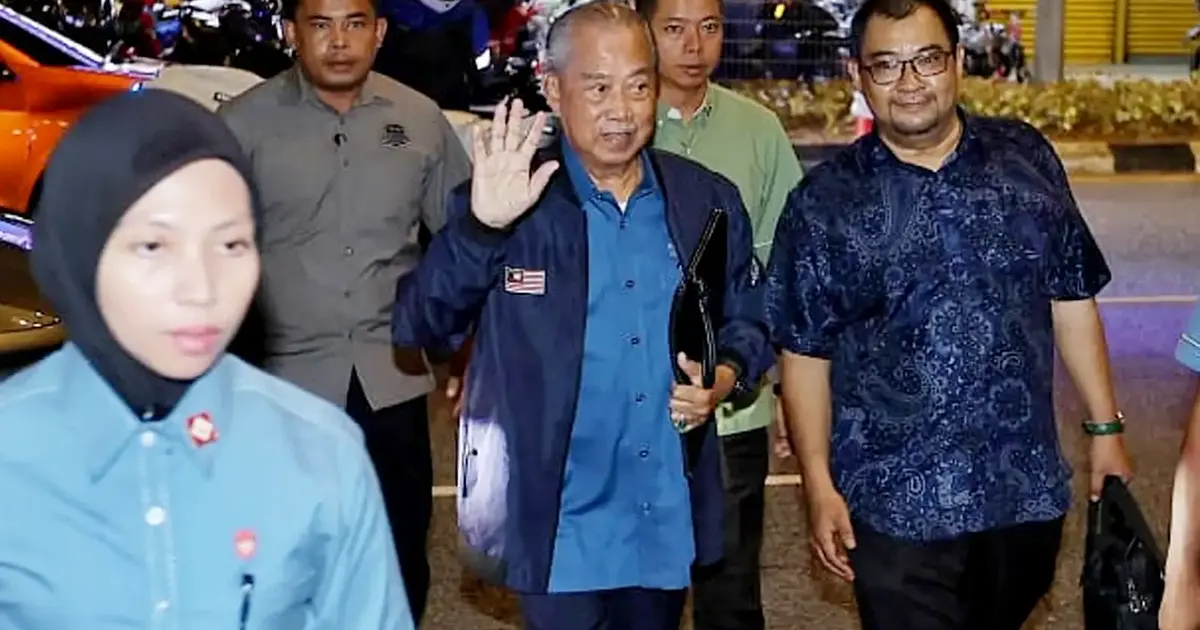
Tan Sri Muhyiddin Yassin and other senior figures from Bersatu have converged for an urgent Perikatan Nasional conclave, signalling deepening turbulence within Malaysia's largest opposition alliance. The hastily arranged gathering underscores the escalating instability gripping the three-party coalition at a time when political fortunes in Parliament remain extraordinarily fluid and each bloc's numerical strength carries outsized consequence.
The immediate catalyst for tonight's assembly is PAS's formal decision to withdraw from the Perikatan Nasional partnership. This development represents a seismic shift in the opposition landscape and dismantles what was once envisioned as a unified counterweight to the Pakatan Harapan government. The severance of ties between these parties, which have collaborated in various configurations for years, reflects irreconcilable differences that have accumulated beneath the surface despite public proclamations of solidarity.
Bersatu faces an existential reckoning following the PAS exit. The party, which functions as the primary vehicle for Muhyiddin's political ambitions and carries substantial symbolic weight as a Bumiputera-focused organisation, suddenly finds itself in a weakened position within the remaining coalition structure. The absence of PAS's parliamentary numbers and organisational machinery fundamentally alters the coalition's viability and raises uncomfortable questions about Bersatu's relevance and bargaining power in future political configurations.
The timing of this emergency session reflects the gravity with which Bersatu's leadership views the situation. Calling a full assembly of senior party figures signals that ordinary procedures and closed-door consultations are deemed insufficient. This escalation suggests divisions within Bersatu itself regarding how the party should respond, whether it should attempt to salvage the Perikatan framework with remaining partners, or whether it should consider alternative political strategies altogether.
For Malaysian political observers, the unraveling of Perikatan Nasional illustrates the fundamental fragility of coalition arrangements built more on strategic calculation than shared ideological moorings. The alliance united opposition parties against the government but never resolved deeper disagreements about governance principles, resource distribution, or long-term vision. PAS's exit suggests that temporary political partnerships, however strategically constructed, cannot indefinitely contain divergent party interests.
The implications extend beyond the opposition sphere. If Perikatan Nasional fragments entirely, Parliament's arithmetic shifts dramatically, potentially strengthening the government's position or creating unprecedented uncertainty about legislative outcomes on major bills. Smaller parties suddenly gain enhanced bargaining leverage, while larger blocs must recalibrate their approaches to securing legislative majorities. This volatility creates both risks and opportunities for Malaysia's political trajectory over the coming months.
Bersatu's predicament also highlights the vulnerabilities of single-party leadership structures dependent on one dominant personality. Muhyiddin's stature and political acumen enabled him to construct the Perikatan alliance in the first place, but his personal authority cannot offset the structural weaknesses now becoming apparent. The party requires institutional depth and internal stability that proves difficult to maintain when external circumstances shift rapidly.
Regionally, the Malaysian political turbulence carries implications for Southeast Asian opposition movements more broadly. The failure of a major opposition coalition to maintain cohesion raises questions about whether such alliances can successfully govern or whether they inevitably collapse once their primary unifying purpose—defeating an incumbent government—becomes diffuse or remote. This pattern manifests across the region and offers cautionary lessons for emerging democratic movements.
Within Bersatu itself, tonight's assembly will likely reveal fault lines about the party's future direction. Some factions may advocate for rebuilding bridges with PAS despite recent ruptures, betting that temporary disagreements can be overcome through compromise. Others may push for Bersatu to pursue independent political pathways or explore alternative coalitions that might better serve the party's interests. Muhyiddin's challenge involves navigating these tensions while preserving party unity and avoiding further defections.
The PAS decision to leave the coalition did not emerge spontaneously but represents the culmination of mounting frustrations over decision-making processes, resource allocation, and divergent political priorities. PAS, with its substantial rural base and stronger parliamentary representation, evidently concluded that remaining yoked to a weakening coalition disadvantaged its own electoral prospects and strategic positioning. This calculation reflects cold political realism rather than sudden ideological revelation.
For ordinary Malaysians, the machinations within opposition coalitions may seem removed from daily concerns about the economy, employment, and public services. Yet parliamentary stability and coalition coherence directly influence government effectiveness and the likelihood of legislative deadlock. When major opposition blocs fragment, governance suffers regardless of which party holds executive power, as parliamentary fragmentation creates leverage for smaller parties that may demand excessive concessions.
The emergency assembly represents a critical juncture for Bersatu and potentially for Malaysian opposition politics more generally. How Muhyiddin and party colleagues respond to this crisis will shape the political landscape for months ahead. Whether Perikatan Nasional can survive this blow or whether it follows the fate of numerous other opposition coalitions in fragmenting entirely remains uncertain, but tonight's gathering will offer preliminary signals about the coalition's durability and the path forward for Malaysia's complex political theatre.