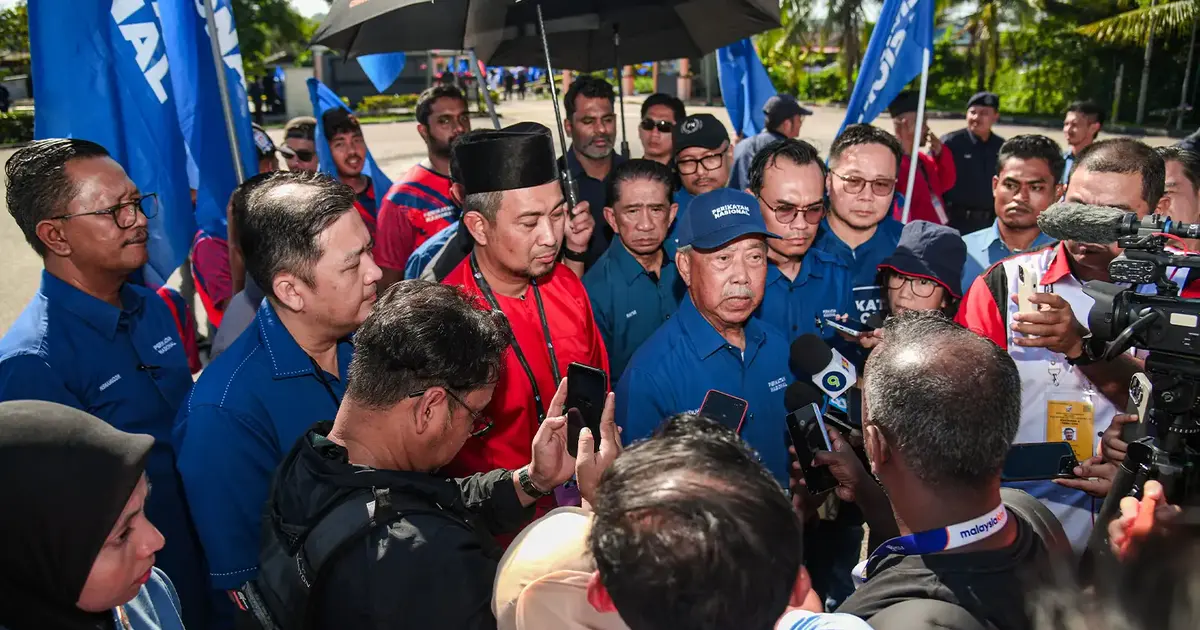
Bersatu president Muhyiddin Yassin has signalled growing confidence in Perikatan Nasional's ability to secure state governments in forthcoming elections, arguing the coalition commands a stronger foundation than commonly perceived. His remarks underscore a strategic pivot in how the opposition bloc is positioning itself ahead of potential state-level contests, moving away from narratives of weakness to emphasise coalitional flexibility and untapped political reserves across Malaysia's fractured political landscape.
The Perikatan Nasional coalition, which currently comprises PAS and Bersatu as its primary members, has historically struggled with messaging around viability despite strong performances in certain regions. Muhyiddin's confidence reflects internal calculations about support networks that extend beyond formal coalition membership, a crucial distinction in Malaysia's fluid political environment where informal alliances and seat-sharing arrangements frequently determine electoral outcomes. This approach acknowledges that formal coalition architecture often obscures the true breadth of political cooperation on the ground.
Central to Muhyiddin's assessment is the potential inclusion of Muda, the younger-oriented political party led by Syed Saddiq Syed Abdul Rahman. Muda's positioning as a reform-minded, independent force outside the traditional coalition structures makes it an attractive ally for Perikatan Nasional in state elections, particularly in urban constituencies where the party has demonstrated growing appeal. The party's support base, drawn largely from urban professionals and younger voters, complements the more rural-oriented demographics of PAS and Bersatu, creating opportunities for broader electoral coalitions at the state level.
Muhyiddin's articulation of these coalition possibilities matters significantly for Southeast Asian political dynamics, as Malaysia's electoral mathematics serve as a model for how fragmented opposition movements elsewhere in the region construct governing majorities. The emphasis on informal alliances rather than permanent institutional structures allows greater flexibility and reduces the visibility of compromise negotiations that might alienate base voters. This approach has become increasingly common across Southeast Asia as traditional parties face pressure from reform movements and regional parties with distinct ideological platforms.
The statement arrives amid broader uncertainty about when state elections might occur across Malaysia's thirteen states. Some states face electoral timetables determined by fixed tenures, while others operate under more discretionary dissolution provisions that give incumbent governments timing advantages. Muhyiddin's public confidence may serve as a morale-building exercise for the opposition coalition while simultaneously testing public and internal party responses to potential electoral scenarios. Understanding when and where elections might occur remains critical for all political coalitions in Malaysia.
For Malaysian voters and observers, the significance of Muhyiddin's remarks extends beyond simple electoral arithmetic. The statement indicates that opposition political forces view state-level governance as achievable terrain despite losing federal power in the 2023 general election. State governments in Malaysia control significant fiscal resources, including land policy, local governance, and regional development priorities. Control over these levers affects everyday citizen experiences with taxation, housing availability, and infrastructure development, making state-level politics substantially more relevant to lived experience than strictly federal considerations alone.
The inclusion of Muda in Muhyiddin's calculations also reflects changing political generational dynamics within Malaysia's opposition movements. Muda represents a more digitally native, reform-oriented political impulse than traditional opposition parties, appealing to voters who view both Pakatan Harapan and Perikatan Nasional as tainted by previous governance records or ideological constraints. By publicly acknowledging Muda's alliance potential, Muhyiddin signals awareness that opposition electoral success increasingly depends on accommodating these newer political forces rather than marginalising them as upstart competitors.
Peikatan Nasional's current positioning contrasts sharply with its performance in the 2023 general election, when the coalition won only 43 parliamentary seats despite securing popular support in certain regions. This performance gap—where regional strength failed to translate into proportional national representation—highlights how Malaysia's first-past-the-post electoral system distorts political outcomes. State elections, with their smaller geographic scale and more localised campaign dynamics, potentially favour Perikatan Nasional's concentrated regional support bases more effectively than nationwide contests. Understanding these structural advantages explains Muhyiddin's confidence more fully than simple assertions about party strength.
Regional analysts tracking Malaysian politics note that opposition coalition dynamism often increases during periods when federal government is perceived as weak or unpopular. Current political circumstances, characterised by significant economic headwinds, ongoing questions about governmental efficiency, and public scepticism toward institutional performance, create environments where opposition messaging resonates more effectively. Muhyiddin's emphasis on coalition potential appears timed to capitalise on this broader sentiment while party structures consolidate around state-level organising efforts that could pay electoral dividends within 12-24 months.
The pathway Muhyiddin describes—where Perikatan Nasional governs states through diverse alliance combinations rather than monolithic electoral dominance—mirrors governance patterns increasingly common across Southeast Asia. Thailand, Indonesia, and Cambodia have all experienced coalition governments dependent on flexible parliamentary alignments rather than single-party majorities. Understanding these models helps contextualise Malaysian political development within regional trajectories where fluid, multi-party coalition systems become institutionalised features of democratic competition rather than temporary anomalies requiring resolution through institutional reform.
Looking forward, Muhyiddin's public positioning on coalition potential serves practical purposes beyond rhetorical effect. State-level negotiations with parties like Muda require establishing credible frameworks where smaller parties receive meaningful representation or portfolio allocation. Public statements about coalition openness signal negotiating flexibility to these potential allies while simultaneously managing expectations among Bersatu and PAS rank-and-file members who might resist power-sharing arrangements. This delicate balancing act represents central challenges facing opposition political movements across Malaysia and the wider Southeast Asian region.

