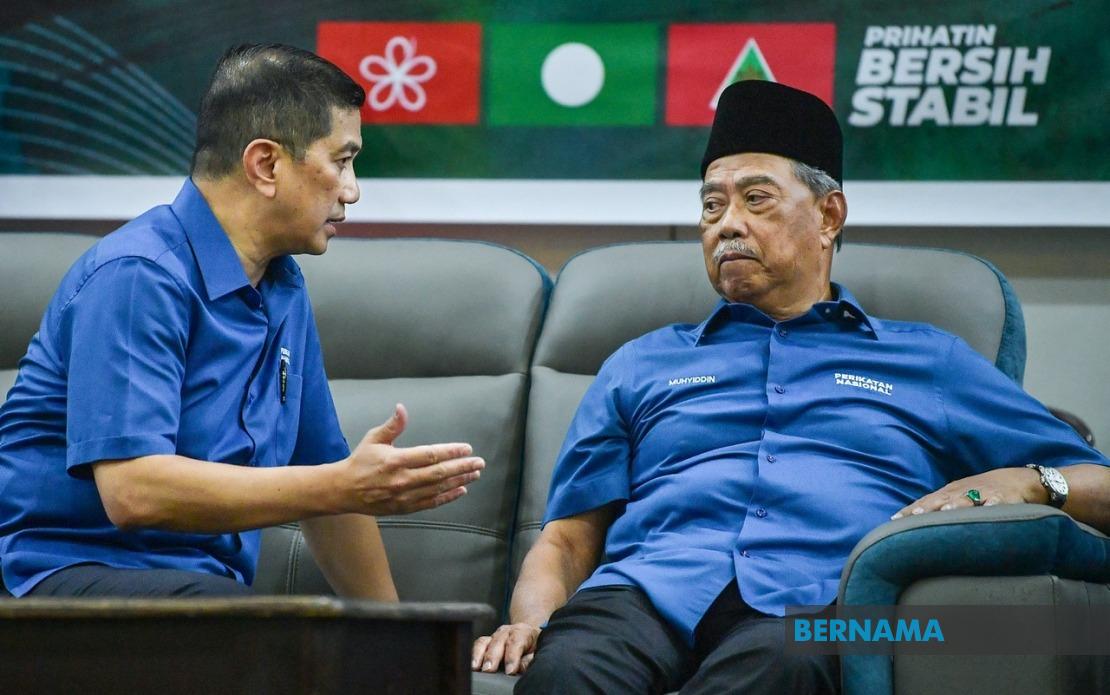
Tan Sri Muhyiddin Yassin, the former Prime Minister and current Bersatu party president, has thrown his support behind a package of government initiatives unveiled by Prime Minister Datuk Seri Anwar Ibrahim to address mounting pressures on household finances and business operations across Malaysia. The measures, which take effect on September 1, represent a significant policy shift designed to tackle widespread concerns about affordability and economic strain affecting ordinary Malaysians and enterprises of varying sizes.
Among the centrepiece announcements is the restoration of the RON95 fuel subsidy eligibility threshold from 200 litres to 300 litres monthly, a decision that will directly impact vehicle owners across the country who have grown accustomed to the lower ceiling introduced during an earlier period of fiscal consolidation. Alongside this fuel measure, the government has expanded relief for the business community by raising the e-Invoicing exemption limit to encompass enterprises generating annual revenue up to RM3 million. Muhyiddin characterised these twin policies as essential mechanisms to help both consumers and business operators navigate an environment of persistently elevated operational costs.
The former premier has emphasised the critical importance of swift and effective implementation of these announcements. In particular, he underscored the necessity for relevant ministries and implementing agencies to distribute allocated funds expeditiously and ensure that assistance reaches all qualified beneficiaries without unnecessary delay or bureaucratic friction. This concern about execution reflects a broader challenge facing Malaysian governance, where well-intentioned policy announcements sometimes falter in practical delivery, resulting in public frustration and reduced impact of intended relief.
Muhyiddin's endorsement extends beyond the fuel and taxation components to encompass several other initiatives within the package. An additional RM500 million allocation for school maintenance addresses longstanding infrastructure deficiencies in educational institutions nationwide, whilst simultaneous digitalisation efforts in healthcare services aim to modernise and streamline medical delivery systems. Perhaps most notably for Malaysia's growing digital workforce, the government will provide subsidised access to artificial intelligence software subscriptions for younger citizens, positioning the nation to compete effectively in an increasingly technology-driven economy.
Recognising the particular vulnerability of Malaysia's vast small and medium enterprise sector, the package includes substantial injections of liquidity and direct support. An extra RM1 billion in micro-credit facilities will become available to small traders struggling with cash flow constraints, whilst a parallel RM200 million grant programme targets petty merchants, night market vendors, and women operating home-based businesses. These mechanisms represent deliberate attempts to stimulate commercial activity within the MSME ecosystem, which employs millions of Malaysians and constitutes a crucial engine of grassroots economic participation and employment creation.
The Bersatu president has signalled his hope that these announced measures will constitute merely the opening salvo in a comprehensive policy offensive aimed at comprehensively relieving the cost-of-living crisis. In his remarks, he explicitly called for additional measures to be unveiled in the 2027 budget framework, suggesting that current initiatives, whilst welcome, remain insufficient to address the magnitude of financial pressures confronting Malaysian households and enterprises. This staged approach to relief suggests an acknowledgment that sustainable resolution of affordability challenges requires sustained policy attention beyond short-term measures.
Critically, Muhyiddin has urged the government to undertake more fundamental reassessment of taxation and subsidy rationalisation policies that he identifies as direct contributors to the public's current financial hardship. This call implies frustration with piecemeal adjustments and suggests advocacy for more systemic reform of fiscal architecture. Such repositioning reflects broader political economy debates within Malaysia regarding the appropriate balance between fiscal sustainability and social protection, particularly as commodity prices fluctuate globally and domestic revenue pressures intensify.
The policy package must be understood within the broader context of Malaysian governance challenges surrounding cost-of-living management. Successive governments have grappled with reconciling the need to maintain fiscal discipline with popular demands for affordable essential services and goods. Fuel subsidies, in particular, have proven chronically contentious, with previous attempts at rationalisation provoking significant public backlash and political consequences. The decision to expand rather than further restrict fuel subsidy eligibility therefore represents a strategic choice to prioritise near-term political palatability over long-term fiscal consolidation objectives.
For ordinary Malaysians, particularly those in the lower and middle income brackets, these measures translate to tangible if modest financial relief. The additional 100 litres of subsidised fuel monthly permits slightly greater consumption at reduced cost, whilst the expanded e-Invoicing threshold eases compliance burdens on small business operators. The healthcare and education investments, though welcome, will likely generate benefits that materialise over extended timeframes rather than providing immediate respite from immediate financial pressures.
The package also signals evolving policy attention to digital economy infrastructure and artificial intelligence adoption, reflecting Malaysia's strategic recognition that long-term competitiveness increasingly depends on technological sophistication. By subsidising AI software access for youth, the government tacitly acknowledges that digital skills and fluency constitute essential components of future employability and economic participation. This dimension transcends simple cost-of-living relief, instead positioning investments in technological capability as foundational to sustained prosperity.
Muhyiddin's support carries particular significance given his positioning as a senior figure capable of providing cross-partisan acknowledgment of government policy direction. His endorsement potentially buffers the initiatives against criticism from opposition quarters and provides backing from a respected voice within the Bumiputera political establishment. However, his simultaneous call for more comprehensive future measures subtly signals that current steps, whilst commendable, require supplementation through additional policy adjustments to adequately resolve underlying affordability challenges.
As these initiatives take effect, their success will depend substantially on effective implementation and genuine delivery of promised relief to eligible recipients. Malaysian experience demonstrates that announcements frequently exceed achievements, with bureaucratic delays and inadequate communication creating gaps between policy intention and household reality. The coming months will therefore test the government's capacity to execute these commitments whilst simultaneously maintaining the fiscal discipline necessary to preserve macroeconomic stability in an uncertain global environment.

