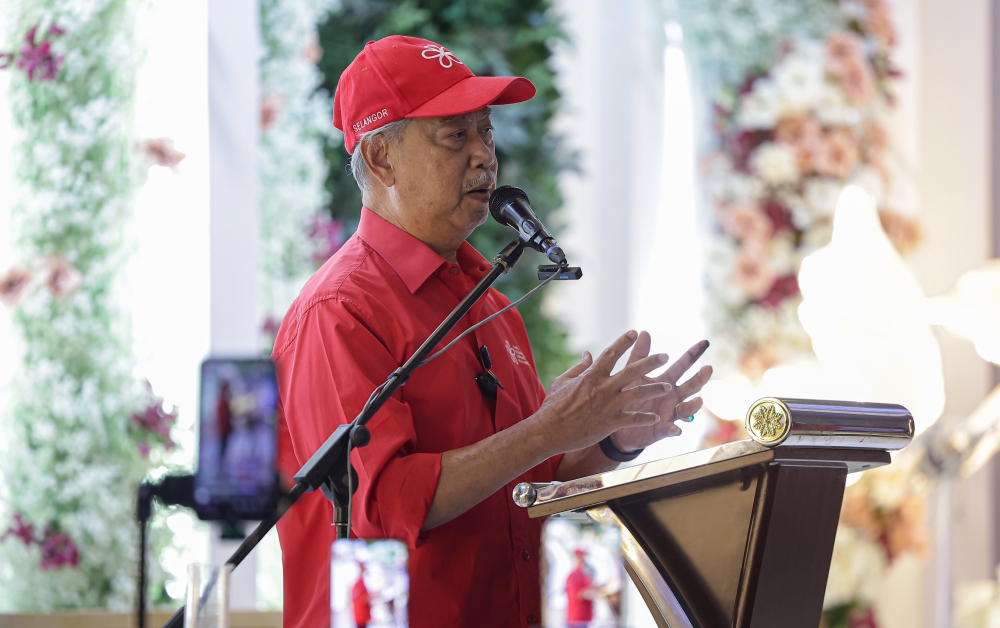
Tan Sri Muhyiddin Yassin has staked a significant claim for Parti Pribumi Bersatu Malaysia, asserting that his party now occupies a unique position as the sole genuinely independent Opposition voice within Parliament. The declaration comes amid a period of considerable flux in Malaysian political alignments, where traditional Opposition-Government boundaries have become increasingly blurred through various cooperation agreements and shifting partnerships that have fundamentally altered the conventional parliamentary structure.
Muhyiddin's assertion reflects the complexities facing Malaysia's political landscape, where the traditional binary opposition has given way to a more fragmented system. The Bersatu president's remarks suggest that other Opposition-aligned parties have, through their involvement in government cooperation pacts or regional alliances, forfeited their capacity to operate as uncompromising critics of the ruling coalition. This positioning attempts to distinguish Bersatu from competitors like the Democratic Action Party and Amanah, parties that have made strategic decisions to participate in various formal or informal arrangements with the Government.
The timing of Muhyiddin's pronouncement carries particular weight given Malaysia's ongoing political volatility. Since the 2022 general election, which produced a fragmented Parliament without a clear majority, the country has experienced multiple shifts in coalition arrangements. These realignments have tested the coherence of Opposition blocs, forcing parties to choose between maintaining ideological purity and securing political relevance through negotiated settlements with the Government. Bersatu's decision to remain outside these formal arrangements now presents itself as principled independence, though critics might counter that it reflects limited leverage rather than principled positioning.
Muhyiddin's strategic messaging also serves a broader organizational purpose for Bersatu, which has experienced internal turbulence and membership defections since splitting from the broader Perikatan Nasional coalition in 2023. By positioning the party as Parliament's exclusive authentic Opposition, the leadership can rally remaining supporters around a core identity and potentially attract opposition-minded voters frustrated with other parties' compromises. This narrative construction seeks to transform what some perceive as political isolation into a badge of honor and principled commitment to parliamentary scrutiny.
The claim warrants careful examination given Malaysia's parliamentary context. Opposition parties, whether formally designated or de facto critics, serve crucial functions in democratic systems by subjecting Government policies to rigorous examination, proposing alternative approaches, and representing constituents dissatisfied with ruling coalition decisions. However, the definition of what constitutes a "true" Opposition remains contested terrain in Malaysian politics, where cooperative arrangements—sometimes called "confidence and supply" agreements in Commonwealth democracies—have become increasingly common globally as coalitional governance replaces clear-cut majorities.
Bersatu's independence credentials rest partly on its consistent voting patterns and parliamentary interventions, though the party's relatively modest parliamentary representation (compared to larger Opposition blocs) means its actual capacity to impede Government legislative agendas remains circumscribed. The party holds fewer parliamentary seats than DAP or Amanah, and its influence derives more from vocal criticism and occasional coalition-building with other Opposition members than from numerical strength. Muhyiddin's rhetorical claim to Opposition authenticity thus compensates for structural limitations by elevating moral and principled dimensions of parliamentary opposition.
From a Southeast Asian perspective, Malaysia's political fluidity reflects broader regional trends where established two-party or two-coalition systems have fractured into more complex multiparty configurations. Thailand's fragmented Parliament, Indonesia's coalition-dependent governance, and the Philippines' presidential systems all demonstrate how traditional Opposition categories have become inadequate in contemporary Southeast Asian democracy. Muhyiddin's assertion that Bersatu represents something distinctive resonates with voters and observers seeking clarity amid complexity, even if the underlying political mathematics tell a different story.
The implications for Malaysian governance extend beyond Bersatu's internal fortunes. If multiple parties now inhabit Opposition space with differing degrees of willingness to cooperate with Government, Parliament's scrutiny function may actually strengthen through diversified critical voices rather than suffer from fragmentation. Conversely, if Bersatu's independence merely reflects inability to negotiate power-sharing arrangements, the claim to Opposition authenticity becomes more hollow. The distinction between principled opposition and marginalization often depends on subsequent political developments and electoral results.
Muhyiddin's pronouncement also addresses internal party morale and retention, as Bersatu members might feel validated by leadership assertions of principled positioning, even amid limited parliamentary influence. Framing isolation as independence helps maintain organizational cohesion and provides psychological compensation for reduced ministerial appointments or influence compared to Government coalition partners. This rhetorical strategy, while politically useful, obscures fundamental questions about whether Bersatu's Opposition status reflects considered strategic choice or constrained circumstances.
Looking forward, Bersatu's positioning as parliamentary purist Opposition will be tested by electoral performance and institutional developments. Should the party gain parliamentary numbers through future elections, its claimed independence may translate into enhanced scrutiny capacity. Conversely, if electoral performance continues declining, accusations that Bersatu's opposition authenticity reflects political marginalization rather than principled independence may intensify. Muhyiddin's current framing thus represents an attempt to convert potential weakness into perceived strength while Malaysian politics continues its unsettled evolution.

