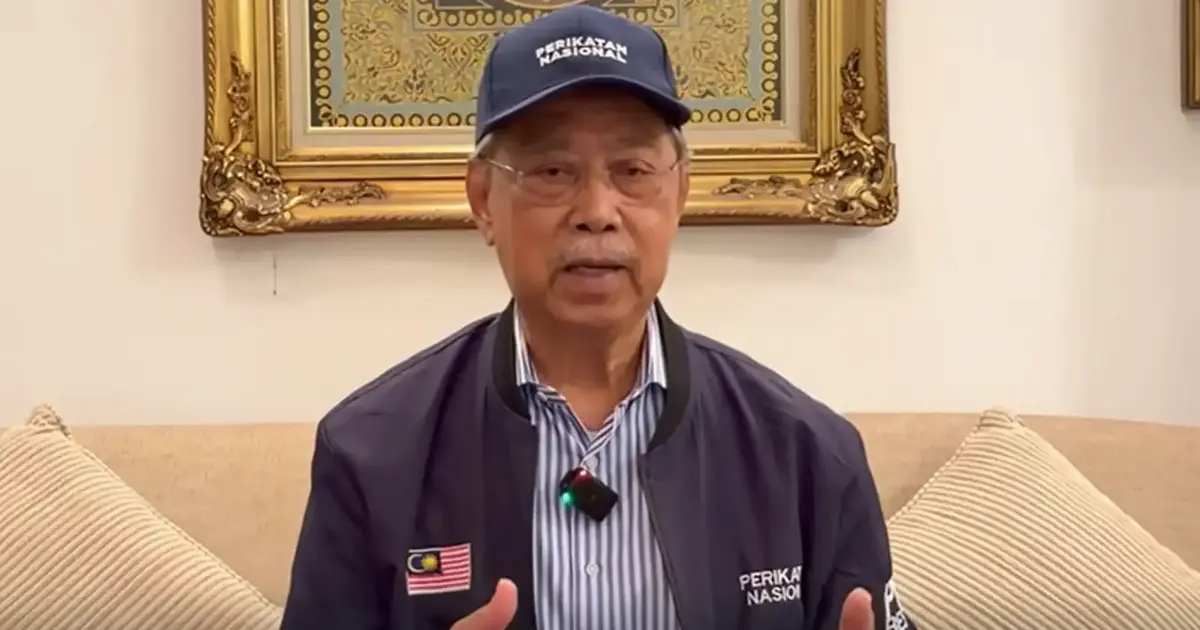
Muhyiddin Yassin, the Bersatu president and former Johor menteri besar, has launched a direct appeal to voters in his home state, positioning himself as a son of Johor with deep connections to the region's people and their aspirations. The move signals an intensified campaign strategy centred on local identity and political legitimacy in a state that has historically wielded considerable influence in national politics. By invoking his background as a long-serving administrator in Johor, Muhyiddin seeks to rebuild political capital among voters who may be reassessing their options in an increasingly fragmented electoral landscape.
The appeal comes at a critical juncture for Perikatan Nasional, the political coalition anchored by Bersatu alongside the Islamist PAS and smaller partners. Since its formation, the coalition has undergone considerable scrutiny and faced questions about its cohesion and governance vision. Muhyiddin's emphasis on giving the coalition "another chance" suggests acknowledgment that public confidence requires reconstruction, particularly in strategic states like Johor where electoral mathematics remain decisive in determining national government outcomes.
Muhyiddin's framing of his political identity as fundamentally grounded in service to the people represents an attempt to transcend partisan divisions and appeal to voters across demographic and socioeconomic lines. This rhetorical strategy—emphasizing personal commitment to constituents rather than merely party affiliation—is designed to counter narratives of political opportunism that have dogged both Muhyiddin and his coalition. By rooting his appeal in his administrative track record in Johor, he implicitly invites comparison between his tenure as menteri besar and subsequent governance under other administrations.
Johor's electoral importance cannot be overstated in Malaysian political calculations. The state, one of the largest contributors to federal coffers and home to significant urban and rural populations, has consistently served as a bellwether for national trends. Control of Johor carries symbolic and practical significance—the state government commands resources and administrative machinery that can influence both state-level policy outcomes and national political momentum. Muhyiddin's decision to centre his appeal on Johor suggests the coalition views the state as winnable territory and critical to broader electoral ambitions.
The distinction Muhyiddin draws between his personal identity as a Johorean and his role as national party leader reflects broader tensions within Malaysian politics between localised constituencies and centralised party structures. Voters in Johor, like those elsewhere, frequently prioritise immediate local concerns—infrastructure development, education quality, economic opportunities—over national ideological debates. By emphasizing his roots and long-standing presence in the state, Muhyiddin attempts to bridge this gap between national coalition politics and granular local interests.
Peikatan Nasional's composition warrants consideration when assessing voter receptiveness to Muhyiddin's overture. The coalition's partnership with PAS, which commands significant support among Malay-Muslim voters, provides a foundation for mobilization. However, this partnership has also triggered concerns among non-Muslim communities and urban voters regarding the coalition's governing philosophy and commitment to inclusive politics. Muhyiddin's appeal to the broader Johorean constituency, framed around service rather than religious or ethnic identity, may represent an attempt to broaden coalition appeal beyond its core support bases.
The political landscape facing Perikatan Nasional has shifted considerably since the coalition's formation and its brief period helming national government. Public sentiment regarding coalition stability, ministerial performance, and corruption allegations remains volatile. For many voters, the question is not simply whether to support the coalition again, but whether it has demonstrated genuine commitment to the reforms and governance improvements it promised. Muhyiddin's personal plea suggests the coalition believes renewed emotional connection to leadership might compensate for governance performance shortcomings.
Economically, Johor voters have experienced both prosperity and uncertainty in recent years. The state's manufacturing base, logistics infrastructure, and proximity to Singapore have generated wealth, yet economic distribution remains uneven and job security concerns persist across sectors. Muhyiddin's appeal implicitly promises that his coalition's policies would address these economic anxieties more effectively than alternatives. The credibility of this promise rests partly on Muhyiddin's track record during his tenure as menteri besar—a period voters in the state can directly evaluate based on their lived experience.
The strategic timing of this appeal matters significantly. Electoral cycles in Malaysia involve multiple contests—state assemblies, parliamentary constituencies, and federal-level coalition manoeuvres—occurring across different timeframes. Positioning himself early as the face of Perikatan Nasional in Johor allows Muhyiddin to establish narrative control before opposing coalitions consolidate their messaging. The appeal also serves a secondary function within Bersatu itself, reinforcing Muhyiddin's authority within the party and his position as the coalition's primary spokesperson.
Opposition coalitions, particularly those led by Pakatan Harapan, will respond to Muhyiddin's overture by highlighting governance failures and broken promises during previous administrations. The counter-narrative will likely emphasize that voter loyalty should depend on demonstrated performance rather than nostalgia or personal appeal. This contestation between rival coalitions for Johor voters will substantially shape the state's political future and may provide indicators for national trends.
Muhyiddin's appeal ultimately reflects a political calculation that many Johorean voters retain capacity to be persuaded, that local identity and personal connection to leadership remain electorally significant, and that framing the choice as between competing visions of who best serves the people—rather than abstract ideological differences—represents the optimal strategy for Perikatan Nasional. Whether this approach succeeds depends on whether voters perceive genuine commitment to their interests or view the appeal as strategic positioning disconnected from substantive governance improvements.

