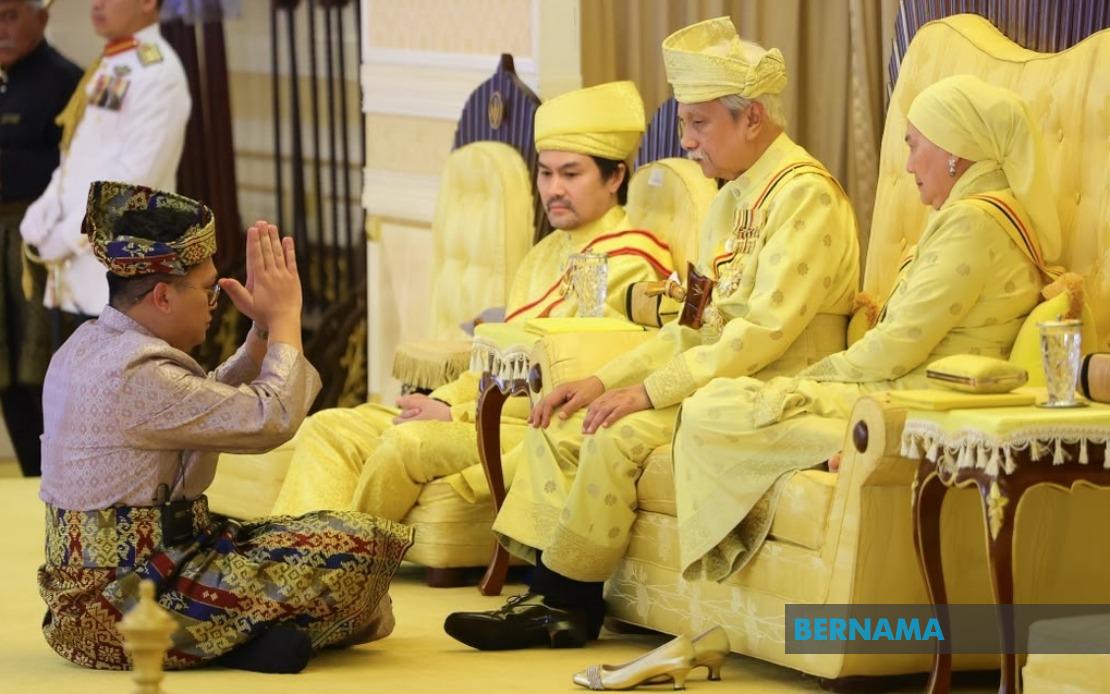
The formal installation of Muhammad Faris Johari as the 11th Undang of Luak Sungei Ujong took place on June 27, when Tuanku Muhriz Tuanku Munawir, the Yang Dipertuan Besar of Negeri Sembilan, presided over the ceremonial investiture at Istana Besar Seri Menanti in Kuala Pilah. The appointment marks another significant moment in the state's traditional hierarchy, with the newly elevated leader receiving the hereditary title Datuk Klana Petra as part of the formal recognition.
The investiture followed the conventional protocols governing Negeri Sembilan's customary leadership system. The proceedings commenced with the Orang Empat Istana, the council of senior palace officials, formally seeking the ruler's permission to proceed with the ceremony. This ritualistic seeking of consent underscores the constitutional relationship between the state's traditional chieftains and the supreme authority of the Yang Dipertuan Besar, reinforcing the hierarchical structure that underpins governance in the Nine Districts of Negeri Sembilan.
Following the granting of permission, Muhammad Faris pledged his allegiance and loyalty to Tuanku Muhriz in a ceremony steeped in tradition. This oath represents far more than ceremonial formality—it symbolises the continuing bond between customary leadership and the state's institutional framework. The ruler subsequently proclaimed the 28-year-old's formal assumption of office, marking the transition of responsibility for Luak Sungei Ujong to his stewardship.
Tuanku Muhriz used the occasion to underscore expectations for the state's customary leadership. In his address, the ruler emphasised that the pledges made during the ceremony must be honoured with steadfast sincerity, personal integrity, and an acute awareness of the responsibilities inherent to the position. These remarks carried particular weight given the significance of maintaining public confidence in traditional institutions at a time when Malaysia's constitutional monarchy faces scrutiny and evolving perceptions among younger populations.
The Yang Dipertuan Besar further directed his remarks toward all Orang Kaya—the collective chieftains of the state—reinforcing their obligation to remain steadfastly loyal to his office and to cultivate respectful, harmonious relationships with both the ruler and the palace institution. This collective address served as a reminder that individual appointments occur within a broader framework of unified customary governance, where all traditional leaders share mutual responsibilities toward the state's welfare and institutional preservation.
The installation witnessed substantial representation from Negeri Sembilan's highest circles. Tuanku Aishah Rohani Tengku Besar Mahmud, the Tunku Ampuan Besar, attended alongside Tunku Ali Redhauddin Tuanku Muhriz, the Tunku Besar Seri Menanti, and Tunku Zain Al-'Abidin, the Tunku Panglima Besar. Menteri Besar Datuk Seri Aminuddin Harun also graced the ceremony, reflecting the interconnection between traditional and modern state administration. The presence of senior government department heads further demonstrated the formal integration of customary leadership within Negeri Sembilan's broader governance apparatus.
Tuanku Muhriz articulated a broader vision for preserving institutional continuity in Negeri Sembilan's unique constitutional framework. He stressed that relationships grounded in mutual respect, reciprocal trust, and collaborative consensus remain foundational to sustaining the constitutional monarchy in the state. These principles, he suggested, extend beyond ceremonial observance to encompassing the practical safeguarding of customary traditions and the nurturing of conditions conducive to sustainable state development and social harmony.
The ruler's emphasis on Adat Perpatih—the customary law system practised in Negeri Sembilan—represents recognition of the profound cultural significance embedded within the state's governance traditions. By calling upon the population to work alongside customary leadership whilst preserving and upholding these ancestral values, Tuanku Muhriz framed the appointment within the larger context of cultural continuity in an increasingly modernised Malaysia. This framing acknowledges tensions between traditional systems and contemporary governance while asserting the enduring relevance of customary institutions.
Muhammad Faris brings contemporary professional credentials to the traditionally-oriented position. Born on October 30, 1997, he completed undergraduate studies in accountancy at Universiti Teknologi MARA, subsequently obtaining professional qualifications through the Association of Chartered Certified Accountants programme in 2022. His qualification at age 28 demonstrates a younger generation assuming roles traditionally held by their elders, potentially signalling evolving dynamics within Negeri Sembilan's customary hierarchy. He is married to Sharifah Amirah Syed Ismail Ash-Shahab.
The appointment of Muhammad Faris represents continuity within the system of nine luaks, or territorial divisions, that characterise Negeri Sembilan's distinctive political structure. Each luak maintains its own undang, creating a federal arrangement unique among Malaysian states. This decentralised arrangement, whilst complex administratively, has preserved localised autonomy and customary governance patterns that distinguish Negeri Sembilan from neighbouring states following the Adat Perpatih system.
The same morning witnessed preparation for another significant ceremonial installation. A further royal audience was scheduled to formalise the appointment of the 22nd Undang of Luak Rembau, another of Negeri Sembilan's constituent territories. The clustering of these installations demonstrates the periodic renewal of customary leadership across multiple luaks, reflecting generational transitions or succession events that occur within the state's traditional framework.
The installation of Muhammad Faris occurs within Malaysia's broader discourse regarding the relevance and future of traditional institutions. Whilst some observers question whether customary leadership structures remain meaningful in contemporary governance, others argue that such institutions provide valuable continuity, cultural grounding, and community representation that modern bureaucratic structures may inadequately supply. Negeri Sembilan's sustained commitment to traditional ceremonies and customary leadership suggests that the state regards these institutions as enduring components of its political identity, notwithstanding the integration of modern administration and governance practices.

