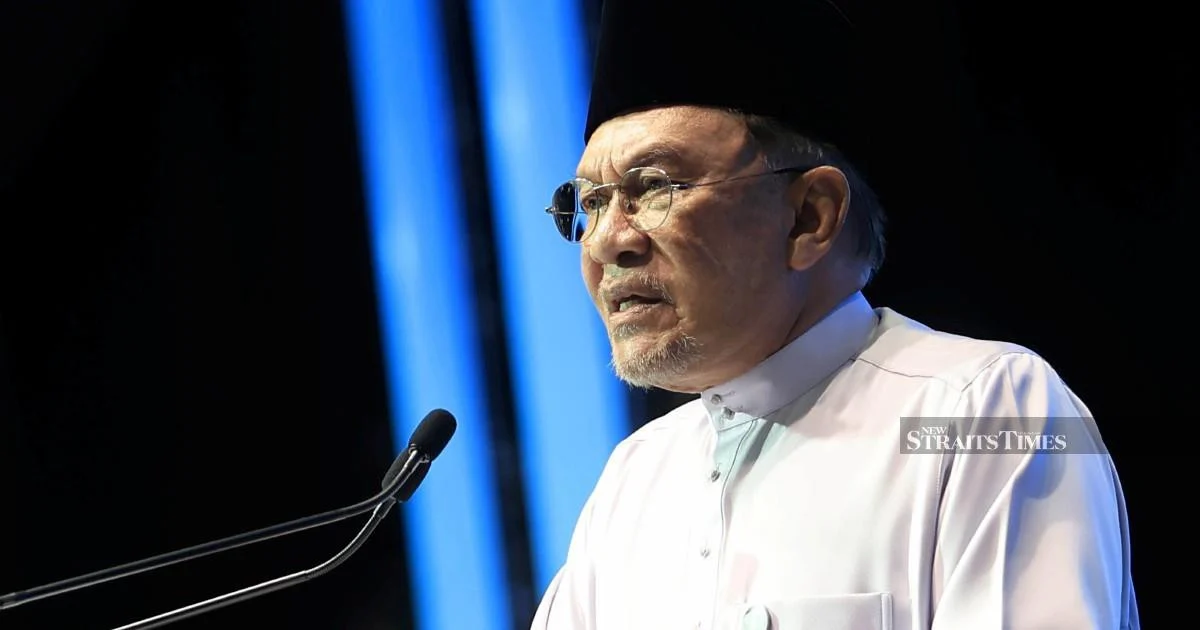
The Muar district office has firmly disputed allegations that Prime Minister Datuk Seri Anwar Ibrahim faced restrictions when attempting to use a government facility for public engagement activities. The statement, issued on Tuesday, specifically addressed accusations that officials had prevented the Prime Minister from accessing the Penghulu Mukim Sungai Balang Complex during an event held in the previous month.
The controversy highlights the intersection of administrative governance and political activity during a period when Johor state has become a focal point of national political attention. The denial marks an important moment in clarifying the operational independence of district-level government offices and their relationship with federal leadership, particularly given the symbolic importance of government facilities in facilitating prime ministerial functions.
Such disputes over access to public buildings during election-adjacent periods carry significant implications for democratic processes and the principle of equal treatment of political figures. In Malaysia's federal structure, the management of government complexes involves multiple layers of authority, creating potential friction points between state administrators, federal officials, and political operatives. The Penghulu Mukim Sungai Balang Complex, as a district-level facility, serves as a venue for routine administrative functions and community programmes that carry both governance and political dimensions.
The timing of these allegations is noteworthy, emerging during a phase when Johor politics commands heightened national scrutiny. Any perception that government infrastructure is being weaponised to restrict political access—regardless of the party involved—raises concerns about institutional neutrality and undermines public confidence in administrative processes. District offices in Malaysia maintain responsibility for numerous public-facing functions, and their capacity to host political gatherings represents an important avenue for politicians to engage constituents directly.
The Prime Minister's engagement activities in districts like Muar typically form part of broader administrative and electoral connectivity strategies. Community programmes utilising government complexes allow federal leadership to maintain visible presence at grassroots levels while leveraging established public infrastructure. When questions emerge about access to such facilities, they inevitably trigger broader discussions about whether bureaucratic systems are functioning according to merit and procedure or responding to political pressure.
Muar district, located within Johor's administrative framework, encompasses diverse communities with varying political affiliations and interests. The capacity of district officials to provide impartial access to government facilities across the political spectrum remains essential to maintaining public trust in institutions. The denial issued by the district office can be understood partly as an assertion of this institutional independence and resistance to allegations that might suggest administrative capture or partisan bias.
The absence of detailed explanation regarding what transpired during the alleged incident leaves room for interpretation among observers seeking to assess the credibility of both the original claims and the subsequent denial. In the Malaysian context, where concerns about institutional integrity periodically surface, such episodes become material for broader political narrative-building. Each side in Johor's intensely competitive political environment will likely interpret the district office's statement through their respective lenses.
The government complex in question, serving Sungai Balang mukim residents, represents the type of facility that should remain accessible for legitimate governance and community engagement purposes. The denial therefore carries implicit reassurance that administrative procedures were followed appropriately and that no political interference occurred. However, greater transparency regarding the specific circumstances—whether related to facility availability, scheduling conflicts, security protocols, or administrative requirements—would strengthen the credibility of such denials in the eyes of sceptical observers.
For Malaysian voters and political observers, incidents like this underscore the importance of distinguishing between genuine administrative constraints and politically motivated obstruction. District offices operate within regulatory frameworks that sometimes legitimately restrict facility usage based on capacity, maintenance schedules, conflicting bookings, or security considerations. When officials deny access allegations, the public reasonably expects clarity about the actual reasons behind any restrictions that may have occurred.
The Johor political environment, characterised by intense competition and multiple power centres, creates conditions where misunderstandings or disputes regarding administrative procedures can quickly acquire political significance. A community engagement programme that cannot proceed as planned at one location typically relocates to alternative venues, yet the circumstances surrounding such relocations can fuel narratives about institutional dysfunction or political interference. The district office's statement attempts to arrest such narratives before they crystallise into broader accusations.
Moving forward, this episode suggests value in establishing clearer protocols regarding government facility usage during politically sensitive periods. Transparent booking systems, published availability schedules, and documented reasons for any access restrictions could prevent similar disputes. Such institutional improvements would benefit not only the Prime Minister's office but also all politicians and community organisations seeking to utilise government infrastructure.
The incident ultimately reflects broader tensions within Malaysia's system of federalism and political competition, where district-level administrators occupy positions requiring balance between federal directives and local political dynamics. The denial from Muar district office represents one such attempt to navigate these pressures while asserting administrative integrity and impartiality.

