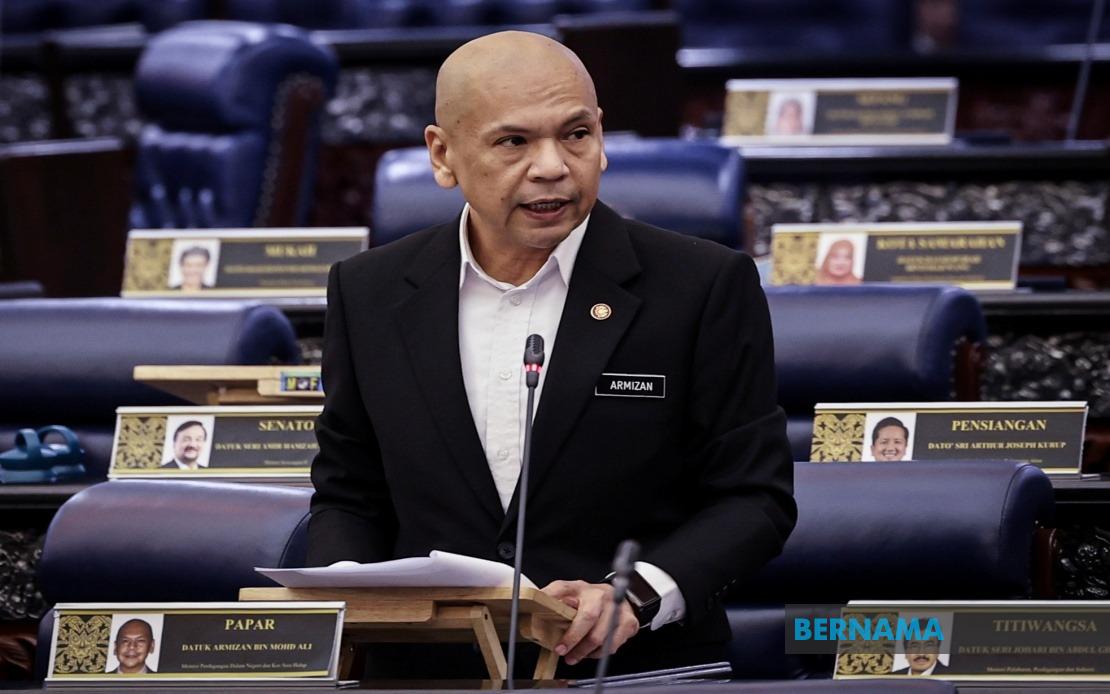
Malaysian parliamentarians have stressed the critical importance of conducting any investigation stemming from the Royal Commission of Inquiry report on Lembaga Tabung Haji with full transparency and independence, arguing that such rigour is essential to protect the interests of depositors and uphold public trust in national institutions. The call came during a special sitting of the Dewan Rakyat convened to deliberate on the commission's findings, which have thrown into sharp relief long-standing concerns about governance and financial management at the hajj fund administrator.
Minister of Domestic Trade and Cost of Living Datuk Armizan Mohd Ali underscored that investigative proceedings must also maintain professional standards throughout, ensuring that conclusions are drawn solely from factual assessment and legal analysis rather than speculation or political posturing. His remarks reflected mounting frustration within parliament at the polarisation surrounding the issue, where accusations of misconduct have become entangled with counter-accusations of defamation, leaving many Malaysians bewildered about what actually transpired and who bears responsibility for the failings that the RCI documented.
The landscape surrounding Tabung Haji's troubles has become increasingly fractious, with various stakeholders pointing fingers at one another whilst invoking slander claims and allegations of libel in equal measure. This muddied environment has complicated public understanding of the fundamental issues at stake, obscuring rather than clarifying what went wrong within the institution and what remedial steps are genuinely necessary. Armizan, the Papar Member of Parliament, welcomed the prospect of enforcement agencies stepping in to conduct thorough investigations, framing such action as an essential ingredient in breaking through the fog of accusation and establishing clear facts.
Beyond the investigative imperative, lawmakers have emphasised that each of the twenty-five recommendations contained in the RCI report demands careful examination and rigorous implementation to complete Tabung Haji's recovery trajectory. The fund has already returned to a position of financial health through various administrative initiatives, yet the structural and governance improvements outlined in the commission's findings remain crucial to preventing recurrence of the problems that emerged between 2014 and 2020, a period when the institution's vulnerabilities became acute. Armizan expressed appreciation for management's recovery efforts whilst stressing that consolidating institutional direction and governance structures must remain a paramount concern.
A significant dimension of the debate centres on departmental responsibility for Tabung Haji's oversight, particularly concerning the division of labour between religious and financial authorities. Minister of Women, Family and Community Development Datuk Seri Nancy Shukri advocated for preserving hajj administration under the Minister in the Prime Minister's Department (Religious Affairs), whilst ensuring that financial and investment functions remain the purview of the Finance Ministry. This structural arrangement, she argued, reflects a sensible specialisation of responsibilities according to professional expertise and reduces duplication of effort, allowing each portfolio to receive the attention it requires from appropriately qualified officials.
The question of political appointments to Tabung Haji's board has emerged as a flashpoint in parliamentary discourse, with some lawmakers questioning whether individuals with political connections should occupy governance positions. Nancy addressed this tension by reframing the conversation away from whether appointees possess political backgrounds and towards whether they demonstrate the integrity, qualifications, experience and capability necessary to discharge their fiduciary duties competently. Her intervention suggests that the fundamental concern should not be the political origin of board members but rather their fitness for the responsibilities entrusted to them, a distinction that may prove decisive in future deliberations about institutional governance.
Nancy advocated for establishing explicit criteria governing board appointments, including clearly defined selection methodologies and specified areas of requisite expertise. Under such a framework, merit and suitability for the particular responsibilities involved would become the primary considerations, with political affiliation relegated to secondary relevance. The minister's position implies that institutions can accommodate individuals with political networks provided they meet rigorous standards of competence and probity, though such individuals must never be appointed merely as political patronage sinecures divorced from genuine capability. This analytical approach potentially offers a pathway beyond the sterile debate about whether political appointees per se represent a governance problem.
The RCI report, released publicly on July 29 after government decision to ensure transparency, catalogues numerous governance and operational deficiencies spanning the six-year period ending in 2020. The commission articulated twenty-five reform recommendations, of which Tabung Haji had implemented approximately seventy-five per cent by the end of July, indicating substantial administrative commitment to remediation. These findings reveal systemic weaknesses in how the institution managed finances, made investment decisions and exercised oversight, failures that directly affected millions of Malaysian pilgrims whose savings and interests depended upon prudent stewardship.
The special parliamentary sitting itself represents a significant institutional response to the RCI's work, providing MPs from across the political spectrum with a platform to scrutinise findings and advocate for specific follow-up actions. This legislative engagement serves multiple functions: it demonstrates parliamentary oversight of executive institutions, signals to the public that governance failures will receive serious attention and creates a formal record of accountability discussions. For Malaysian citizens, particularly those who held deposits with Tabung Haji during the period of weakness, such parliamentary scrutiny offers reassurance that their concerns are being treated as matters of national importance rather than bureaucratic routine.
The path forward appears to depend critically upon whether enforcement agencies can conduct investigations with genuine independence and professional rigour, whether the recommended governance reforms become embedded in institutional practice and whether the broader question of specialisation and accountability within Malaysia's religious and financial bureaucracies receives systematic resolution. The political dimensions of the Tabung Haji situation remain significant, yet lawmakers appear cognisant that sustainable solutions must transcend partisan considerations and focus instead upon creating institutional frameworks that attract and retain competent, trustworthy leadership regardless of their political connections. As the implementation of the RCI's recommendations unfolds, continued parliamentary attention will likely prove necessary to ensure momentum is maintained and genuine reform takes hold across the organisation.

