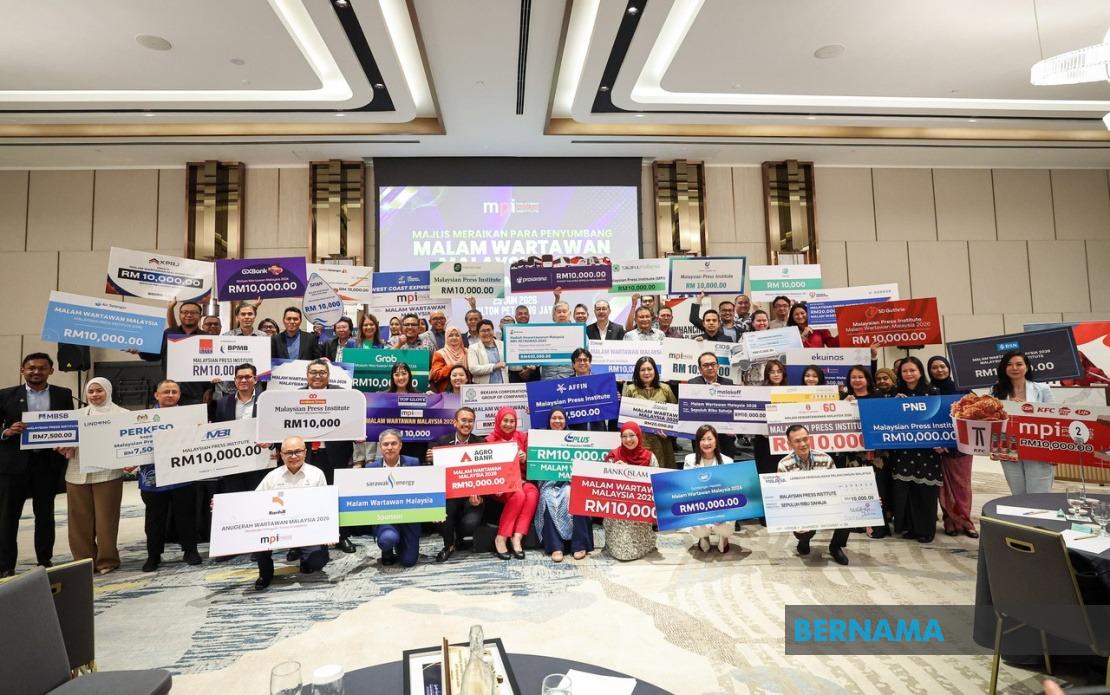
The Malaysian Press Institute has successfully assembled over RM1 million in financial commitments to underwrite Malaysia Press Night 2026, marking another significant milestone for the industry's premier annual celebration of journalism excellence in the region. The funds, totalling RM1.037 million, represent a confluence of support from both the private sector and corporate partners who recognise the importance of sustaining professional media standards across Malaysia's diverse news landscape.
Dr Ainol Amriz Ismail, chief executive of the institute, outlined the composition of the fundraising effort during a Contributors' Appreciation Ceremony in Kuala Lumpur. Sixty organisations contributed RM587,000 collectively, whilst PETRONAS provided RM450,000 to sponsor the awards component of the event. The oil and gas major has maintained an unbroken commitment to supporting the MPI-PETRONAS Malaysian Journalism Awards since 1994, demonstrating remarkable institutional continuity in championing media standards. This extended patronage signals the private sector's ongoing belief that quality journalism underpins the credibility and functioning of modern Malaysian society.
The monetary backing carries implications that extend beyond mere event logistics. Dr Ainol Amriz framed the contributions as a reflection of stakeholder dedication to fostering journalism that remains professional, ethically grounded and worthy of public trust. In an era when media organisations worldwide struggle with audience confidence and newsroom sustainability, this mobilisation of resources suggests the Malaysian business community understands that independent, fact-checked reporting serves national interests. The framing acknowledges growing concerns about misinformation and the erosion of journalistic standards, particularly acute in digital environments where verification becomes increasingly difficult.
Prime Minister Datuk Seri Anwar Ibrahim will grace the July 17 ceremony with his presence, elevating the occasion's political significance. The prime ministerial attendance underscores government recognition of journalism's institutional role within democratic frameworks and economic governance. His participation provides a platform for addressing the entire media community about the administration's relationship with the Fourth Estate and expectations regarding coverage of policy implementation and national development.
The event itself functions as a recognition mechanism for journalists and news organisations who navigate challenging information environments to deliver accurate reporting. Dr Ainol Amriz characterised MPI's annual gathering as honouring practitioners engaged in the demanding work of fact verification, information authentication and transparent reporting under conditions that often involve resource constraints and competing pressures. This symbolic function becomes increasingly vital when trust in institutions and media continues declining across Southeast Asia.
Beyond the awards ceremony itself, the funding enables MPI to sustain professional development initiatives that benefit the broader media ecosystem. Dr Ainol Amriz acknowledged sponsor and contributor backing for industry training programmes and professional advancement opportunities that strengthen journalism practice across Malaysia's news organisations, both established and emerging. These initiatives address a structural challenge facing regional media: the need for continuous skills development as newsrooms adopt digital technologies, navigate changing audience behaviours and respond to evolving news consumption patterns.
The institute's governance structure reflects the collaborative spirit underlying the fundraising effort. Leadership attendees included MPI president Datuk Yong Soo Heong, deputy president Farrah Naz Abd Karim, and Datin Paduka Nur-ul Afida Kamaludin representing Bernama as both a stakeholder and news industry participant. PETRONAS brought its strategic communications perspective through general manager Jalina Joheng, illustrating the dialogue between corporate communications professionals and news media practitioners that characterises Malaysia's media landscape.
The ceremony featured substantive discussion through an industry panel bringing together prominent figures from different media sectors. The conversation included Datuk A. Kadir Jasin, a respected journalism figure with extensive experience in Malaysian newsrooms, Karangkraf Group chief executive Firdaus Hussamuddin representing the print publishing sector, TV AlHijrah's Namanzee Harris reflecting broadcasting perspectives, and Thiaga Rajan Muthusamy from Vanakkam Malaysia contributing community media insights. This deliberately constructed panel composition acknowledged the heterogeneity of Malaysia's media environment, where print, broadcast, digital and community-based outlets operate alongside each other within shared professional frameworks.
The RM1.037 million mobilisation reflects sophisticated fundraising strategy rather than simple corporate charity. By securing both broad-based contributions from sixty organisations and principal sponsorship from a major multinational, MPI has constructed a sustainable financial model that avoids over-dependence on any single funder while building community investment in journalism standards. This diversified approach proves particularly relevant for Southeast Asian civil society organisations navigating resource constraints while maintaining independence from political interference.
Looking forward, the continued elevation of journalism's role through high-profile events and substantial financial commitments addresses a critical regional challenge: declining confidence in news media during periods of rapid information technology adoption and polarised political discourse. Malaysia's experience with these dynamics mirrors patterns across Southeast Asia where misinformation, foreign interference and partisan narratives threaten to overwhelm professional journalism. The MPI's success in mobilising resources and gathering stakeholders suggests the business and media communities recognise that professional standards require ongoing investment and public affirmation.
The RM1.037 million represents not merely event funding but rather a statement about institutional priorities. It signals to Malaysian journalists, news organisations and the broader public that journalism worthy of professional standards, ethical discipline and factual accuracy merits sustained financial and social investment. As Malaysia navigates complex challenges from digital transformation to geopolitical turbulence, this commitment to strengthening journalism infrastructure proves increasingly consequential for democratic health and economic stability across the Southeast Asian region.

