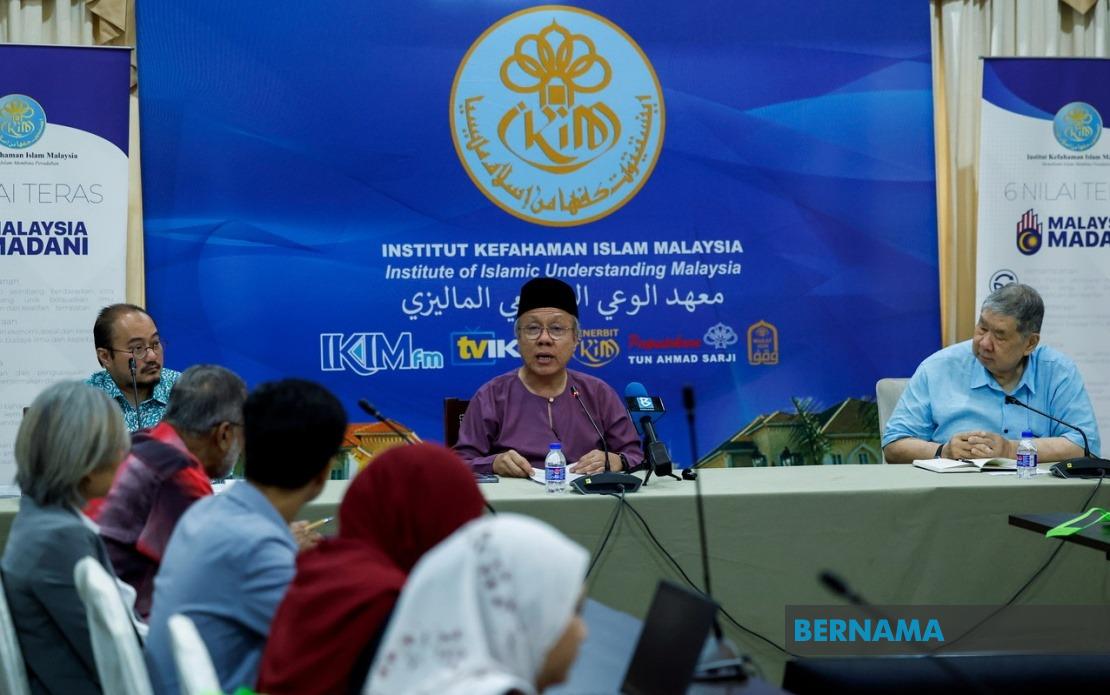
Three prominent Malaysian institutions came together on Wednesday to equip journalists with a deeper understanding of the Tabung Haji Royal Commission of Inquiry, recognising the critical role media plays in shaping public perception during a period of institutional scrutiny. The Malaysian Press Institute, in partnership with the Institute of Islamic Understanding Malaysia and Lembaga Tabung Haji, convened the closed-door briefing session at IKIM's headquarters to provide media practitioners with direct access to senior leadership and detailed information about the pilgrimage fund's governance challenges and recovery efforts.
The session brought together Tabung Haji Group Managing Director and Chief Executive Officer Mustakim Mohamad, MPI President Datuk Yong Soo Heong, and IKIM Director-General Associate Professor Datuk Dr Mohamed Azam Mohamed Adil, alongside more than 20 representatives from Malaysia's news organisations. Over nearly two hours, Mustakim provided a comprehensive overview of the RCI proceedings and fielded detailed questions from journalists about the investigation's scope, findings, and implications for the institution's stakeholders.
For the media community, this gathering represented an opportunity to move beyond headline coverage and engage with substantive detail about one of Malaysia's most significant institutional reviews. Yong emphasised that the collaboration between MPI and IKIM created a valuable channel for journalists to access authoritative information on Tabung Haji's restoration strategy and the concrete measures being deployed to rebuild depositor and investor confidence. Such direct engagement between institutional leaders and news professionals helps establish a foundation for more informed and contextualised reporting on complex governance issues.
The MPI president flagged the importance of accurate public communication during a period when Tabung Haji faces considerable reputational challenges. He noted that the briefing ensured journalists possessed comprehensive, verified information to transmit to the Malaysian public, underscoring the responsibility of the press to reflect institutional developments with precision and balance. Yong also suggested that similar regional initiatives could be replicated across Malaysian states through structured dialogue forums and town hall meetings, extending opportunities for provincial media outlets to engage with senior officials.
A particularly significant intervention came from IKIM's Mohamed Azam, who reframed the Tabung Haji situation entirely. He stated unequivocally that the RCI inquiry should not be characterised as a controversy centred on religion or ethnicity, but rather understood as a matter of organisational integrity and accountability. This framing is crucial for Malaysia's media landscape, where institutional failures are sometimes reflexively interpreted through communal or confessional lenses. By emphasising that the RCI concerns management standards applicable to any financial institution, Mohamed Azam directed media attention toward professional governance rather than theological or identity-based narratives.
This reorientation addresses a significant risk in Malaysian public discourse. When institutional failures affecting Muslim communities are discussed, they can sometimes become polarised along religious or racial lines, complicating genuine accountability discussions. Mohamed Azam's explicit guidance to journalists stressed that this particular inquiry concerns fiduciary duty and professional responsibility—universal principles that transcend any specific community. He urged the media to transmit this message clearly to Malaysian depositors and the broader public to sustain institutional trust during the RCI process.
Tabung Haji occupies a unique position within Malaysia's financial architecture as an Islamic financial institution entrusted with managing pilgrim savings while also embodying the fifth pillar of Islam through its operational framework. Mohamed Azam identified the literacy programme as essential to preserving public confidence in this institution's credibility and capability. When citizens entrust substantial personal resources to an institution, any governance scandal threatens not only their financial security but also their religious confidence. Restoring this trust requires consistent, transparent communication that distinguishes between isolated management failures and the institution's foundational integrity.
The initiative reflects a broader recognition within Malaysia's institutional and media ecosystems that complex public issues demand collaborative approaches to information dissemination. Rather than relying solely on reactive crisis communication, Tabung Haji, through MPI and IKIM, proactively engaged the news industry to ensure journalists possessed sufficient context and understanding to report comprehensively. This stands in contrast to purely defensive media strategies and recognises that journalists, when adequately informed, become partners in clarifying institutional narratives rather than obstacles to be managed.
For Malaysian readers and depositors specifically, this briefing carries direct implications. The gathering signals that Tabung Haji leadership remains engaged with transparency and accountability processes, willing to address media scrutiny openly. The RCI's findings and recommendations will shape how the pilgrimage fund operates going forward, potentially affecting millions of Malaysian Muslims who depend on the institution. Media coverage informed by direct engagement with leadership, rather than speculation or incomplete information, ultimately serves the Malaysian public interest.
The collaboration also demonstrates IKIM's commitment to moderating public discourse around institutional challenges affecting Islamic finance. By emphasising governance and accountability principles rather than religious or communal framings, IKIM positions itself as an intellectual resource for preventing politicisation of institutional oversight. This approach benefits Malaysian governance more broadly, as it models how religious and secular institutions can cooperate to ensure that accountability mechanisms function effectively without becoming divisive.
Moving forward, the success of this initiative will depend on whether media coverage reflects the emphasis on management integrity and factual accuracy that the briefing intended to convey. If journalists internalise the framing that the RCI concerns professional accountability rather than religious controversy, Malaysian public discourse on the matter will likely become more substantive and constructive. The partnership between MPI, IKIM, and Tabung Haji suggests that institutional leaders recognise media literacy as central to navigating governance challenges in contemporary Malaysia, where information flows rapidly and public perception crystallises quickly.

