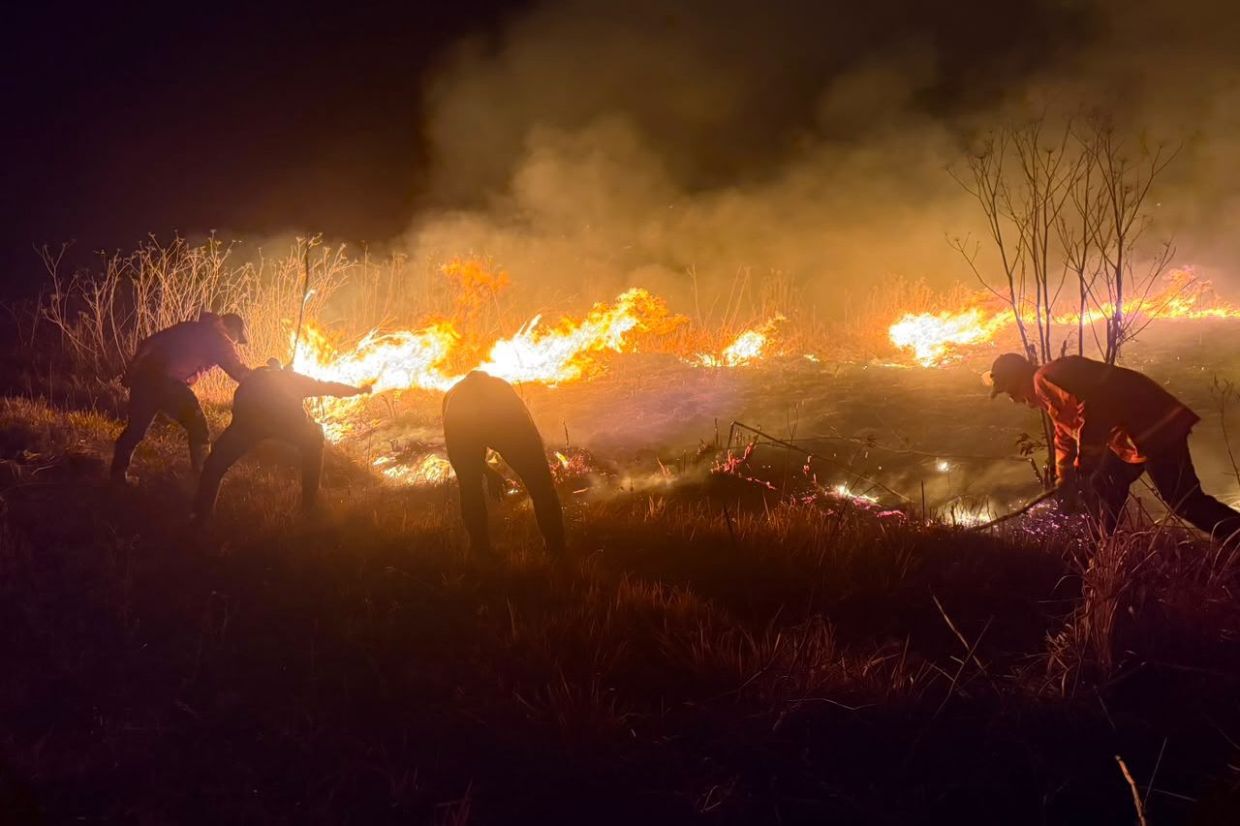
A significant wildfire ravaging Indonesia's Mount Bromo in East Java has now consumed an estimated 520 hectares of landscape, according to park authorities who reported the escalating situation on Sunday. The fire, which reignited intensely on Saturday evening, has spread across both the mountain's slopes and expansive savanna regions, marking a substantial deterioration in fire management efforts throughout the weekend.
Rudijanta Tjahja Nugraha, head of the Bromo Tengger Semeru National Park Authority, attributed the accelerating spread directly to meteorological conditions that have prevailed since Saturday afternoon. The combination of strong winds sweeping across the volcanic terrain has created ideal conditions for rapid flame propagation, pushing the fire from higher elevations downward into lower-lying areas where vegetation coverage is denser. This downslope progression represents a particularly concerning development, as fire moving into populated lower zones typically poses greater risks to settlements and infrastructure surrounding the national park.
The underlying vulnerability of the affected landscape has compounded the wildfire's severity. Weeks of dry conditions have left grass, shrubs, and other vegetation across Mount Bromo's slopes and savanna in an extremely desiccated state, essentially transforming the entire ecosystem into kindling. This natural fuel load, combined with the relentless wind patterns, has created what fire management experts typically characterize as a perfect storm scenario where containment becomes exponentially more difficult. The park authority's acknowledgment that dry conditions significantly increased susceptibility to burning reflects a broader environmental challenge facing Indonesia's forest regions during seasonal dry periods.
The fire's apparent human origins have prompted investigations from law enforcement authorities, as the Bromo Tengger Semeru National Park Authority indicated on Friday. Forestry Minister Raja Juli Antoni emphasized that individuals responsible for setting fires in forests and on agricultural lands would face appropriate legal consequences. This warning signals the Indonesian government's determination to hold perpetrators accountable, whether the fire resulted from deliberate arson, agricultural land-clearing practices that escaped control, or negligent behavior by visitors or residents in the area.
Management of the crisis has required immediate operational responses that significantly impact the region's tourism sector. The national park authority moved decisively to close Mount Bromo to all tourists beginning Saturday evening at 10pm, a measure authorities maintained would continue indefinitely until the firefighting situation stabilizes. This complete access closure aims to accomplish two critical objectives simultaneously: preventing visitors from interfering with emergency response efforts while eliminating the risk that civilians could be caught in the fire's unpredictable path or harmed by toxic smoke inhalation.
The temporary closure has created considerable disruption for the tourism industry and individual travelers. Park authorities have implemented compensation measures for affected visitors by offering either rescheduled visit dates or full refunds. Mount Bromo ranks as one of East Java's premier tourist attractions, drawing thousands of domestic and international visitors annually who trek to its volcanic crater rim to observe sunrise displays. The closure represents a significant revenue interruption for the park, local tourism operators, and hospitality businesses dependent on visitor activity.
Mountain fires in Indonesia's national parks present particular management challenges that distinguish them from lowland forest fires. The topography of volcanic mountains creates wind tunnel effects where breezes accelerate dramatically, while the mixed vegetation—combining grasslands with scattered forest patches—burns in unpredictable patterns. Mount Bromo's status as an active volcano adds another dimension, as the mountain's geothermal features and unstable ground conditions complicate firefighting access and resource deployment.
The timing of this incident reflects Indonesia's broader struggles with wildfire management during seasonal transitions. East Java experiences significant fire pressure during the dry season when regional atmospheric patterns shift, weather systems move northward, and rainfall becomes sporadic. Climate patterns suggest these conditions will persist for several weeks, meaning the current Mount Bromo fire represents a test case for Indonesia's emergency response capabilities during an extended vulnerable period.
For Malaysian observers, the Mount Bromo situation carries particular relevance given similar fire risks affecting Malaysia's own national parks during dry seasons and transboundary haze dynamics that affect both nations. The firefighting challenges, tourism disruptions, and human causation patterns evident at Mount Bromo mirror issues Malaysia has confronted in managing forest reserves and protected areas. Indonesia's investigative approach and penalty framework for forest arsonists also provides context for understanding regional approaches to environmental crime prosecution.

