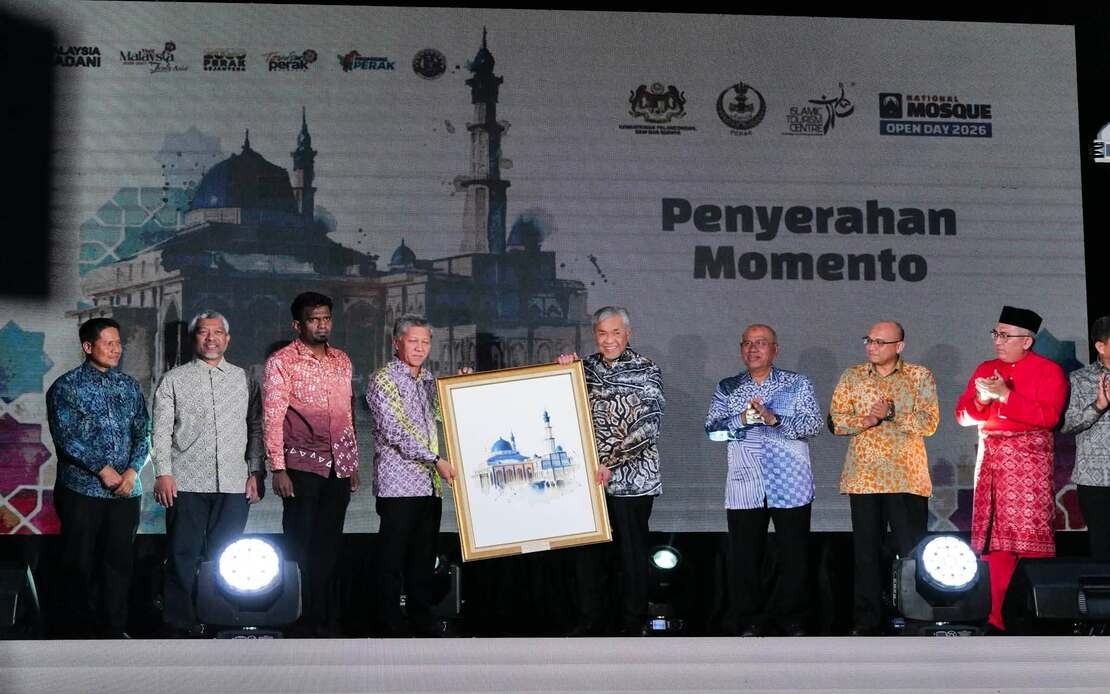
In a significant policy statement during the National Mosque Open Day 2026 event in Bagan Datuk, Deputy Prime Minister Datuk Seri Dr Ahmad Zahid Hamidi articulated a vision of mosques functioning as dual-purpose institutions—spiritual sanctuaries and cultural attractions that showcase Malaysia's Islamic heritage to domestic and international visitors. This pronouncement signals a deliberate governmental pivot toward leveraging religious infrastructure as an economic asset within the broader tourism portfolio, reflecting a sophisticated understanding of how faith-based tourism can generate revenue and cultural diplomacy simultaneously.
Ahmad Zahid emphasised that mosques occupy a unique position within Malaysia's tourism architecture, serving as gateways through which visitors can encounter the nation's rich Islamic civilisation and historical narrative. By opening their doors to diverse audiences, these institutions can communicate messages about Islamic values centred on hospitality, compassion and wisdom—countering negative stereotypes while creating memorable experiences that extend beyond photographic documentation. This approach transforms a place of prayer into a experiential learning space where cross-cultural exchange occurs organically through meaningful human interaction rather than didactic presentation.
The Deputy Prime Minister highlighted the particular relevance of initiatives like the National Mosque Open Day, which curates programming that deliberately attracts multi-generational and multi-faith participation. These events create deliberately designed moments of interfaith harmony where non-Muslim visitors engage with mosque institutions within structured, welcoming environments. The emphasis on such occasions reflects a broader recognition that tourism can serve simultaneously as a vehicle for religious education, community cohesion, and economic activity—bundling disparate objectives into a single policy framework.
Central to this strategy is the Islamic Tourism Centre's recent designation of Masjid Tuminah Hamidi in Bagan Datuk as Malaysia's 98th Tourism Mosque. The facility, completed in 2023 as a waqf (religious endowment) honouring Ahmad Zahid's parents, exemplifies the type of institution that bridges sacred and secular functions. Its distinctive architectural vocabulary and integrated Islamic knowledge gallery position it as a destination where aesthetics, education and spirituality converge—creating an attraction that satisfies multiple visitor motivations simultaneously.
Mohammad Faisal Abu Suaib Khan, the Islamic Tourism Centre's Director-General, disclosed that Malaysia's inventory of 6,851 mosques remains substantially underutilised as tourism assets. The current tally of just 98 designated Tourism Mosques—representing approximately 1.4 percent of the national total—suggests immense untapped potential. This statistical reality implies that most Malaysian mosques, despite often possessing distinctive architectural characteristics and historical significance, have not undergone the institutional development necessary to accommodate and facilitate visitor engagement at scale.
The coordinated approach involving the Islamic Tourism Centre, the Department of Islamic Development Malaysia, and state-level religious departments represents administrative architecture designed to standardise practices across a fragmented landscape. Rather than allowing individual mosque governance to determine visitor policies ad-hoc, this framework establishes guidelines and coordinates participation, ensuring consistency in visitor experiences and quality standards. Such standardisation proves essential when converting thousands of disparate institutions into a cohesive tourism product.
The Muslim-Friendly Tourism and Hospitality Assurance and Recognition scheme, alongside Muslim-Friendly Tourist Guides initiative, constitutes supporting infrastructure that elevates service quality for visitors seeking halal-compliant experiences. These parallel programmes acknowledge that religious tourism functions most effectively when complemented by hospitality frameworks recognising Muslim visitor preferences—creating ecosystem resilience where mosque visitation becomes part of a broader Muslim-friendly tourism narrative rather than an isolated attraction.
For Malaysia, this strategic orientation carries particular significance given regional competition from Indonesia and Brunei in Islamic tourism markets. By systematising mosque accessibility and crafting experiences that communicate Islamic values through personal encounter, Malaysia positions itself as offering authentic religious tourism that transcends mere site-visiting. The emphasis on emotional and intellectual engagement—rather than passive observation—differentiates this approach from conventional heritage tourism models, potentially commanding premium visitor satisfaction and extended stays.
The timing of this initiative reflects broader shifts in Malaysian tourism policy toward segmentation and niche marketing. Rather than pursuing undifferentiated visitor flows, the government increasingly emphasises distinct travel motivations—wellness tourism, heritage tourism, faith-based tourism—each requiring tailored infrastructure and messaging. Islamic tourism occupies a distinctive niche that appeals simultaneously to Muslim travellers seeking familiar spiritual environments and non-Muslim visitors interested in cultural immersion and historical understanding.
Implementing this vision at scale presents institutional challenges. Mosque leadership across Malaysia must navigate competing priorities between religious obligations to congregants and commercial responsibilities toward visitor management. Training personnel to balance welcoming outsiders with protecting sacred spaces requires nuanced cultural competence. Financial implications—infrastructure modifications, staff recruitment, programming expenses—necessitate sustainable funding mechanisms, whether through waqf endowments like Masjid Tuminah Hamidi or government grants.
The narrative Ahmad Zahid constructed positions mosque engagement as a civilisational showcase rather than a sectarian demonstration. By framing mosque visitation as exposing visitors to Malaysian Islamic values—compassion, benevolence, wisdom—rather than converting or indoctrinating audiences, the messaging remains inclusive while advancing religious objectives. This calculated positioning allows Christians, Buddhists, Hindus and atheists to visit without psychological discomfort, while mosque leaders accomplish educational and devotional goals through hospitality rather than coercion.
Regional implications extend beyond Malaysia's borders. If successful, this model could influence mosque engagement strategies across Southeast Asia, particularly in Indonesia, the Philippines, and Thailand where significant Muslim populations inhabit nations with substantial non-Muslim tourism industries. Malaysia's approach—systematising mosque tourism while maintaining spiritual integrity—offers a replicable template for other Muslim-majority contexts seeking to monetise religious infrastructure without secularising it.
Looking forward, the success of this initiative depends on voluntary mosque participation paired with adequate financial and technical support. Ahmad Zahid's policy pronouncement establishes political commitment and policy direction, but translating aspiration into widespread institutional change requires sustained implementation efforts, adequate resourcing, and genuine buy-in from diverse mosque administrations across Malaysia's culturally complex landscape.

