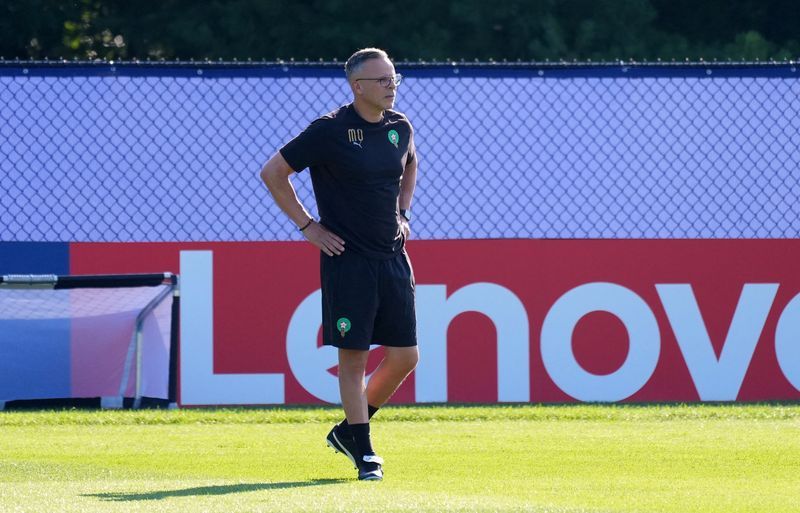
Morocco's footballing ambitions are firmly set on claiming the sport's most coveted prize, not merely celebrating a respectable tournament run, according to coach Mohamed Ouahbi ahead of Thursday's quarter-final clash against France in Foxborough, Massachusetts. The explicit rejection of premature praise reflects a fundamental shift in mindset for the North African nation, which has evolved from World Cup outsiders into genuine title contenders over the course of the competition.
The impending match represents a rematch of last year's semi-final encounter in Qatar, where France extinguished Morocco's historic campaign in that tournament. However, the context has shifted dramatically. Where Morocco entered as underdogs eighteen months ago, they now arrive as a confident, battle-tested unit that has eliminated established opponents and demonstrated tactical maturity at football's highest level. This transformation shapes how Ouahbi and his players view their prospects, rejecting the narrative of contentment with progression.
Ouahbi's comments at Wednesday's press conference underscored his team's refusal to accept external validation or compromise their ambitions. He stated unequivocally that any assessment of Morocco's tournament performance would be deferred until the final whistle sounds in the championship match itself, not before. This stance reflects a professional discipline unusual among teams navigating deep tournament runs, where coaching staff typically field questions about pride in achievement and historical significance. Instead, Ouahbi dismissed what he characterised as complacency-inducing commentary about having done well simply by reaching the quarter-finals.
The coach's declaration that winning the World Cup represents the only genuine "bonus" speaks to how far Morocco's expectations have evolved. Previously, reaching a quarter-final or semi-final would have constituted a triumph for a nation that had never advanced beyond the group stage until 2022. Now, the psychological baseline has shifted entirely. The team operates under the conviction that progression is mandatory at each stage, not fortunate. This mentality recalibrates how players and staff process their achievements and setbacks, creating momentum rather than satisfaction.
France enters the tie as clear favourites, a status Ouahbi readily acknowledged while reserving the right to challenge it. The defending champions, who won the 2018 World Cup in Russia and reached the 2022 final, have displayed clinical finishing at crucial moments. Their round-of-16 victory over Paraguay, secured through a Kylian Mbappe penalty following a tightly contested match, exemplifies their capacity to grind out results when dominance proves elusive. Mbappe's seven tournament goals rank second only to Argentina's Lionel Messi, demonstrating France's attacking potency.
The French forward line represents perhaps the most destructive attacking ensemble at this World Cup, with Mbappe, Ousmane Dembele, Michael Olise, and Bradley Barcola offering multiple avenues of penetration and creative danger. This abundance of attacking talent has defined France's campaign and presents a formidable examination of Morocco's defensive discipline and tactical organisation. Yet Ouahbi's framing of the contest suggests his team views these individual threats as a challenge to overcome rather than an insurmountable obstacle.
Morocco's own pathway to the quarter-finals demonstrates they possess the quality to trouble any opponent. A composed group-stage performance established early dominance, followed by knockout victories against the Netherlands and Canada that required tactical sophistication and mental fortitude. These victories were not flukes or fortune-assisted results, but rather demonstrations of improving quality and competitive steadiness. The team has developed through the tournament rather than merely benefiting from favourable draw positioning.
Ouahbi's emphasis on the necessity to play "at 2,000%" and without regrets signals his interpretation of what the quarter-final demands. This is not a holding operation or a defensive masterclass, but rather an aggressive engagement where Morocco must impose themselves on proceedings while respecting French capabilities. The coach's rejection of the "we have done well to get here" mentality suggests tactical boldness rather than conservative caution, a willingness to attack the favourites rather than park buses and hope for penalties.
For Southeast Asian audiences and followers elsewhere beyond Europe, Morocco's trajectory carries broader significance. The team demonstrates that football's traditional hierarchies remain contestable, that non-traditional powerhouses can challenge established dynasties through systematic development, tactical coherence, and psychological resilience. This quarter-final represents a crucial test of whether Morocco can translate growing capability into results against the sport's elite, or whether the gap between continental football and world-class competition proves unbridgeable.
Ouahbi's refusal to accept complacency also reflects the pressures facing African and non-European football. When teams from outside Europe's traditional power base progress deep into World Cups, domestic and international media often frame achievement through a lens of overperformance or pleasant surprise. By explicitly rejecting this framing, Ouahbi asserts Morocco's right to be treated as serious competitors rather than sympathetic darlings. This psychological stance proves as important as tactical preparation in matches of this magnitude.
The coach's insistence that stock-taking will occur only after the tournament concludes reveals confidence in his team's ability to continue progressing. There is no hedging, no suggestions that reaching the quarter-finals would constitute success under difficult circumstances. Instead, Ouahbi's messaging establishes that Morocco expects to be among the final four, and only then will they begin contemplating their overall achievements. This forward-looking orientation, unusual in press conferences typically dominated by questions about historical significance and unexpected success, suggests a team operating with genuine conviction about their capacity to win the trophy.

