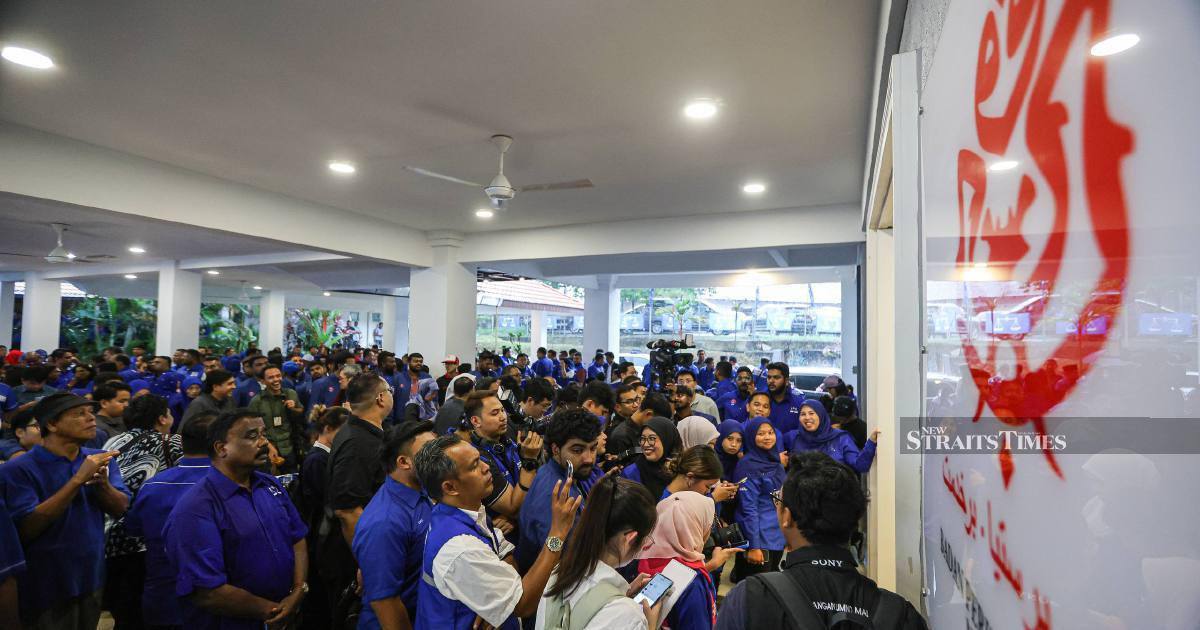
The political temperature in Johor is rising as Barisan Nasional moves toward a critical juncture in its campaign preparations. At the party's headquarters in Johor Baru, an air of anticipation has gripped the compound as senior BN figures, grassroots party members, and enthusiastic supporters gather to witness the formal unveiling of the coalition's candidates for the 16th Johor state election. The gathering represents a crucial milestone in the electoral cycle, signalling the transition from behind-the-scenes negotiations to public-facing campaign activities.
For Barisan Nasional, the candidate selection process carries particular weight in Johor, a state where the coalition has long maintained significant political influence. The coalition's choice of representatives across the state's electoral divisions will shape the narrative going forward and reveal strategic priorities for different constituencies. The energy evident at the headquarters event underscores the importance party leadership places on this election, with senior figures making personal appearances to lend credibility to the selection process and demonstrate unity within the broader BN structure.
The gathering also reflects broader calculations about electoral momentum. Political parties understand that public events announcing candidates serve multiple purposes: they energise the party faithful, generate media attention, and provide an opportunity to project confidence and organisational readiness. The timing of such announcements is rarely accidental, with parties carefully considering when maximum advantage can be derived from the publicity surrounding candidate revelations.
Johor remains strategically significant within the Malaysian political landscape. As the second-most populous state and a traditional BN stronghold, its electoral outcome carries implications extending beyond state borders. The candidates selected will be tasked with defending existing seats while potentially capturing opposition-held constituencies. The profile and background of these individuals will also contribute to the broader narrative about BN's direction and renewal efforts at state level.
The convergence of party leadership and supporters at the Johor Umno headquarters demonstrates the hierarchical nature of Malaysian political party structures, where major decisions flow from the top down but require grassroots endorsement and mobilisation. The presence of multiple tiers of party machinery at the event signals an attempt to bridge central decision-making with community-level activism, a crucial requirement for effective campaigning across diverse constituencies spanning urban, semi-urban, and rural areas.
Candidate selection in Malaysian politics has historically been a source of internal tension within coalitions and individual parties. The process of choosing who will represent the party in each division involves balancing multiple considerations: incumbent performance, factional interests within the party, demographic shifts in constituencies, and perceived electability. The public announcement provides an opportunity for party leadership to frame selections as the product of careful deliberation rather than factional horse-trading, though the reality of selection processes often involves complex negotiations.
The 16th Johor state election represents an opportunity for BN to reassert its dominance in a state where it has governed for extended periods. Voter expectations regarding development, service delivery, and economic opportunities will weigh heavily on the campaign messaging. Candidates selected for competitive constituencies, in particular, may face challenges from opposition parties that have invested significantly in political organising at the grassroots level in recent years.
Geographic and demographic diversity across Johor's constituencies means that candidate selection cannot be one-dimensional. Constituencies in Johor Baru city centre may require candidates with different profiles and experience compared to agricultural areas in districts such as Ledang or Batu Pahat. The distribution of candidates across different demographic profiles and professional backgrounds can signal BN's understanding of evolving voter preferences and aspirations across the state.
The excitement evident at the headquarters event will translate into a broader campaign phase where candidates must connect with voters in their respective divisions. The announcement marks the end of internal party deliberation and the beginning of public accountability for selection decisions. Candidates who prove popular with voters and effective campaigners can amplify the momentum generated by these initial gatherings, while those who struggle to resonate locally can become liabilities for the broader coalition effort.
As Barisan Nasional formalises its candidate slate for Johor, the coalition is effectively drawing a line in the sand regarding its vision for state governance. The individuals selected will become the public face of BN's platform in their constituencies, responsible for articulating policy positions, responding to constituent concerns, and ultimately persuading voters that the coalition deserves continued trust. For Malaysian observers watching Johor politics, the candidate announcements represent a tangible signal of how traditional power structures are adapting to contemporary electoral challenges.