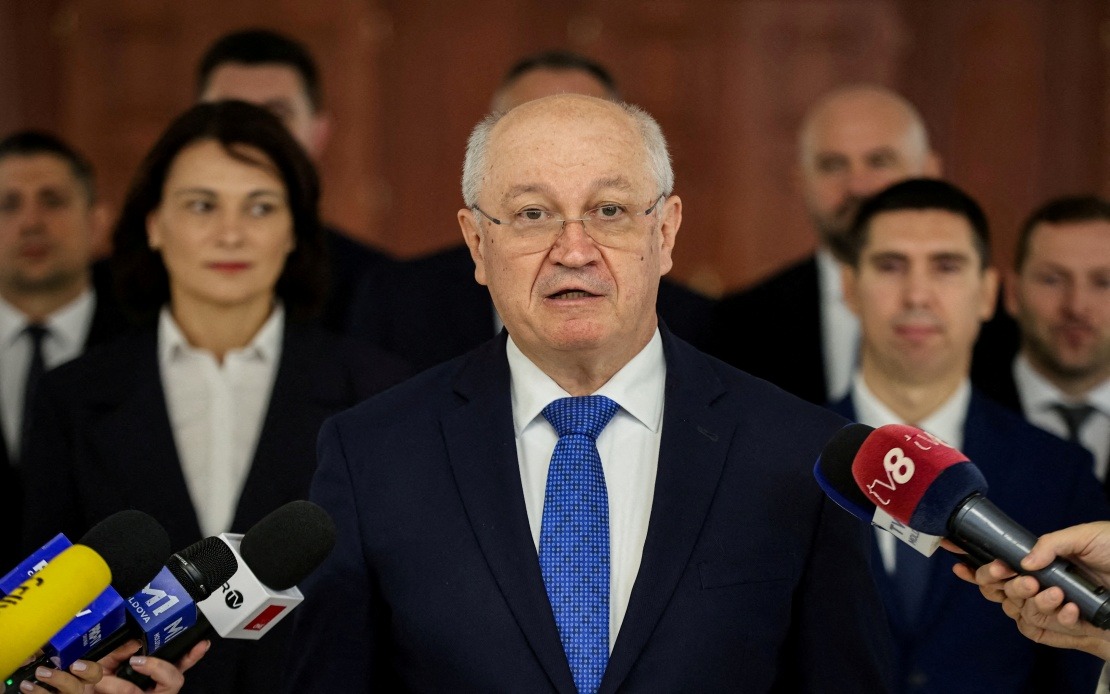
Alexandru Munteanu has ended his tenure as Moldova's Prime Minister, stepping down from the post he has occupied since November 2025. The announcement came on Friday through a message posted on the social media platform X, where he indicated that the time had come to relinquish his responsibilities. His decision marks a significant political development in the Eastern European nation, which has been navigating complex geopolitical pressures and internal governance challenges in recent years.
The prime minister provided limited insight into the circumstances surrounding his departure, choosing instead to anchor his explanation in fundamental principles. In his public statement, Munteanu emphasised that he had reached a point where continuing in his role would have required him to compromise his core convictions. This vague framing suggests underlying tensions or disagreements that remain largely unexplained to the public, though such carefully worded resignations often signal deeper institutional or political conflicts that the outgoing official prefers not to air publicly.
Munteanu's eight-month tenure places him among relatively short-serving premiers in Moldova's recent political history. The brevity of his time in office raises questions about the stability of Moldova's government and the challenges facing its leadership. Moldova has experienced considerable political volatility in recent years, with competing visions for the country's future direction—particularly regarding its relationship with Russia and its orientation towards European integration—creating fault lines within the government and society.
The resignation occurs amid Moldova's broader struggle to maintain democratic institutions and navigate regional security concerns. The country has been subject to Russian pressure, including military posturing across its eastern border and hybrid warfare tactics designed to destabilise governance. These external pressures, combined with internal political divisions, have made the job of leading the government exceptionally demanding, potentially contributing to the difficulties Munteanu encountered.
For Malaysian observers, the situation in Moldova illustrates how smaller nations positioned between great powers face unique governance challenges. The instability evident in Moldova's political leadership reflects broader patterns in Central and Eastern Europe, where governments must balance competing domestic interests while managing pressure from more powerful neighbours. This dynamic has parallels in Southeast Asia's own geopolitical context, where regional powers sometimes exert influence on smaller neighbours' internal affairs.
The lack of detailed explanation from Munteanu invites speculation about what specific issues prompted his departure. Whether the resignation stems from policy disagreements with his coalition partners, pressure from international stakeholders, or fundamental disagreements about governance priorities remains unclear. The opacity surrounding his decision may itself indicate that transparency was among the principles he felt compelled to protect by stepping away.
Mold's political landscape has been characterised by coalition governments and competing factions with divergent visions for the nation's future. These structural factors can create situations where prime ministers find themselves caught between conflicting demands from coalition partners, international allies, and domestic constituencies. A leader committed to principled governance might find such circumstances untenable if forced to choose between loyalty to coalition agreements and fidelity to personal convictions.
The succession process that follows Munteanu's resignation will be closely watched both domestically and internationally. The credibility and stability of Moldova's government depend on identifying a replacement capable of navigating the country's complex challenges while maintaining the confidence of coalition partners and the confidence of key international supporters. Any prolonged uncertainty in the succession could undermine Moldova's efforts to strengthen democratic institutions and pursue its European integration agenda.
For the broader Southeast Asian region, Moldova's political upheaval serves as a reminder of how external pressures can destabilise governments in strategically important locations. Malaysia and other ASEAN nations, while geographically distant, share an interest in a rules-based international order that protects smaller nations' sovereignty and autonomy. Developments in Moldova contribute to broader international conversations about how the international community can better support democratic governance in countries facing external pressure.
The timing of Munteanu's resignation may carry significance within Moldova's political calendar and international relations. His departure could influence Moldova's approach to various policy questions, from fiscal management to foreign relations. Any shift in governmental priorities following the transition might affect Moldova's engagement with European institutions and its handling of security matters along its disputed eastern frontier.
As Moldova moves forward, the reasons underlying Munteanu's resignation will likely become clearer through subsequent political developments and commentary from political figures within the country. His departure underscores the genuine difficulties facing leaders of smaller European nations who must balance multiple stakeholder demands while maintaining their integrity. The resolution of this political transition will reveal much about Moldova's ability to preserve institutional continuity and pursue coherent long-term policy directions despite its challenging circumstances.

