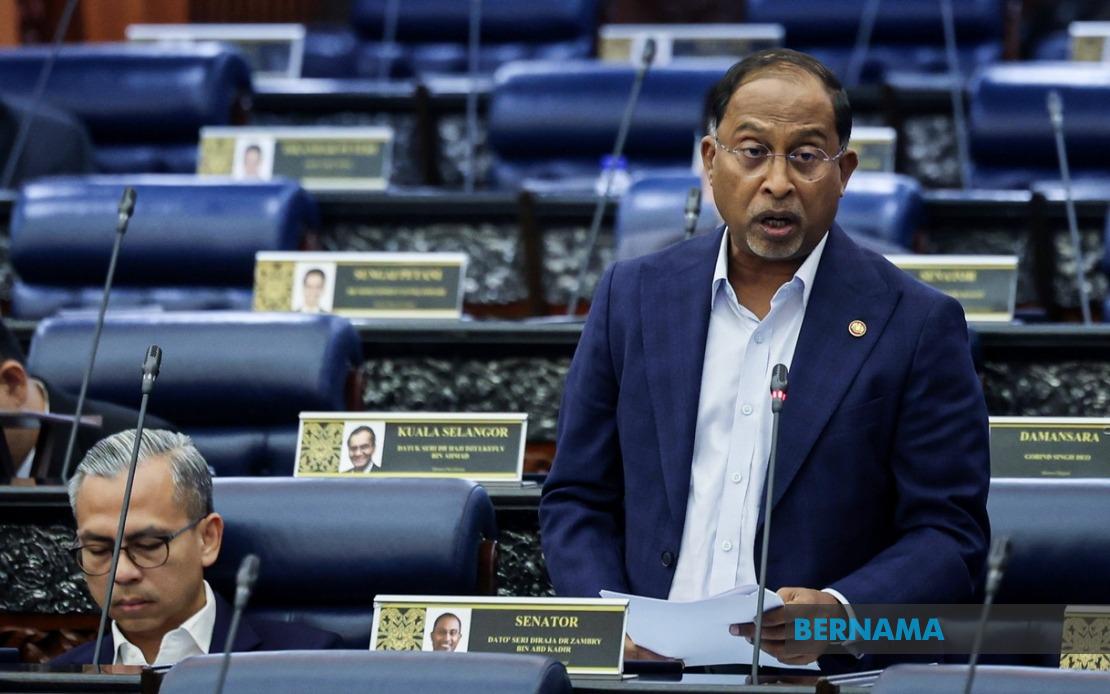
The Higher Education Ministry (MOHE) has signalled its willingness to consider fresh academic programme applications from Universiti Malaysia Sabah (UMS), polytechnics and community colleges operating within the state, as part of a broader push to strengthen the higher education landscape in East Malaysia. Higher Education Minister Datuk Seri Dr Zambry Abdul Kadir made the announcement during parliamentary proceedings, emphasising that the ministry's gatekeeping function would prioritise quality and alignment with regional economic priorities. The ministerial statement came in response to concerns raised by lawmakers about the limited local options forcing Sabah students to pursue tertiary education on the peninsula.
The proposed expansion mechanism operates within a structured evaluation framework rather than a blanket approval policy. Each new programme submitted for consideration would undergo rigorous assessment against multiple benchmarks: the submitting institution's established expertise and research track record; demonstrated industry demand within Sabah's economic ecosystem; the provider's actual capacity to deliver quality instruction; genuine student interest levels; and crucially, the employment prospects for graduates. This multi-layered approach reflects a shift away from quantity-focused expansion toward strategic, quality-driven development that respects both institutional strengths and regional labour market realities.
Minister Zambry emphasised that the exercise would simultaneously prevent programme redundancy across Sabah's public higher education sector. Rather than allowing competing institutions to duplicate offerings and fragment already-limited resources, MOHE intends to orchestrate a complementary ecosystem where each institution occupies a distinct niche based on comparative advantage. The rationale reflects a mature understanding that Sabah's relatively nascent higher education infrastructure cannot afford the wasteful institutional competition that has characterised some peninsular campuses. Efficiency in resource allocation emerges as central to the ministry's thinking about state-level expansion.
At present, Sabah's public higher education footprint comprises sixteen registered institutions as of late June, distributed across four public universities, three polytechnics and nine community colleges. This network, while geographically dispersed to serve the state's vast and challenging terrain, remains modest compared to Peninsular Malaysia's concentration of institutions. The structural imbalance has created a persistent migration pattern whereby ambitious Sabahan students with the means to do so leave for Kuala Lumpur, Selangor or other peninsular locations, draining the local talent pool and creating brain drain pressures that policymakers across the region have grown increasingly concerned about addressing.
UMS, the flagship institution within the state system, has already charted a differentiation strategy that could serve as a template for the broader expansion approach. The university has deliberately anchored its academic portfolio to Sabah's distinctive geographical and ecological characteristics, developing clusters around marine science and aquaculture that capitalise on the state's maritime heritage; tropical biotechnology programmes that leverage local biodiversity; medical sciences offerings; heritage and social sciences that engage with Borneo's complex history and cultures; and ecotourism combined with business administration programmes. This constellation of programmes reflects a conscious effort to build institutional reputation around local assets rather than merely replicating generic offerings available elsewhere.
UiTM Sabah's branch operations, meanwhile, concentrate on tourism and hospitality management, business administration, administrative sciences and applied science and technology fields. This complementary positioning acknowledges both the established strength of UiTM's brand in service sector education and the particular relevance of tourism to Sabah's economy. The geographic distribution of institutional focus across the state's public system thus already demonstrates sophisticated sectoral planning, even as gaps remain in certain fields with demonstrated demand.
The ministry has signalled substantial financial commitment to undergird this expansion vision through a slate of 21 concurrent development projects across Sabah valued at RM1.05 billion. Of this total investment, RM160.6 million has been earmarked specifically under the First Rolling Plan of the 13th Malaysia Plan framework, which extends through 2026. This injection of capital—while modest on a per-institution basis given Sabah's geographic sprawl—signals genuine intent to address infrastructure deficits that have historically constrained programme diversification. Without this parallel investment in physical facilities, digital infrastructure and human resources, programme expansion announcements would amount to empty rhetoric.
Minister Zambry rejected suggestions that the government should establish arbitrary quotas mandating a specific percentage of total higher education places be filled within Sabah itself. Such targets, he argued, would be administratively awkward and economically counterproductive, since certain specialised fields may be offered more efficiently at peninsular institutions with established reputations and larger student bodies. The refusal to set blanket targets reflects pragmatism about the constraints facing even developing regions, while also acknowledging that some cross-border student mobility serves legitimate efficiency functions rather than representing pure market failure requiring state intervention.
Yet Zambry identified law programmes as a strategic exception to this hands-off approach, explicitly flagging both Sabah and Sarawak as regions with demonstrable labour market demand for legal professionals but currently insufficient local capacity. This specificity suggests the ministry is willing to employ targeted interventions where compelling evidence of unmet demand exists in high-priority fields. Law programme expansion could reduce reliance on peninsular law schools while addressing workforce gaps in government, corporate and civil society sectors throughout East Malaysia. The programme selectivity reflects a niche-based strategy that is far more intellectually coherent than the indiscriminate institutional expansion that has sometimes characterised Malaysian higher education policy.
Research funding mechanisms also factor prominently within the ministry's vision for institutional growth in Sabah. Government support flows through MOHE directly and via the Ministry of Science, Technology and Innovation to underwrite university research activities, including those pursued under the RDICE (Research, Development, Innovation, Commercialisation and Economy) programme framework. This initiative explicitly targets research with commercial application potential, creating incentive structures for academic work that could generate intellectual property, startup formation or industry partnerships. For research-intensive institutions like UMS that sit within regions offering distinctive botanical, marine and indigenous knowledge assets, commercialisation-focused funding mechanisms create pathways to sustainability beyond traditional teaching revenue streams.
The ministerial response to parliamentary inquiry reveals a measured approach to Sabah's legitimate grievances regarding educational access and equity. Rather than promising indiscriminate programme proliferation or accepting political pressure to meet arbitrary targets, MOHE has articulated a framework emphasising strategic expansion constrained by quality standards, institutional capacity and genuine market signals. For Malaysian policymakers wrestling with how to distribute resources fairly across a geographically dispersed federation where peninsular concentration has created persistent imbalances, the statement offers a model combining ambition with realism. Implementation success, however, will depend on whether promised capital investments materialise on schedule and whether institutional leaders in Sabah demonstrate the vision to propose complementary rather than competitive programme clusters.

