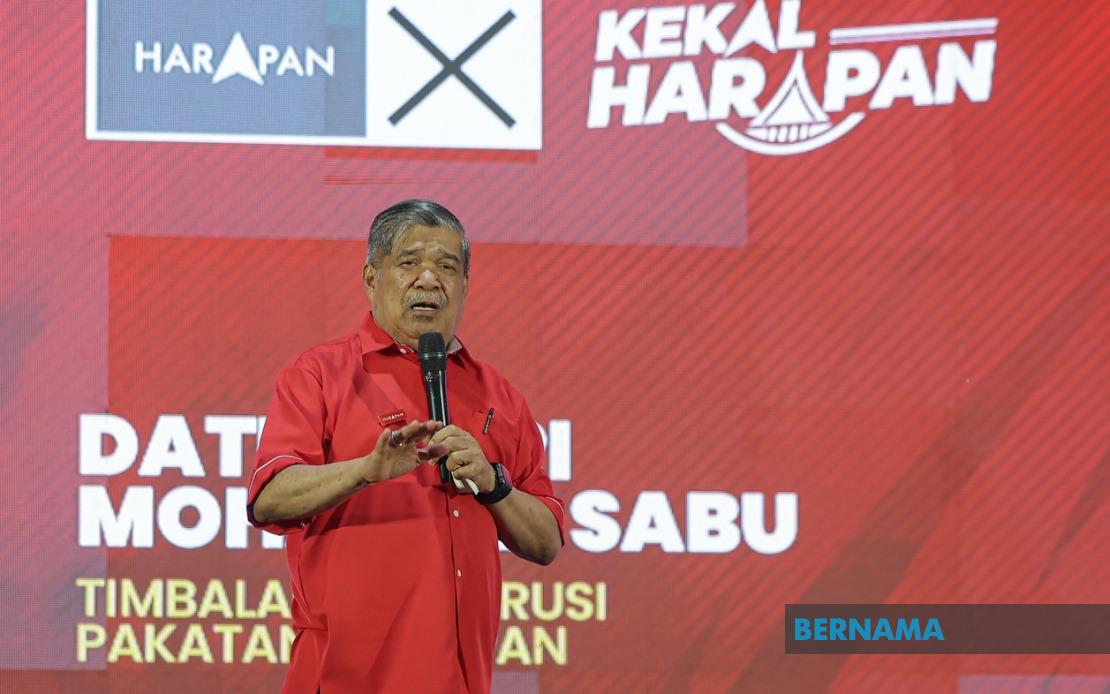
Amanah president Datuk Seri Mohamad Sabu has called on voters in Negeri Sembilan to decisively reject what he characterizes as 'marriage-divorce' politics, a term he uses to describe the opportunistic practice of parties rapidly switching political alliances in pursuit of electoral advantage and power. Speaking in Seremban on July 22, Mohamad Sabu argued that such behaviour represents a fundamental threat to Malaysia's democratic institutions and political order, and must not be allowed to become normalized within the nation's political culture.
The concept of 'marriage-divorce' politics, as articulated by the Amanah leader, refers to the pattern whereby political parties abandon their principles and previous partnerships whenever circumstances shift, seeking new coalition partners solely to maintain or acquire governmental control. This practice, he contends, demonstrates a troubling absence of ideological consistency and a willingness to subordinate the public interest to narrow factional interests. Rather than building durable political frameworks based on shared values and long-term vision, parties engaged in such behaviour treat alliances as temporary transactions to be discarded when no longer convenient.
Mohamad Sabu emphasized that allowing such political behaviour to persist would progressively undermine the stability and predictability that democratic systems require to function effectively. When voters cannot rely on parties to maintain consistent positions or honour their commitments to coalition partners, the entire political system becomes destabilized. This creates uncertainty for policymaking, erodes public confidence in democratic institutions, and reduces the accountability mechanisms that should bind elected representatives to the electorate. The Amanah president framed voter rejection of such politics as a matter of collective responsibility for safeguarding democratic integrity.
The critique carries particular weight given Malaysia's recent political history, which has witnessed numerous dramatic realignments. Mohamad Sabu illustrated his point by tracing a specific party's trajectory through multiple coalition shifts, describing a bewildering sequence of political marriages and divorces spanning multiple election cycles and government formations. He pointed to how certain parties have shifted between Barisan Nasional, Pakatan Rakyat, Bersatu, and other configurations, each change ostensibly driven by immediate tactical calculations rather than principled conviction. This pattern, he suggested, epitomizes precisely the behaviour that threatens Malaysia's political maturation.
The timing of Mohamad Sabu's remarks reflects broader anxieties within Pakatan Rakyat regarding coalitional stability ahead of significant electoral contests. The warning appears directed at parties perceived as unreliable coalition partners or potential defectors who might negotiate simultaneously with multiple blocs. By publicly framing such behaviour as illegitimate and calling on voters to actively punish it, Amanah seeks to create political costs for any parties contemplating opportunistic realignments. The strategy assumes that voters, when properly informed about the consequences of political instability, will prioritize governmental continuity over short-term factional gains.
For Malaysian voters in Negeri Sembilan and beyond, this message invites reflection on what criteria should govern electoral choice. Should voters reward consistency and principled commitment, even if they disagree with a party's policy positions? Or should they respond primarily to immediate material offers and promises? Mohamad Sabu clearly advocates the former, arguing that a functioning democracy ultimately depends on politicians who maintain their word and resist the temptation to abandon partners whenever advantage beckons. This represents a call for raising the political bar, expecting more from elected representatives than mere opportunism.
The Southeast Asian regional context adds further significance to this intervention. Across the region, democratic systems have faced erosion partly through the normalization of political fluidity, where coalitions form and dissolve with bewildering speed and individual politicians switch parties without electoral mandate. Malaysia's experience mirrors these regional trends, yet Mohamad Sabu's intervention suggests at least some political leaders recognize that unchecked coalition instability carries systemic costs. Whether voters will heed such warnings and whether they possess sufficient leverage to enforce such discipline remains an open question.
Mohamad Sabu's specific reference to parties attempting to "woo" Barisan Nasional indicates that concrete political dynamics underlie his abstract warning. Rather than speaking merely in principle, he responds to observable negotiating behaviour among Malaysian political actors. By labelling such manoeuvres as unacceptable, he attempts to delegitimize them in public discourse before they crystallize into actual governmental changes. This represents a form of political pressure applied through rhetoric, seeking to shape elite calculations about which moves will command voter support.
The broader implications extend to governance quality and policy continuity. When coalitions remain unstable and parties prioritize survival over substantive performance, long-term policy initiatives suffer. Infrastructure projects, educational reforms, and economic development plans all require consistency across electoral cycles. When politicians focus primarily on securing the next coalition agreement, they necessarily divert resources and attention from effective administration. Mohamad Sabu's warning thus connects political morality to practical governance outcomes, suggesting that voter discipline regarding party-hopping ultimately serves the public interest through better-functioning government.
Negeri Sembilan voters face the immediate task of considering whether candidates and parties before them embody the consistency and principled commitment that Mohamad Sabu advocates. This requires looking beyond campaign rhetoric to examine actual track records of alliance stability, policy consistency, and follow-through on commitments. The challenge for voters lies in distinguishing between legitimate shifts in political position based on changed circumstances or evolved thinking, versus opportunistic realignments driven purely by power considerations. Mohamad Sabu's intervention, while clearly partisan, articulates a standard that transcends factional interests: that Malaysian democracy functions better when politicians demonstrate reliability and resist the perpetual temptation to abandon partners in pursuit of marginal advantage.

