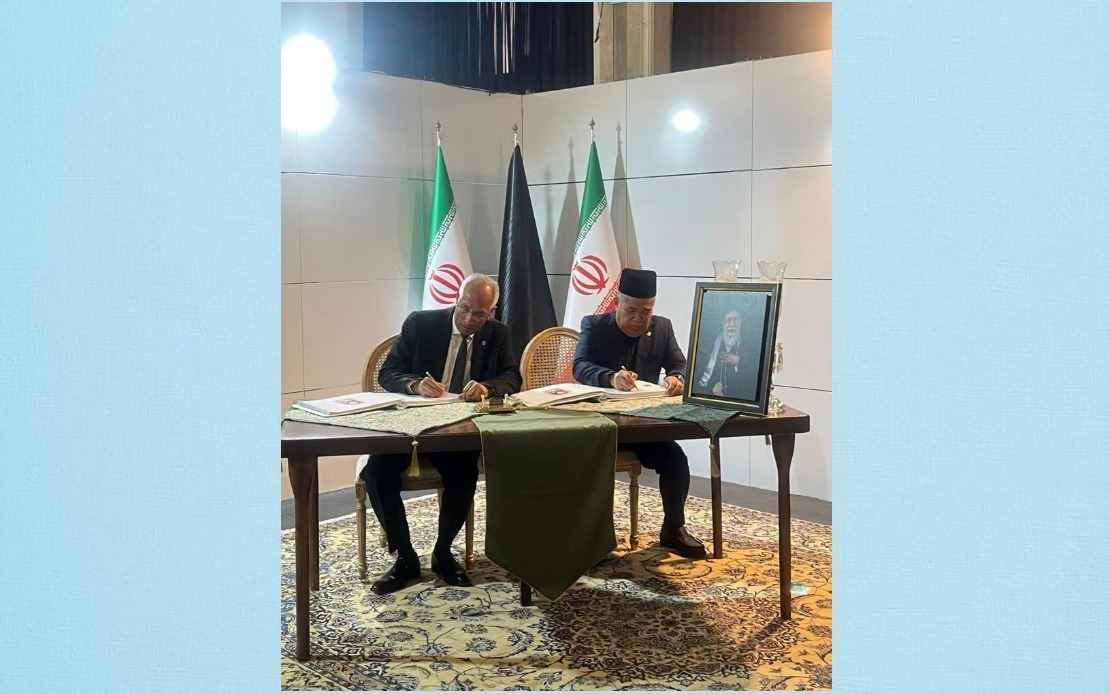
Malaysia's Minister of Agriculture and Food Security Datuk Seri Mohamad Sabu travelled to Tehran to represent the government in honouring the late Ali Khamenei, Iran's former Supreme Leader, at ceremonies held at the Grand Mosalla. The minister's presence underscores Malaysia's diplomatic ties with the Islamic Republic and reflects the country's respectful engagement with regional powers despite geopolitical complexities.
The mourning ceremonies extend across several cities over an extended period, beginning with proceedings in Tehran before moving through Qom, Najaf, and Karbala. The final resting place will be the Imam Reza Shrine in the holy city of Mashhad, where Khamenei's burial is scheduled for July 9. This multi-city journey reflects the significance accorded to Khamenei within Iran's political and religious hierarchy, as well as the importance of the funeral rites in Islamic tradition.
Khamenei's death occurred in late February following an attack that involved both United States and Israeli forces. The considerable interval between his death and these formal mourning ceremonies—spanning more than 100 days—suggests that the Iranian authorities took substantial time to organise the elaborate funeral proceedings befitting a figure of his stature. The extended timeline also permitted international delegations, including Malaysia's, to coordinate their participation.
Upon arriving in Tehran, Mohamad received an official welcome from Mohammad Bagher Ghalibaf, Speaker of the Iranian Parliament, alongside Abbas Araghchi, who holds the position of Iranian Foreign Minister. This protocol reflects the elevated status of the Malaysian delegation and Malaysia's standing within Iran's diplomatic framework. The reception by senior parliamentary and foreign ministry officials indicates that the Iranian government views Malaysia's participation as meaningful within its broader international relations strategy.
In remarks following the conclusion of the tributes at the Grand Mosalla, Mohamad expressed sentiments consonant with Islamic tradition, invoking divine mercy upon the deceased and praying for forgiveness of his sins. Such expressions, made through his Facebook post, serve a dual purpose: they acknowledge the spiritual dimensions of the mourning ceremony while communicating Malaysia's respectful stance to both Iranian authorities and the Malaysian public.
The Malaysian government's decision to send a ministerial-level delegation to these ceremonies carries symbolic weight. Mohamad's portfolio as Agriculture and Food Security Minister does not directly align with foreign affairs or defence, yet his selection as delegation head suggests that the government prioritises maintaining cordial relations with Iran at a time when international attention remains focussed on the region. This approach demonstrates Malaysia's commitment to a balanced foreign policy that respects Islamic solidarity whilst maintaining pragmatic international engagements.
From a regional perspective, Malaysia's participation in Khamenei's funeral ceremonies reflects broader Southeast Asian diplomatic practices. Nations in the region, despite varying strategic alignments and economic partnerships, have traditionally acknowledged significant developments within the broader Islamic world. The Malaysian delegation's attendance fits this pattern, signalling that Malaysia views its relationship with Iran as sufficiently important to warrant high-level representation during significant state occasions.
The Iran-Malaysia relationship encompasses trade, cultural exchange, and shared Islamic heritage. However, it also exists within a complex geopolitical context where Malaysia maintains relationships with numerous powers, including the United States, China, and regional actors. The government's decision to participate in these ceremonies does not necessarily imply closer alignment with Iranian policies, but rather reflects Malaysia's approach of engaging respectfully with diverse international partners based on mutual interests and shared values.
The series of ceremonies across multiple cities—Tehran, Qom, Najaf, and Karbala—underscores the significance of Khamenei's legacy within Shia Islamic tradition, as all these cities hold profound religious importance. The journey culminating in Mashhad, home to one of Islam's most sacred shrines, reflects how Khamenei's death is being commemorated within frameworks that blend political leadership with religious significance. International delegations' participation in this journey illustrates how even secular state ceremonies can carry deep spiritual dimensions.
Looking forward, Malaysia's diplomatic engagement during this period may have implications for bilateral relations and broader regional dynamics. The funeral ceremonies represent an opportunity for governments to reaffirm their international relationships and signal their positions on matters of regional importance. Malaysia's presence demonstrates its willingness to engage with all significant actors in the Middle East while maintaining its established diplomatic framework.

