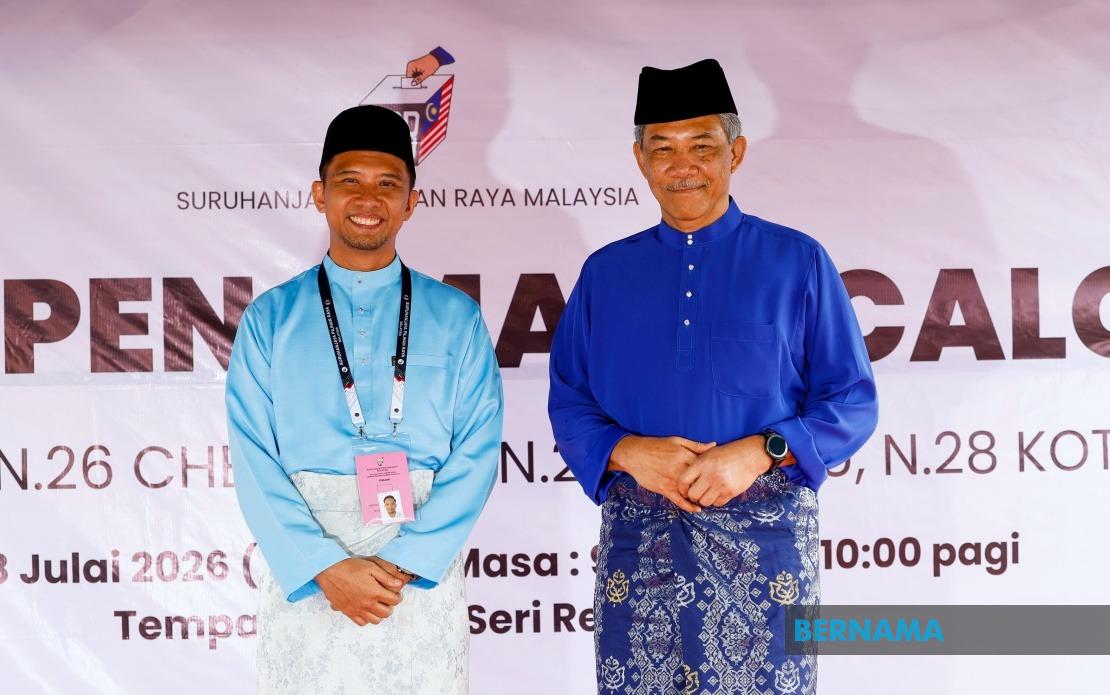
Rantau will witness a direct contest between two contrasting candidates as Negeri Sembilan heads toward polling day on August 1. State Barisan Nasional chairman and Foreign Minister Datuk Seri Mohamad Hasan will defend his stronghold against Pakatan Harapan's Dr Azizul Hakim Mahdi, a medical professional, following the completion of the nomination process at Dewan Sri Rembau on July 18. The straight fight configuration in this traditionally held BN seat sets the stage for a battle of experience and establishment credentials against the appeal of a younger, professionally-trained challenger.
Mohamad, who simultaneously holds the position of UMNO deputy president, brings formidable political capital to the contest. His tenure in Rantau stretches back nearly two decades, having first secured the seat in 2004 and consistently strengthened his grip on the constituency. In the 2023 state election, he secured a commanding victory with 16,957 votes, defeating PH's Rozmal Malakan by a substantial margin of 10,280 votes. This electoral history underscores the district's historical alignment with BN and the incumbent's deep organisational advantages within the local political machinery.
The incumbent's campaign strategy centres on consolidation and persuasion. Mohamad has indicated that BN's messaging throughout the campaign period will emphasise the coalition's manifesto and attempt to secure voter support on polling day. He has called for disciplined and systematic campaign operations across the BN machinery, suggesting that effective grassroots work will translate into electoral success. This approach reflects confidence born of previous victories, yet also hints at the coalition's awareness that complacency could prove costly in a political environment where anti-establishment sentiment has periodically emerged.
Dr Azizul Hakim, at 35 years old, embodies a generational shift in opposition politics. The candidate brings a decade of professional practice as a medical doctor and operates three private clinics across Senawang, Puncak Alam, and Melaka. His campaign narrative pivots on offering voters a distinctly different choice grounded in community-focused expertise rather than traditional political pedigree. He has explicitly positioned healthcare as his primary advocacy, arguing that his direct experience treating patients and understanding healthcare systems positions him to deliver meaningful improvements in medical service accessibility for Rantau residents.
The healthcare angle carries particular resonance in Malaysia's political discourse. Both urban and rural constituencies have increasingly vocalised concerns about medical service quality, accessibility to primary care, and the capacity of government clinics to serve growing populations. By presenting himself as a practising physician rather than a politician-physician, Dr Azizul attempts to shift the contest onto terrain where professional credibility matters more than political machinery. This approach reflects PH's broader strategy of fielding candidates with substantial professional credentials to challenge BN's traditional dominance.
Beyond Rantau, the 16th Negeri Sembilan state election will feature competitive contests across several other constituencies that reveal deeper political fragmentation. The Paroi seat will see a three-way battle involving PH's Ahmad Shahir Mohd Shah, the Menteri Besar's press secretary, alongside Perikatan Nasional's Kamarol Ridzuan Mohd Zin and Bersatu's Mohd Nazree Mohd Yunus. This configuration demonstrates how Bersatu's decision to contest independently has complicated the opposition's coalition arithmetic and potentially split anti-BN votes. Similarly, the Kota constituency features a three-cornered contest where BN incumbent Suhaimi Aini must contend with both PH and Bersatu challengers.
Conversely, Chembong will witness a cleaner two-way contest pitting BN incumbent Datuk Zaifulbahri Idris against PH's Danish Nazran Murad. Such variations in contest structure across the state's constituencies create differential dynamics that could influence overall results. Straight fights typically advantage the stronger incumbent, whilst three-cornered contests introduce unpredictability and potentially benefit candidates who can secure specific demographic or sectional support.
The state assembly comprises 36 seats, with the Election Commission setting July 28 as early voting day and August 1 as polling day. The eligible voter roll encompasses 889,490 registered voters, including 867,151 ordinary voters alongside 16,884 military personnel and their spouses and 5,455 police personnel entitled to early voting privileges. This voter composition matters considerably for campaign strategy, as candidates must balance competing appeals to civilian constituencies with specific outreach to military and police families who may prioritize security-related policy positions and employment considerations.
For Malaysian political observers and international commentators tracking the nation's electoral trajectory, the Negeri Sembilan contest offers important signals about voting patterns and coalition sustainability. BN's traditional strongholds in peninsular states face persistent challenges from an opposition coalition that, despite internal strains following the 2023 federal election, retains organisational capacity in select constituencies. The Rantau clash between establishment continuity and youthful professional credibility encapsulates a broader tension reshaping Malaysian electoral politics as voters weigh accumulated administrative experience against calls for fresh leadership perspectives.
The nomination process completion formalises the contest and officially inaugurates the campaign period during which all candidates will intensify their appeals to voters. BN's focus on systematic campaign organisation reflects a calculation that superior machinery and voter familiarity with incumbent services remain decisive advantages. PH's parallel emphasis on professional credentials and issue-specific expertise suggests a belief that voters increasingly value demonstrated competence in specific policy domains over generic political affiliation. The August 1 polling will ultimately determine whether Rantau voters prioritise continuity with Mohamad's two-decade tenure or opt for the healthcare-focused alternative represented by Dr Azizul Hakim.

