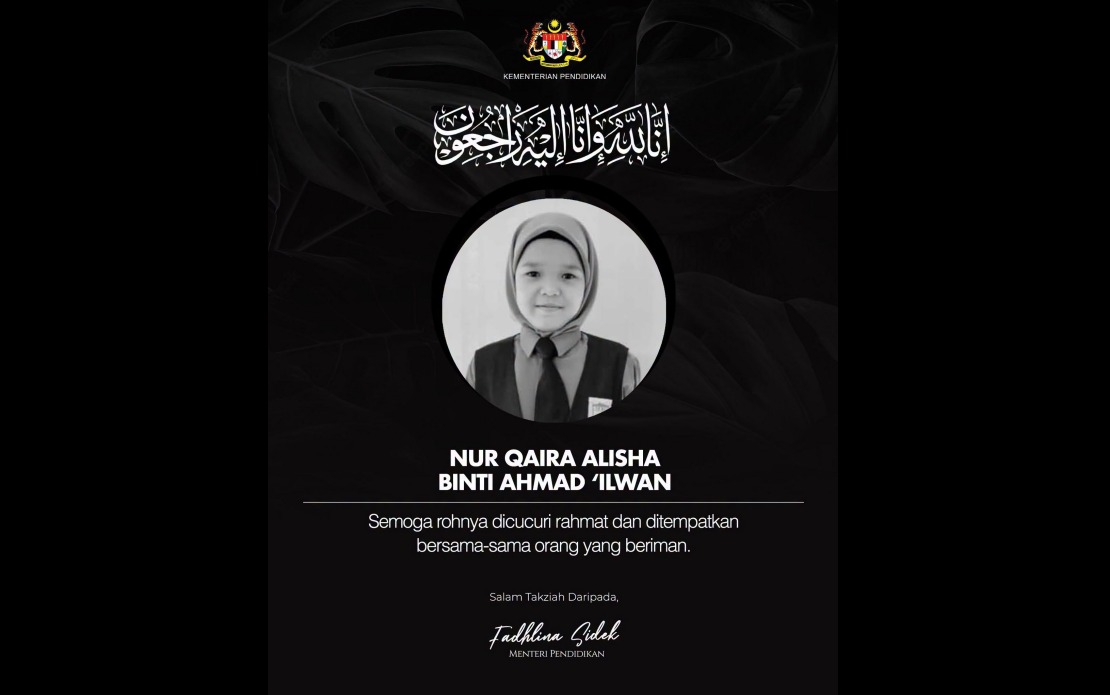
Education Minister Datuk Seri Fadhlina Sidek has instructed the Ministry of Education's Integrity Unit to pursue further investigations into a complaint lodged by the family of Nur Qaira Alisha Ahmad Ilwan, a Year Four pupil who recently passed away. The minister emphasised that any action undertaken must align with established protocols and be grounded in principles that safeguard fairness to all involved parties. The decision comes following a preliminary investigation conducted by the Kedah State Education Department into the circumstances surrounding the child's death, which has prompted scrutiny over school safety procedures and the duty of care owed to pupils with known medical conditions.
Fadhlina underscored the ministry's commitment to student protection and wellbeing through a Facebook statement, positioning the probe within the broader context of ensuring educational institutions operate with appropriate safeguards. She stressed that the immediate priority remains providing the bereaved family with compassionate support and necessary space to process their loss. The minister also extended formal condolences to Nur Qaira's parents and extended family, expressing hopes that they find emotional resilience during this challenging period.
According to documented medical history, Nur Qaira had been living with a cardiac condition since infancy, diagnosed when she was just three months old. Her health vulnerability was well-documented at her school, and she had been formally exempted from participating in competitive sports and strenuous physical activities. This medical accommodation should have provided a protective framework, yet the circumstances leading to her hospitalisation suggest this safeguard may not have been consistently observed by school personnel.
The sequence of events that precipitated her hospitalisation began on April 15 when, according to her parents' account, a teacher directed Nur Qaira to take part in a running competition during inter-house sports selection activities. The family contends that despite the school receiving an explicit medical letter documenting her cardiac condition and sports exemption, the instruction to participate proceeded regardless. This alleged directive represents a potential breach of established protocols designed to protect vulnerable students.
Nur Qaira's condition deteriorated rapidly following the sporting activity. Nine days after the April 15 incident, she was brought to Sultanah Bahiyah Hospital presenting with acute symptoms including severe vomiting and pronounced swelling around her eyes. Medical examination revealed that she was suffering from acute heart failure stemming from decompensated dilated cardiomyopathy, a progressive weakening of the heart muscle. The hospitalisation ultimately proved unable to reverse the trajectory of her illness, and the child passed away.
The case raises significant questions about institutional accountability and the consistency with which medical exemptions are applied across Malaysian schools. While individual teachers may exercise considerable discretion in classroom settings, decisions affecting students with diagnosed medical vulnerabilities demand heightened scrutiny and adherence to documented health protocols. The fact that a medical letter existed yet appeared to have limited practical impact suggests potential gaps in how schools communicate health information among staff members or enforce compliance with medical recommendations.
Fadhlina's direction to the Integrity Unit signals that the Education Ministry recognises this matter extends beyond administrative routine and touches on institutional responsibility for student welfare. The Integrity Unit's involvement typically indicates that concerns about professional conduct or systemic failures are being formally examined. This escalation reflects growing public awareness that schools must actively safeguard vulnerable pupils rather than simply maintaining records of medical conditions on file.
For Malaysian families with children who have chronic health conditions, this case underscores the importance of maintaining detailed medical documentation and actively communicating with school administrators beyond formal submission of medical letters. Parents may need to pursue multiple channels of communication and documentation to ensure their child's health needs are appropriately reflected in daily school operations. The experience also highlights a potential gap in school staff training regarding recognition of and response to health vulnerabilities among the student population.
From a broader Southeast Asian perspective, Malaysia's handling of this case may influence how other regional education systems approach institutional accountability in matters involving student health. Countries across the region grapple with similar tensions between inclusive education practices and protective measures for medically vulnerable students. How the Education Ministry's investigation unfolds and whether it results in systemic changes to health communication protocols could establish precedent for regional educational governance.
The investigation outcome will likely carry implications for school liability frameworks and the extent to which institutions can be held responsible for harm resulting from breach of documented medical accommodations. Legal and policy experts will watch closely to see whether the inquiry results in recommendations for enhanced teacher training, clearer protocols for communicating medical information, or structural changes to how schools implement health-related exemptions. The thoroughness and transparency of this investigation may also influence parental confidence in the education system's commitment to protecting students with pre-existing health conditions.

