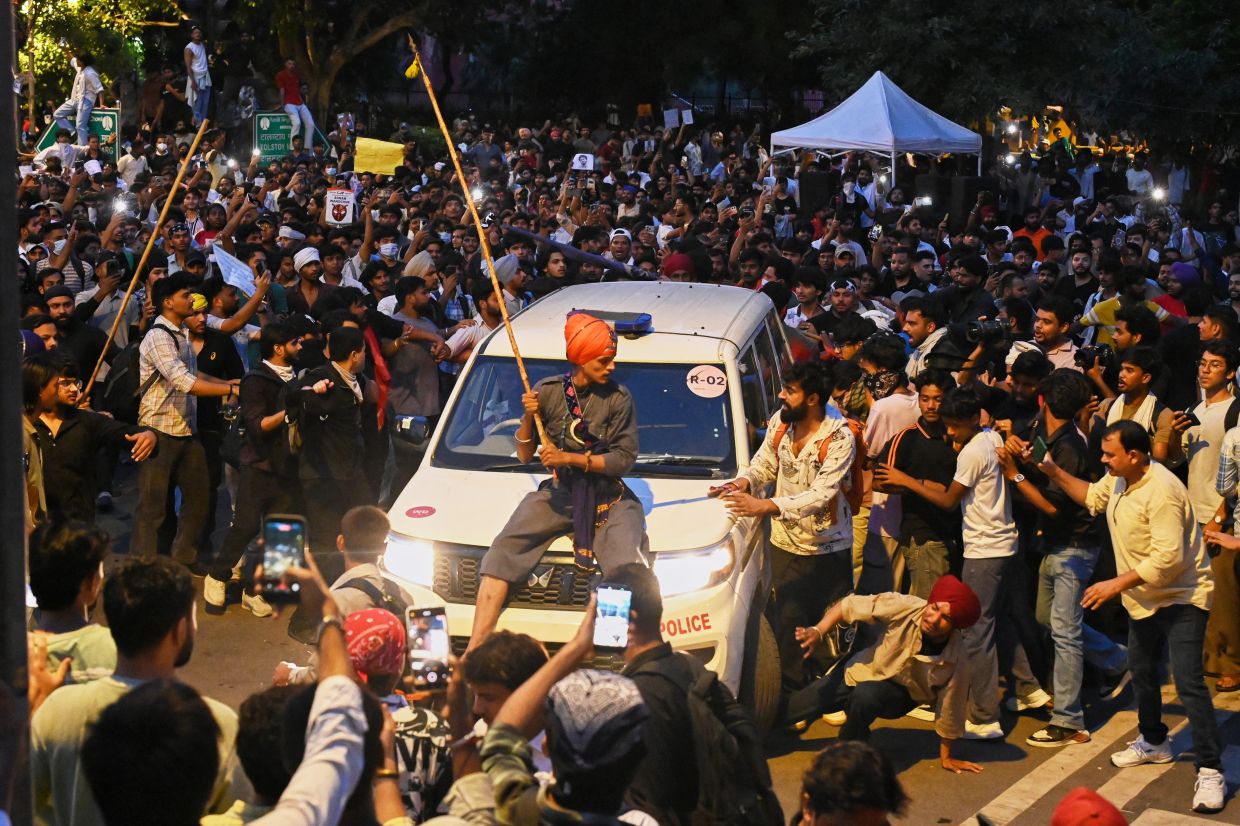
Indian Prime Minister Narendra Modi has moved to quell escalating student unrest by committing to stern action against those responsible for widespread examination fraud, marking his first substantive public response to demonstrations that have shaken the capital. Speaking through social media on Thursday, Modi underscored that youth welfare constituted his government's paramount concern, while announcing plans to establish expedited judicial proceedings targeting those culpable in question paper breaches. His intervention came as protests demanding the education minister's resignation continued to swell across the country, drawing fresh comparisons to the youth-driven upheavals that toppled neighbouring Bangladesh's government in 2024.
The escalation began in earnest on Monday when tens of thousands gathered outside parliament on the opening day of monsoon proceedings, intent on forcing their grievances directly before lawmakers. Police responses proved heavy-handed, deploying tear gas and deploying batons against the largely youthful crowd. Demonstrators countered with stone-throwing, transforming the scene into what officials termed the most significant street confrontation in the capital for approximately five years. According to police records, 178 individuals sustained injuries throughout the violence, encompassing both security personnel and protesters, though independent casualty figures remain contested.
Wednesday's continuation saw renewed clashes at the Jantar Mantar protest hub, where crowds mushroomed beyond designated demonstration zones into surrounding thoroughfares. Late-night skirmishes between police and protesters further heightened tensions. Spokespeople for the protest movement documented heavy-handed police tactics, asserting that internet services were curtailed to inhibit coordination and that participants endured excessive force. Conversely, Delhi Police maintained that demonstrators initiated violence, lobbing stones and plastic containers at officers and inflicting what they characterised as severe injuries.
Central to the movement's emergence has been the Cockroach Janta Party, a social media-driven collective that evolved from initially satirical origins into a broader political force. The moniker derived from comments attributed to Chief Justice Surya Kant, who allegedly compared young citizens to cockroaches and parasites during judicial proceedings in May. What began as pointed social commentary has metamorphosed into a sustained campaign encompassing unemployment concerns, youth opportunity gaps, and what participants perceive as increasingly authoritarian governance under Modi's administration. The movement's capacity to mobilise millions through digital platforms reveals structural vulnerabilities in how contemporary Indian governments navigate youth engagement and institutional legitimacy.
The examination system failures underlying this unrest reflect deeper institutional breakdowns affecting India's educational infrastructure. Most prominently, the leak of a medical entrance examination question paper compelled over two million applicants to undergo retesting, representing an unprecedented breach of standardised testing security. Complementing this scandal, controversies surrounding online marking of assessments administered to nearly two million secondary students have compounded public disillusionment. These systemic failures have transcended technical administrative concerns, acquiring symbolic weight as manifestations of broader governance deficiencies that younger Indians increasingly associate with institutional rot and lack of meritocratic advancement.
Opposition political parties have strategically leveraged the protests to mount parliamentary pressure on Modi's government. Proceedings have been repeatedly disrupted as lawmakers demand an apology for Monday's police conduct. Congress Party figure Rahul Gandhi has articulated the opposition narrative most forcefully, contending that Modi bears primary responsibility for educational system degradation through his alleged tolerance of administrative capture. This framing reorients the discourse from discrete examination security failures toward systemic indictment of government stewardship across the education sector. The opposition's mobilisation demonstrates how youth movements can intersect with partisan politics to amplify challenge against incumbents.
Demonstrations have transcended Delhi's boundaries, with secondary rallies materialising in metropolitan centres including Mumbai, Bengaluru, and Patna. The nationwide distribution of protests suggests the movement has tapped into genuine, geographically dispersed youth sentiment rather than constituting an isolated capital-based phenomenon. Regional expressions of solidarity reinforce the notion that examination system failures have registered across India's diverse educational landscape. For Malaysian observers, this pattern underscores how education system integrity represents a critical legitimacy foundation for contemporary Asian democracies and how technical failures can rapidly transmute into broader political challenges.
International dimensions have further elevated the protests' significance. Bangladeshi students have announced solidarity vigils, explicitly drawing parallels to their 2024 uprising against Sheikh Hasina's government, which ultimately forced her departure. Such transnational mobilisation among youth constituencies reflects shared South Asian grievances regarding educational access, employment prospects, and governance responsiveness. The Bangladesh precedent simultaneously cautions Indian authorities that dismissed youth movements can escalate unpredictably, as demonstrations initially appearing contained spiralled into regime-threatening upheavals. For India's neighbourhood, including Southeast Asia, these developments illustrate how integrated youth consciousness across borders can create unexpected political volatility.
Modi's public reassurances, notwithstanding their explicit acknowledgment of youth welfare priorities, confront substantial credibility deficits accumulated through previous controversies. The CJP movement and allied opposition framing have established narratives portraying his administration as complicit in educational system degeneration rather than victimised by administrative malfeasance. Establishing expedited courts addresses the technical legal dimensions of fraud prosecutions but potentially overlooks the deeper institutional governance questions animating demonstrators' political engagement. Whether Modi's interventions sufficiently address youth frustrations regarding systemic opportunity and meritocratic advancement mechanisms will substantially determine whether current mobilisation moderates or intensifies.
The political trajectory of these protests carries implications extending beyond Indian borders. For Malaysia and Southeast Asia, the episodes illuminate how education system vulnerabilities represent flashpoints for youth political mobilisation. They additionally demonstrate contemporary social media's capacity to convert discrete policy failures into comprehensive governance challenges. As Asian nations navigate post-pandemic educational recovery alongside persistent youth unemployment anxieties, maintaining institutional credibility regarding examination systems and advancement pathways constitutes increasingly important governance imperatives. India's current demonstrations thus constitute cautionary exemplars regarding the political costs of allowing educational infrastructure deterioration, particularly when youthful constituencies possess digital connectivity enabling rapid grievance aggregation and transnational solidarity expression.

