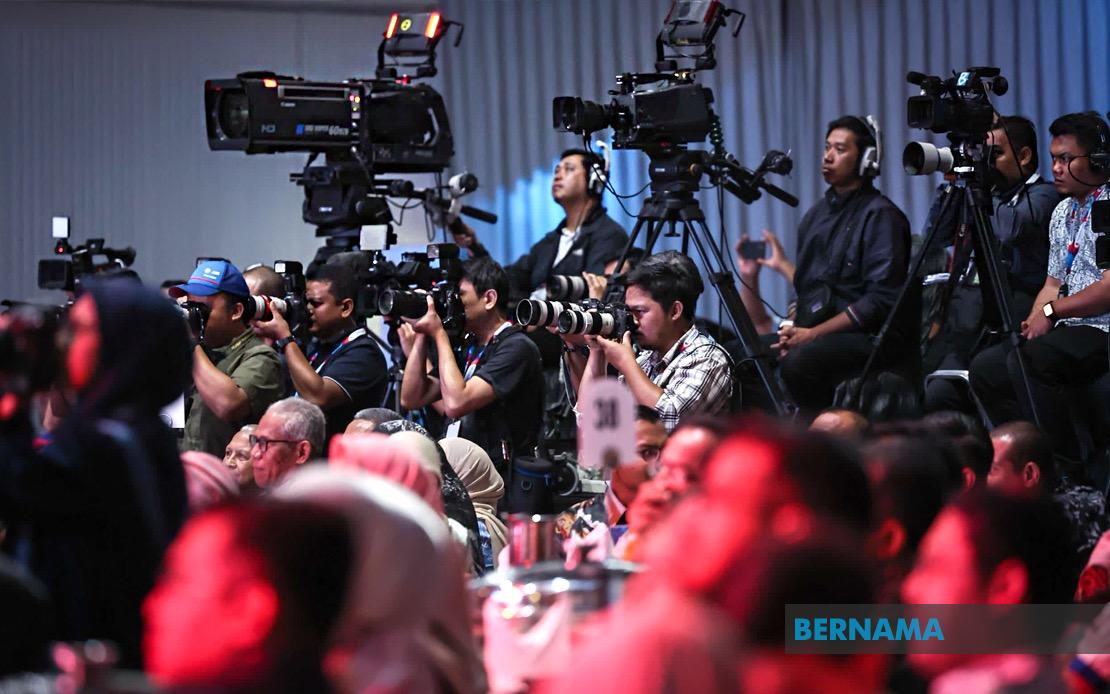
The Malaysian Media Council has thrown its support behind Prime Minister Datuk Seri Anwar Ibrahim's recent directive establishing a structured process for handling complaints involving journalists. Under this framework, grievances concerning journalists employed by recognised media organisations must be initially submitted to the Council rather than immediately escalated to legal authorities or enforcement agencies. The Council views this development as a significant affirmation of independent media self-regulation and a commitment to balancing press freedom with institutional accountability through transparent, professional channels.
The MMM's endorsement signals an important institutional alignment on how Malaysia should manage disputes between the media and complainants. The Council characterised the Prime Minister's statement as recognition of its role as an independent arbiter in the media industry, one mandated to strengthen journalism standards, promote ethical reporting practices, and maintain a complaints mechanism grounded in clear, accessible procedures. This positioning reflects a broader governance philosophy: that professional self-regulation can be more effective than reactive legal proceedings in addressing legitimate grievances while preserving the editorial independence necessary for a functioning press.
The Council emphasises that its self-regulatory remit does not supersede the courts or law enforcement. Rather, the MMM functions as a specialised institution designed to examine complaints rooted in journalistic practice, media ethics, reporting accuracy, the right of reply, and questions of public interest through a framework informed by journalism principles and democratic values. This distinction is crucial: the mechanism does not shield media organisations from legal consequences when they breach criminal statutes or civil law, but instead creates a preliminary filtering system that evaluates whether a complaint concerns editorial judgment and journalistic conduct.
Central to the Council's approach is the principle that journalists should not face arbitrary investigation or punishment simply because a complaint has been filed. The MMM contends that complaints involving journalistic work must first undergo contextual review, taking into account journalism's democratic role, editorial decision-making norms, and the media's responsibilities to serve the public interest. This safeguard addresses a concern widespread in press freedom advocacy: that vexatious or politically motivated complaints can weaponise legal systems against journalists, creating a chilling effect on legitimate reporting even when claims lack merit.
Simultaneously, the Council acknowledges that the mechanism protects complainants' interests by providing structured access to redress. Members of the public, organisations, government bodies, and other affected parties can lodge formal complaints and expect a systematic response. The Secretariat first determines whether matters fall within the MMM's jurisdiction and relate to journalistic practice. Where appropriate, the Council refers complaints to relevant media organisations for response, clarification, or corrective action, creating accountability without resorting to punitive legal measures.
The Council's framework operates on the principle that unresolved complaints can proceed to formal assessment against the Code of Conduct and established journalism principles. This graduated approach balances competing interests: it prevents trivial or bad-faith complaints from consuming journalistic resources, while ensuring that legitimate concerns about editorial lapses receive professional examination. The process prioritises dialogue, correction, and proportionate remedies over adversarial court proceedings, which can be protracted, costly, and disproportionately damaging to media organisations and individual journalists.
The MMM's statement occurs within the broader context of Malaysia's media freedom rankings. The Council noted that the Prime Minister's directive was framed partly as a response to concerns about Malaysia's standing in the World Press Freedom Index, an international benchmark that influences perceptions of Malaysia's democratic health and governance quality. This connection underscores how media regulation mechanisms affect not merely domestic journalism but also Malaysia's international reputation and soft power positioning in a region where press freedom remains contested.
The Council has called upon all stakeholders—government agencies, politicians, public institutions, civil society organisations, and the public—to utilise its complaints mechanism when disputes arise. This appeal reflects an effort to shift dispute-resolution culture away from public pressure campaigns, threats, harassment, or punitive measures toward professional processes. Such a cultural shift requires sustained commitment from multiple actors: journalists must respect legitimate criticism and correct genuine errors; complainants must channel grievances through appropriate channels rather than pursuing reputational attacks; and government bodies must refrain from using legal instruments opportunistically against critical reporting.
The relationship between media freedom and media responsibility has been historically polarised in Malaysia's public discourse, often presented as opposing forces requiring compromise. The MMM's statement reframes this dynamic, arguing that freedom and accountability are mutually reinforcing rather than competitive. When media organisations operate under robust self-regulatory standards, public trust strengthens, and claims that the press is unaccountable diminish. Conversely, when regulation is opaque, arbitrary, or captured by political interests, media freedom erodes and journalists become vulnerable to state overreach.
For Malaysian newsrooms and regional media observers, this development carries practical implications. The establishment of a formal, independent complaints channel may reduce pressure on journalists in real-time and provide editorial teams with defensible procedures for responding to criticism. However, the mechanism's effectiveness depends entirely on implementation. If the MMM's processes are slow, inaccessible, or perceived as biased toward media organisations, confidence will erode and stakeholders may bypass the system entirely, reverting to legal confrontation.
The Council's commitment to working closely with the government, Parliament, media organisations, civil society, and the public suggests recognition that self-regulation cannot function in isolation. Independent media regulation requires supportive institutional ecosystems: legislative frameworks that protect self-regulatory determinations from legal challenge, political cultures that accept adverse media scrutiny, and civil society pressure that holds both media and regulators accountable to professional standards. Southeast Asian experience demonstrates that media councils succeed when they are genuinely independent, adequately resourced, transparent in their operations, and respected by stakeholders across the political spectrum.
The MMM's positioning also reflects awareness of regional trends in media governance. Across Southeast Asia, governments increasingly establish regulatory mechanisms that nominally acknowledge press freedom while creating compliance burdens or legal pathways to sanction journalism. By promoting its role as the appropriate venue for complaints resolution, the MMM implicitly argues that independent self-regulation is preferable to regulatory capture or politicised legal action. The Council's effectiveness in sustaining this role will significantly influence whether Malaysia's press freedom trajectory improves or faces further constraint in coming years.

