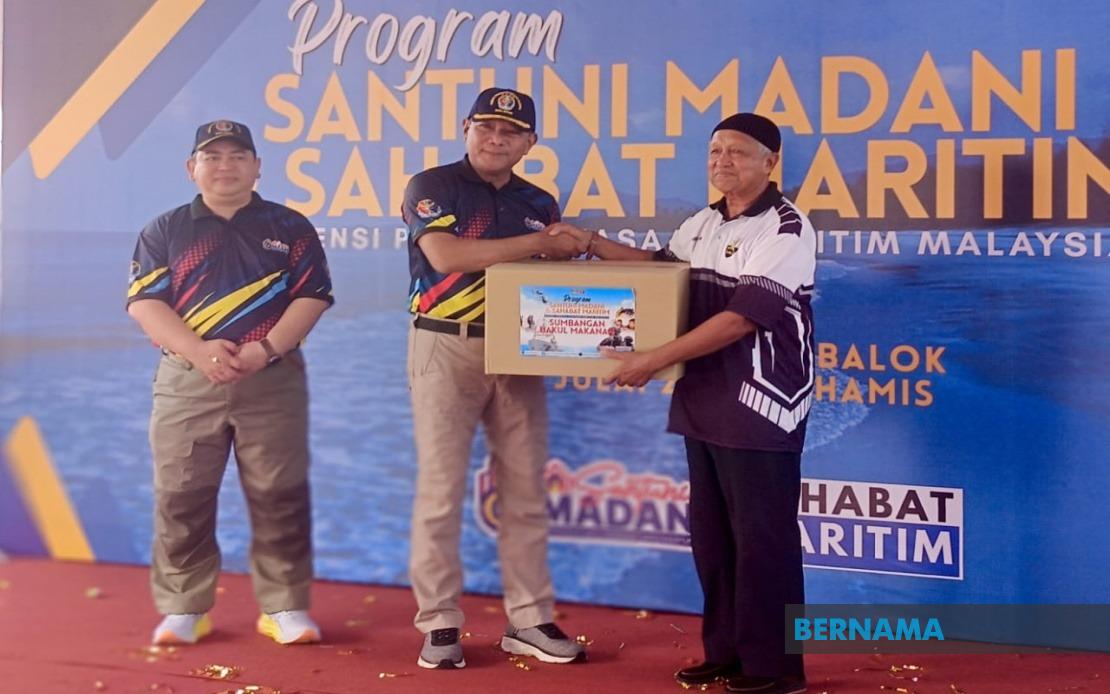
The Malaysian Maritime Enforcement Agency (MMEA) has achieved substantial results in its maritime law enforcement operations during the first six months of 2024, recording combined seizures valued at RM2.29 billion while apprehending 516 individuals suspected of various offences. Maritime Admiral Datuk Mohd Rosli Abdullah, the agency's director-general, disclosed these figures while addressing participants at community engagement programmes held in Kuantan on July 16, emphasizing that such outcomes reflect the MMEA's unwavering dedication to protecting and enforcing Malaysia's sovereign maritime interests.
The composition of seized assets reveals the diverse nature of maritime violations confronting Malaysia's waters. Illicitly obtained local vessels comprised the largest share by value at RM2.11 billion, underscoring concerns about smuggling operations involving Malaysian-registered craft. This was followed by narcotics valued at RM86.06 million, foreign fishing vessels worth RM66 million, contraband cigarettes amounting to RM25.16 million, prawns estimated at RM5.2 million, and illegally transported diesel totalling RM3.33 million. The variety of contraband indicates sophisticated criminal networks exploiting maritime routes to move goods across borders while evading regulatory oversight and taxation systems.
Addressing the broader strategic context, Mohd Rosli articulated the MMEA's commitment to preventing the unlawful exportation of price-controlled and subsidised commodities while simultaneously combating tax evasion schemes. Malaysia's policy of maintaining subsidized fuel and essential goods creates particular vulnerabilities to smuggling operations, where criminal syndicates purchase these items domestically at regulated prices and transport them illegally to neighbouring markets where significantly higher prices prevail. The scale of diesel seizures, though smaller in absolute terms, illustrates the persistent challenge posed by fuel smuggling across the region's porous maritime boundaries.
The agency has simultaneously intensified focus on strengthening maritime security infrastructure and enhancing search and rescue capabilities across Malaysian waters. These operational priorities reflect recognition that effective maritime governance requires multi-dimensional approaches encompassing both enforcement and emergency response. The emphasis on maritime crime prevention represents acknowledgment that Southeast Asian waters remain conduits for transnational organised crime, with sophisticated criminal networks constantly adapting tactics to circumvent enforcement measures.
Particular prominence has been given to integrated operations involving multiple enforcement agencies working in coordinated fashion. Operation Tiris, which brings together various government enforcement bodies, exemplifies this collaborative approach. The operation achieved notable success on June 23 when authorities interdicted a major cigarette smuggling attempt in Tawau, Sabah, resulting in seizures and vessel confiscation collectively valued at approximately RM64 million. This single operation demonstrates the scale at which organised smuggling networks operate and underscores the necessity for sustained, coordinated enforcement responses.
The programmes conducted at Pantai Rekreasi Balok, specifically the Santuni MADANI and Sahabat Maritim initiatives, served purposes extending beyond enforcement publicity. These engagements functioned to cultivate awareness regarding maritime safety among coastal communities while simultaneously nurturing cooperative relationships between enforcement personnel and local populations. Such community partnerships prove invaluable given that coastal residents often possess crucial intelligence regarding suspicious maritime activities and can serve as force multipliers for official enforcement agencies.
From a regional perspective, Malaysia's maritime enforcement challenges reflect broader Southeast Asian struggles with transnational organised crime and maritime violations. The dominance of vessel seizures in the confiscation figures highlights the extent to which sophisticated criminal organisations utilise maritime infrastructure. The integration of MMEA operations with those of other agencies suggests growing recognition within Malaysian governance structures that maritime security transcends single-agency capacity and demands institutional coordination.
The first-half 2024 results carry implications for Malaysian economic interests beyond immediate enforcement metrics. Successful prevention of subsidised fuel and commodity smuggling protects government expenditure on subsidy programmes while safeguarding domestic supply chains. The substantial narcotics seizures, though representing only one component of total confiscations by value, address urgent public health and security concerns that extend throughout Malaysian society. The cigarette interdictions acknowledge both the revenue implications of illicit tobacco trafficking and transnational dimensions of commodity smuggling networks.
Looking forward, the MMEA's stated commitment to intensifying operations suggests anticipated continuation and potential escalation of enforcement activities. However, the persistent scale of seizures also implies that despite substantial achievements, criminal networks continue operating within Malaysian maritime jurisdictions. The agency faces the perennial challenge confronting maritime enforcement: the vast expanse of waters requiring monitoring against the finite resources available for surveillance and interdiction. Success in individual operations, while publicly demonstrable and operationally meaningful, may represent only fractional impact on overall smuggling volumes transiting through regional waters.
The integration of maritime enforcement with community engagement programmes indicates evolving approaches within Malaysian governance toward security challenges. Rather than enforcement conceived purely as governmental action imposed upon populations, these initiatives position communities as stakeholders in maritime security objectives. This approach acknowledges that sustainable maritime governance ultimately depends upon broader public cooperation and understanding regarding regulatory frameworks and their purposes.

