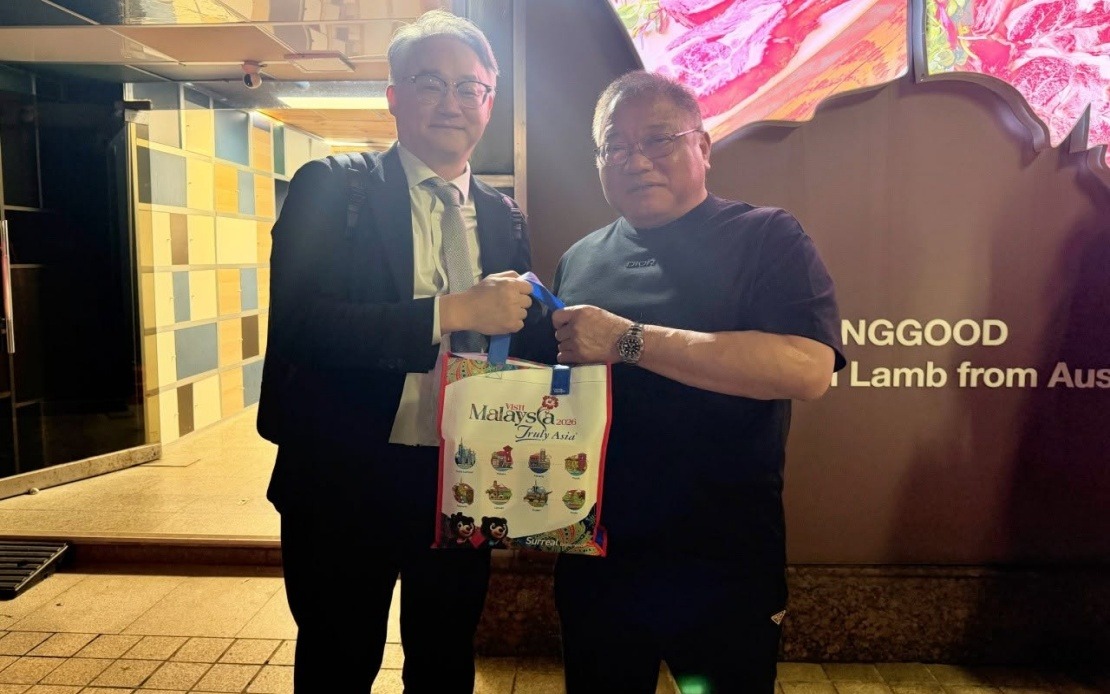
Tourism, Arts and Culture Minister Datuk Seri Tiong King Sing has issued a stern reminder to Malaysia My Second Home (MM2H) programme agents that holding a Malaysian licence does not absolve them of responsibility to adhere to the legal frameworks of nations where they conduct promotional and recruitment activities. The warning underscores growing concerns about regulatory gaps and potential misconduct within the international MM2H ecosystem, particularly as agents expand their reach into key markets across Asia and beyond.
During a recent visit to the Republic of Korea, Tiong raised this issue with representatives of the Malaysian Association, who flagged troubling patterns in how some Malaysian-based agents operate abroad. The association's leadership, including president Dr Aaron Kim Hong-Seok, secretary-general Kim Jun-Hyung, and other officials, shared observations that several MM2H agents appear to lack comprehensive understanding of the regulatory landscapes they enter, leading to informal arrangements with local intermediaries and a proliferation of unaccredited parties claiming to facilitate MM2H applications.
This fragmentation creates fertile ground for confusion and potential fraud. The minister stressed that agents must undertake their own due diligence to understand applicable regulations in target markets and establish cooperative relationships with legitimate local authorities and industry partners. Simply holding a Malaysian regulatory stamp, he emphasized, provides no passport to operate with impunity elsewhere. The distinction matters enormously for the credibility and sustainability of the programme globally.
Upon his return to Malaysia, Tiong pledged to communicate this expectation directly to all MM2H agent companies, reinforcing that compliance is not optional but foundational to their operational mandate. The approach reflects a maturation in how Malaysian authorities view the programme's international footprint—shifting focus from volume metrics to programme integrity. Rather than celebrating raw application numbers, the ministry now prioritizes safeguarding prospective participants and maintaining market discipline.
The emphasis on transparency and legal orderliness addresses a fundamental tension inherent in overseas recruitment programmes. When agents operate across borders, they navigate multiple jurisdictions simultaneously, each with distinct consumer protection standards, financial regulations, and anti-fraud mechanisms. Without clear coordination and mutual understanding between Malaysian agents and local authorities in destination countries, this complexity becomes a vulnerability that bad actors can exploit. Prospective applicants, often wealthy retirees or high-net-worth individuals unfamiliar with Malaysian regulatory frameworks, become exposed to schemes ranging from inflated service fees to falsified applications.
Korea represents a strategically important market for MM2H expansion, particularly among retirees seeking a temperate climate alternative during winter months. The Korean demographic profile—an ageing population with disposable income and growing interest in Southeast Asian destinations—aligns well with MM2H objectives. However, realizing this potential requires building trust, and trust cannot be manufactured through promotional campaigns alone; it must be earned through demonstrable adherence to rules and consistent agent conduct.
The minister's call for a structured cooperation framework between Malaysian agents and Korean industry partners signals recognition that bilateral arrangements need formalization. Rather than ad hoc relationships with individual intermediaries, the path forward involves working with established local institutions and authorities who can verify credentials, enforce standards, and provide recourse for dissatisfied applicants. This institutional approach protects both the programme's reputation and consumer interests.
For Malaysia, the stakes extend beyond individual transactions. The MM2H programme serves as a significant instrument of soft power and economic engagement, attracting foreign capital, generating service-sector employment, and enhancing Malaysia's profile as a retirement and lifestyle destination. When agents operating under Malaysia's banner engage in improper conduct abroad, they taint the entire initiative, potentially triggering regulatory backlash from foreign governments or damaging Malaysia's international standing. Conversely, demonstrating stringent self-regulation can differentiate Malaysia from competing long-term residency programmes in Thailand, Vietnam, and the Philippines.
The minister's positioning also reflects evolving expectations around corporate responsibility within government-endorsed programmes. MM2H agents are not merely private commercial operators; they are gatekeepers and representatives of Malaysian interests abroad. With that designation comes implicit accountability not just to profit motives but to the broader mission of sustainable, reputation-conscious engagement with foreign populations. This represents a shift away from purely transactional thinking toward stakeholder-centric governance.
Moving forward, the ministry's follow-up actions will be instructive. Enforcement mechanisms, clarity on penalties for non-compliance, and channels for reporting misconduct all require definition. Without credible consequences, exhortations to comply ring hollow. Similarly, agents need concrete guidance on navigating different regulatory environments—a resource or consultation mechanism that equips them to operate legally without facing prohibitive compliance costs.
The Korea engagement also hints at broader diplomatic coordination. If Malaysia can establish protocols with the Korean government and industry bodies, similar frameworks could be replicated with other key markets, creating a scalable model for international MM2H operations. Such structures would benefit all stakeholders: applicants gain protection, agents enjoy clarity, and Malaysia's brand integrity remains strong. As the programme matures, this kind of institutional maturity will increasingly distinguish it in a competitive global landscape.

