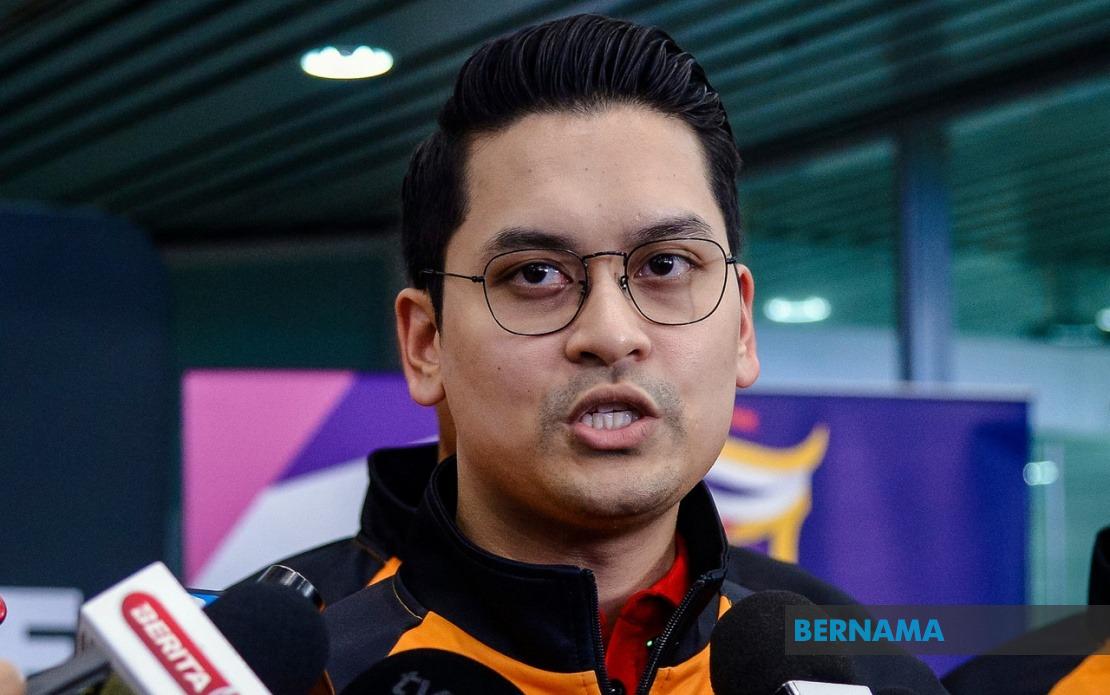
Malaysia's weightlifting programme has secured government backing with a RM4.1 million allocation for 2026, signalling the sport's elevated status within national sporting priorities. The Youth and Sports Ministry (KBS) has committed these funds across multiple athlete and coaching development streams, whilst remaining receptive to further investment discussions with the Malaysia Weightlifting Federation (PABM). This financial commitment arrives as weightlifting establishes itself as a genuine medal-winning commodity for the nation, having recently demonstrated its competitive muscle on the regional stage.
Minister Dr Mohammed Taufiq Johari outlined the scope of the current allocation, emphasising that resources flow into athlete development pipelines at various stages. The funding structure encompasses the Road to Gold programme, designed to nurture emerging talent with Olympic potential, alongside the Podium scheme targeting athletes closer to international competition standards. The Pelapis programme, a supplementary development tier, and grassroots initiatives round out the ecosystem. This tiered approach reflects contemporary best practice in talent identification and progression, ensuring that investment reaches prospects at appropriate developmental phases rather than concentrating resources solely on established competitors.
The weightlifting federation's request for an additional RM1 million annually has not been dismissed outright, with the minister indicating openness to substantive discussions on expanding the financial envelope. The proposed supplementary funding would primarily address coaching infrastructure and personnel costs, areas that commonly constrain development programmes in sports with limited commercial revenue streams. Johari acknowledged meeting with PABM president Datuk Ayub Rahmat and representatives from state weightlifting associations to better understand the federation's requirements and constraints. This consultative approach suggests the ministry recognises that adequate funding for coaching quality and stability directly correlates with athlete performance trajectories.
The decision to invest substantially in weightlifting reflects a strategic calculation about the sport's capacity to deliver Olympic success for Malaysia. Johari explicitly identified weightlifting as a discipline capable of securing the nation's maiden Olympic gold medal, a benchmark that has eluded Malaysian athletes despite decades of international participation. This aspiration carries considerable national prestige, and the government appears willing to deploy resources where credible pathways to podium finishes exist. The emphasis on this particular outcome underscores how Olympic performance has become intertwined with national pride and government sporting policy objectives across Southeast Asia.
Current programme participation demonstrates the federation's active recruitment and development efforts. Two weightlifters are enrolled in the Road to Gold pathway, representing the earliest stage of systematic Olympic preparation, whilst eight athletes compete within the Podium tier. An additional pair occupy spots in the Pelapis programme, indicating a reasonably healthy pipeline of developing talent across multiple levels. These figures suggest that weightlifting has transitioned from a marginal sport within Malaysia's athletic ecosystem to one meriting structured investment and professional management.
The sport's breakthrough at the Commonwealth Games provided compelling evidence for sustained government support. Weightlifting contributed substantially to Malaysia's medal tally, delivering five gold medals alongside one silver and one bronze. This performance elevated the national contingent's overall haul to eight gold, three silver and five bronze medals, exceeding initial targets. Such results carry particular weight in Commonwealth competition, which features robust representation from established sporting nations and provides reliable indicators of performance capacity at other international forums, including Olympic Games. The weightlifting federation's medals translated directly into justification for continued financial commitment.
Beyond athlete support, the ministry has pledged attention to coach welfare, recognising that personnel stability and adequate compensation underpin programme sustainability. State-level coaches supervised by the National Sports Council represent crucial infrastructure often overlooked in funding discussions dominated by athlete-centric narratives. Poor coaching compensation frequently drives talent migration, with qualified instructors seeking more remunerative opportunities elsewhere or departing the profession entirely. The minister's commitment to examining this dimension suggests awareness that technical expertise retention merits equivalent investment to athlete development.
The weightlifting sector's fortunes reflect broader shifts in Malaysian sporting policy, particularly movement away from sports traditionally associated with the nation toward more results-focused investment. Weightlifting's transparency—measurable performance standards, clear competitive hierarchies, and quantifiable success metrics—renders it amenable to the outcomes-based funding frameworks increasingly favoured by government sports administration. Unlike sports requiring subjective evaluation or dependent on infrastructure deployment across multiple sites, weightlifting produces unambiguous performance data that facilitates government accountability and demonstrates return on investment.
For Southeast Asian observers, Malaysia's weightlifting investment carries broader implications. The region houses several nations pursuing Olympic success through targeted support for niche sports, and Malaysia's approach offers insights into sustainable funding models. The tiered athlete development structure, combining grassroots recruitment with elite podium preparation, mirrors international best practice implemented successfully elsewhere. The integration of coaching welfare into policy considerations acknowledges that athlete performance ultimately derives from coach quality and commitment—a principle increasingly recognised across the region.
The dialogue between government and sports federation on additional funding remains preliminary, with discussions yet to yield definitive outcomes. However, the ministry's receptiveness to further investment, contingent upon detailed examination of federation requirements, suggests that weightlifting's Commonwealth success has generated political capital translatable into expanded support. The minister's remark that the sport merits continued prioritisation, coupled with commitment to ongoing dialogue, indicates the government's recognition that weightlifting occupies an elevated position within national sporting ambitions. Whether the additional RM1 million materialises will depend on forthcoming conversations clarifying precisely how supplementary funding translates into enhanced coaching capacity and athlete outcomes.

