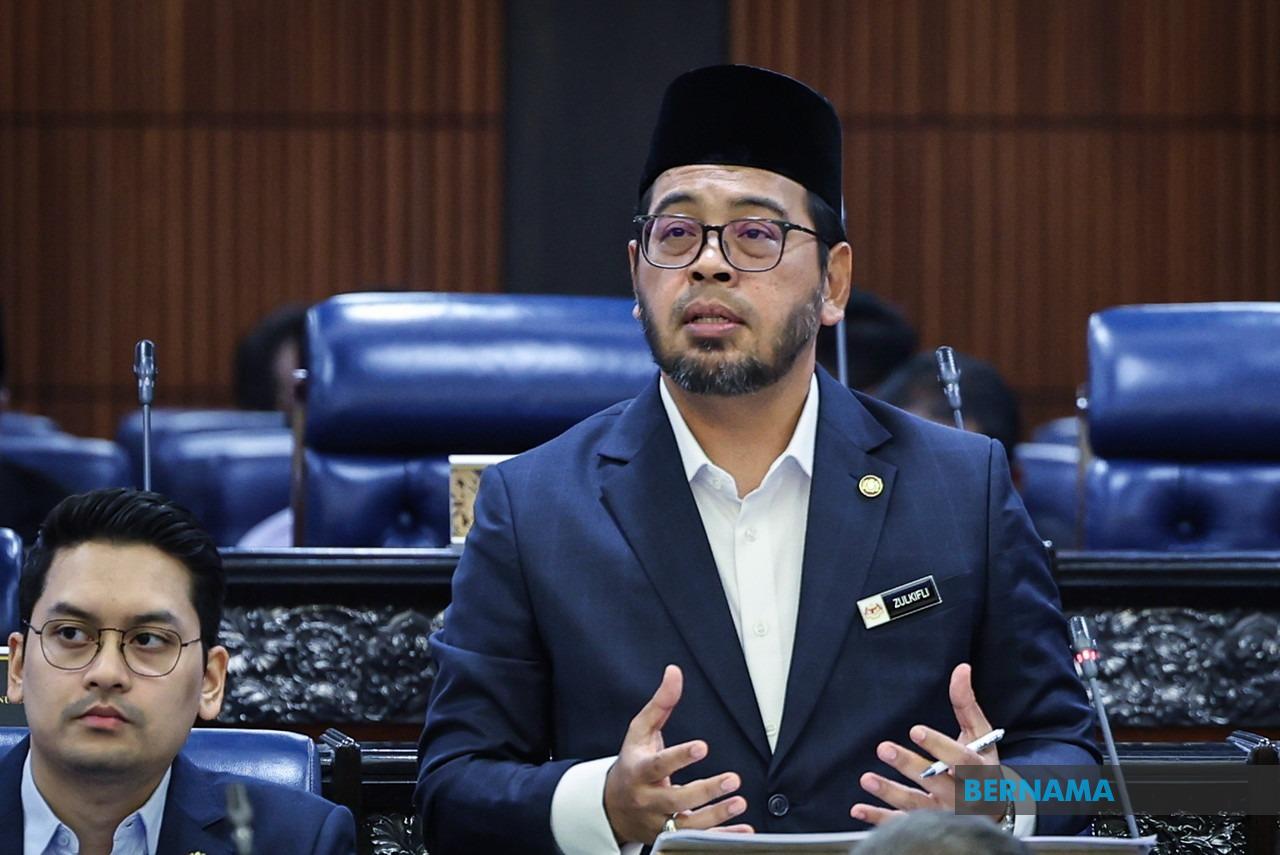
Dr Zulkifli Hasan, Minister in the Prime Minister's Department (Religious Affairs), has articulated a scathing critique of Lembaga Tabung Haji's (TH) pre-2018 financial practices, employing a relatable analogy to explain how Malaysia's pilgrimage fund deceived depositors and regulators about its true economic position. During parliamentary debate following a ministerial briefing on the Royal Commission of Inquiry (RCI) report into TH, Zulkifli invoked the image of Mak Cik Senah, a single mother, to illustrate the mechanics of the fund's accounting deception—a comparison that resonates deeply in Malaysian culture and underscores the human cost of corporate financial manipulation.
The core of Zulkifli's argument centers on a fundamental principle of financial law: dividend payments can only be legitimately distributed when a fund's total assets exceed its liabilities and outstanding obligations. In TH's case, this foundational requirement was systematically violated. The fund's managers engaged in what Zulkifli characterizes as asset value inflation on paper, artificially boosting the apparent worth of holdings to create a mirage of profitability. This deliberate distortion allowed TH to announce substantial profit distributions to depositors—distributions that appeared generous and justified on the surface but were fundamentally unsustainable given the fund's deteriorating actual financial condition.
What distinguishes TH's conduct from legitimate accounting practices is the deliberate nature of the manipulation. The RCI's investigation uncovered a pattern of creative accounting that violated Malaysian Financial Reporting Standards (MFRS) and involved systematic changes to impairment policies designed to obscure the true picture. Zulkifli explicitly connects this behavior to fraudulent schemes familiar to Malaysians—comparing it to a Ponzi scheme structure and the notorious Skim Pak Man Telo, where returns appear to be generated from legitimate investment returns when they are actually funded by new deposits or, in this case, artificially inflated asset valuations. This framing transforms what might seem like technical accounting violations into recognizable crimes against depositors' trust.
A particularly damaging finding relates to the methodology used to inflate asset values. TH employed a technique called Realisable Asset Value (RAV), which was calculated outside the formal audited financial statements. This arrangement allowed the fund to present an inflated asset position while maintaining the veneer of professional oversight. Strikingly, of the total RM4.6 billion in assets that TH valued, only RM556 million were actually assessed by professional valuers—a mere 12 percent. The remaining 88 percent of the stated asset value lacked independent professional validation, yet was used to justify profit distributions that should never have been declared.
The role of external auditors further illustrates the sophistication of the deception. While PricewaterhouseCoopers (PwC) issued a damning 2018 report confirming the financial manipulation, the fund had strategically deployed Ernst & Young not as an independent auditor but merely to review pro forma statements that TH itself had prepared. This arrangement created the appearance of external validation without the substance. The use of selective professional valuation—validating only a fraction of claimed assets—allowed TH to maintain what resembled legitimate accounting procedures while systematically misrepresenting the fund's financial health to both depositors and regulators.
Zulkifli's Mak Cik Senah analogy gains force when examined against the statutory violations TH committed. The Tabung Haji Act explicitly prohibits profit distributions when assets do not exceed liabilities. By distributing profits while the deficit between assets and liabilities was actually widening, TH leadership knowingly violated this statutory requirement. This was not a matter of aggressive interpretation or borderline judgment calls—it was a clear breach of law undertaken with full awareness that the fund was technically insolvent. The distributions were made not from genuine investment returns but from the depletion of the capital base itself, a reality obscured by creative asset valuations.
The implications for Malaysia's broader financial regulatory framework are sobering. TH's case demonstrates how institutions with significant public trust and religious significance can exploit lax oversight and opaque accounting practices. For the 8.5 million Malaysians who hold deposits with TH, the case raises fundamental questions about the reliability of fund management practices and the adequacy of existing regulatory oversight. The Hajj pilgrimage savings held by TH carry profound religious and financial significance for Muslim Malaysians, making the breach of trust particularly acute. Many depositors had entrusted multi-year savings to what they believed was a professionally managed, government-linked institution protected by regulatory scrutiny.
The financial rescue ultimately required by the government carries both visible and invisible costs. The RM10 billion bailout represents funds that, as Zulkifli pointedly notes, could have been directed toward hospitals, schools, mosques, and community facilities that Malaysians desperately need. This opportunity cost extends beyond mere mathematics—it reflects the real-world consequences of financial mismanagement at major institutions. The bailout was not discretionary but essential, both to preserve depositors' life savings and to maintain TH's viability as an institution deeply embedded in Malaysia's Muslim community identity. Without intervention, the fund would have collapsed entirely, resulting in catastrophic losses for millions of ordinary Malaysians.
The RCI's examination has established a clear pattern: TH leadership prioritized maintaining the appearance of high performance over ensuring genuine financial stability. By declaring substantial dividends on a deteriorating asset base, management created a moral hazard environment where short-term reputation metrics trumped long-term institutional sustainability. Each year of artificially inflated profits increased the eventual crisis, as liabilities accumulated while assets were being consumed to fund those very distributions. By the time the scale of the problem became undeniable, the fund required extraordinary government intervention to prevent complete collapse.
For Malaysian policymakers and regulators, the TH case underscores the necessity of stricter oversight mechanisms for institutions managing collective savings, particularly those holding religious and cultural significance. The fact that a 12 percent validation rate for stated assets could pass regulatory scrutiny—or worse, never face serious challenge—suggests that existing monitoring frameworks require substantial strengthening. Enhanced requirements for professional asset valuation, mandatory external audits for significant asset categories, and more rigorous regulatory reviews of profit distribution decisions could help prevent similar episodes. The cost of remediation through bailouts far exceeds the cost of preventive regulation.
Zulkifli's parliamentary intervention represents an unusual instance of high-level political accountability being demanded for corporate financial misconduct. By employing accessible analogies and explicit references to fraud schemes that resonate in Malaysian public discourse, he has transformed technical accounting violations into comprehensible crimes against depositors. The Mak Cik Senah analogy—evoking the image of a vulnerable single mother losing her carefully accumulated savings to financial sleight-of-hand—makes visceral what might otherwise remain abstract. This rhetorical strategy serves to anchor public understanding of how institutional deception operated and why the government's RM10 billion intervention, while substantial, was ultimately unavoidable given the depths of mismanagement that preceded it.

