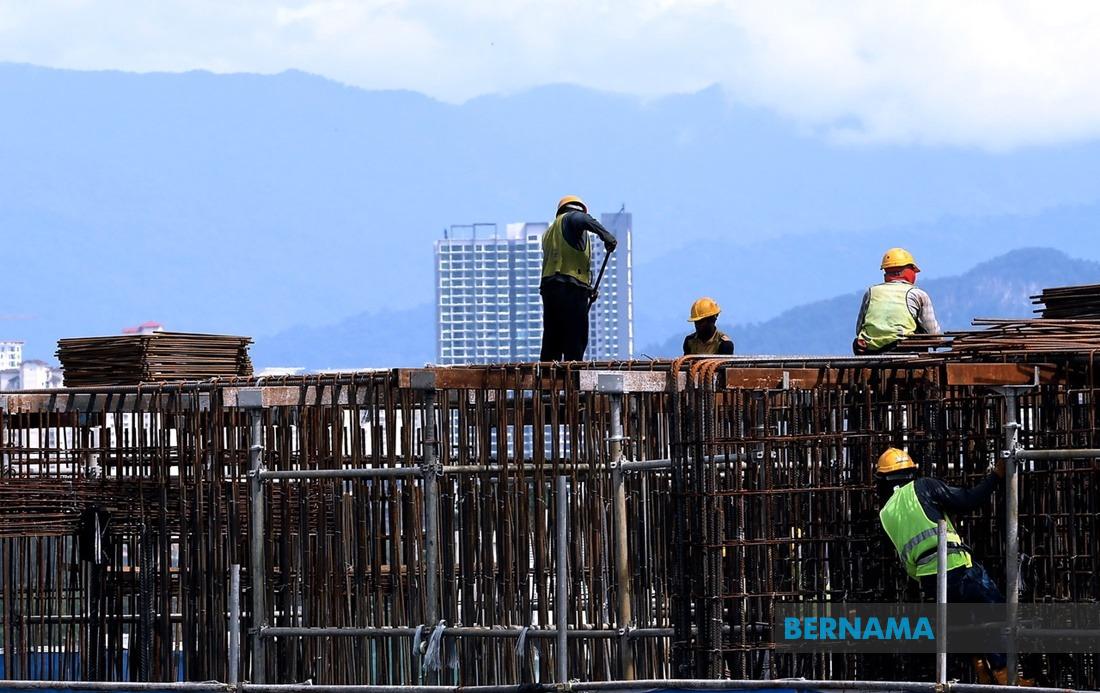
The government's examination of the Minimum Wages Order 2024 represents a critical opportunity to assess whether wage floors adequately reflect contemporary economic realities and the genuine needs of Malaysia's workforce, according to labour union leadership. Union Network International - Malaysia Labour Centre (UNI-MLC) president Datuk Mohamed Shafie BP Mammal emphasised that the review process carries significant weight in determining the continued relevance of existing pay scales to workers' actual circumstances and daily financial pressures.
At the heart of the wage debate lies a fundamental principle: remuneration extends far beyond the numerical figure printed on a payslip. Rather, it represents the purchasing power available to workers for acquiring necessities and maintaining household stability. This distinction matters enormously for policy purposes, as it shifts the conversation from abstract wage figures to concrete family budgets. The UNI-MLC president stressed that periodic reassessment of wage rates against shifting cost-of-living pressures represents not merely a technical exercise but an essential safeguard for worker welfare and dignified living standards across Malaysia's diverse economic landscape.
Workers constitute a foundational layer of the nation's economic machinery, driving productivity and contributing substantially to national growth and development objectives. Acknowledging this contribution demands corresponding attention within labour policy frameworks. When wage structures fail to keep pace with inflation and rising household expenses, workers face a particularly untenable situation: earning sufficient income to subsist yet lacking the capacity to build financial security, invest in their children's education, or navigate unexpected crises. This squeeze on household finances carries broader implications for social stability and economic resilience throughout Malaysian communities.
Mohamed Shafie articulated a straightforward but powerful vision of genuine worker welfare. True support for the labour force does not centre on enabling luxurious consumption or excessive spending. Rather, it concerns facilitating the ability to lead a respectable existence derived entirely from legitimate employment income. A worker earning minimum wage should reasonably expect to cover rent, food, utilities, transport and essential services without constant financial anxiety. When this basic benchmark proves unattainable, the wage structure has failed its fundamental purpose, regardless of what comparative statistics might suggest.
Crucially, the UNI-MLC president cautioned against misinterpreting the review process as automatically leading to wage increases. The examination represents instead a structured opportunity for government officials, business representatives, and worker advocates to evaluate whether current rates appropriately balance multiple considerations. This measured framing suggests recognition that wage policy operates within complex constraints involving employer capacity, business competitiveness, and economic growth considerations. The review framework therefore promises a genuinely tripartite evaluation rather than a predetermined outcome favouring any single stakeholder group.
The timing of this wage review arrives amid broader economic pressures affecting Malaysian households. Inflation has incrementally eroded purchasing power across income categories, with lower-wage workers typically experiencing the sharpest impact due to the larger proportion of their earnings devoted to non-discretionary expenses. Food prices, housing costs, transportation fees, and utility bills have escalated considerably, compressing the margin between typical minimum wage payments and actual survival costs. Families depending on minimum-wage incomes increasingly struggle to access services previously considered routine, including preventive healthcare and educational advancement for children.
UNI-MLC has signalled its constructive engagement with all relevant stakeholders throughout the review process. This collaborative stance reflects the organisation's understanding that sustainable wage policy requires buy-in from employers, government agencies, and workers themselves. The labour centre's commitment to ensuring that national wage policies remain responsive to economic realities suggests a framework where ongoing dialogue replaces one-time adjustments. Regular review mechanisms, informed by actual cost-of-living data and labour market conditions, would enable wage policy to function as a dynamic instrument rather than a static regulation requiring periodic overhaul.
For Malaysia's broader economic health, wage policy carries implications extending beyond individual worker welfare. When minimum wages lag significantly behind actual living costs, several secondary effects ripple through the economy. Consumer purchasing power diminishes, potentially constraining domestic demand for goods and services. Worker productivity may suffer if employees struggle with nutrition, healthcare access, or family stability. Healthcare systems face increased demand from stress-related and poverty-associated conditions. Educational outcomes may decline when children lack adequate nutrition or when families cannot afford school expenses. These interconnected effects suggest that inadequate wage policy imposes costs on society substantially exceeding any savings employers might achieve through lower payroll expenses.
The Southeast Asian context provides instructive comparison points for Malaysian policymakers. Neighbouring countries including Thailand, Vietnam, and Indonesia have grappled with similar tensions between minimum wage floors and actual living costs. Several regional economies have implemented periodic review mechanisms tied to inflation indices or cost-of-living surveys, attempting to maintain automatic adjustment capacity. Others have experimented with regional differentiation, recognising that urban centres typically feature higher living costs than rural areas. These varied approaches offer potential models for Malaysian consideration, though direct transplantation of foreign policies rarely succeeds without substantial domestic adaptation.
Moving forward, the government faces pressure to ensure transparency throughout the review process. Publishing detailed cost-of-living analyses, employer impact assessments, and worker testimony would strengthen public confidence in whatever outcomes emerge. Such transparency also provides a foundation for rational debate rather than competing assertions grounded in advocacy rather than evidence. Clear communication about the methodology and evidence underlying any wage adjustments would help all stakeholders understand the rationale and improve acceptance of resulting policy.
The broader challenge confronting Malaysian policymakers involves recognising that wage policy connects integrally to multiple national objectives including poverty reduction, social cohesion, and sustainable economic development. A comprehensive approach would treat the minimum wage review not as an isolated exercise but as part of integrated consideration of social protection, healthcare access, education funding, and housing policy. Workers earning minimum wages simultaneously navigate housing costs that frequently consume half their income, education expenses for children, and healthcare needs increasingly unaffordable without adequate income buffers. Wage policy operating in isolation from these complementary policy domains cannot adequately address the fundamental challenge of enabling dignified living standards for Malaysia's working poor.

